
Container Gardens
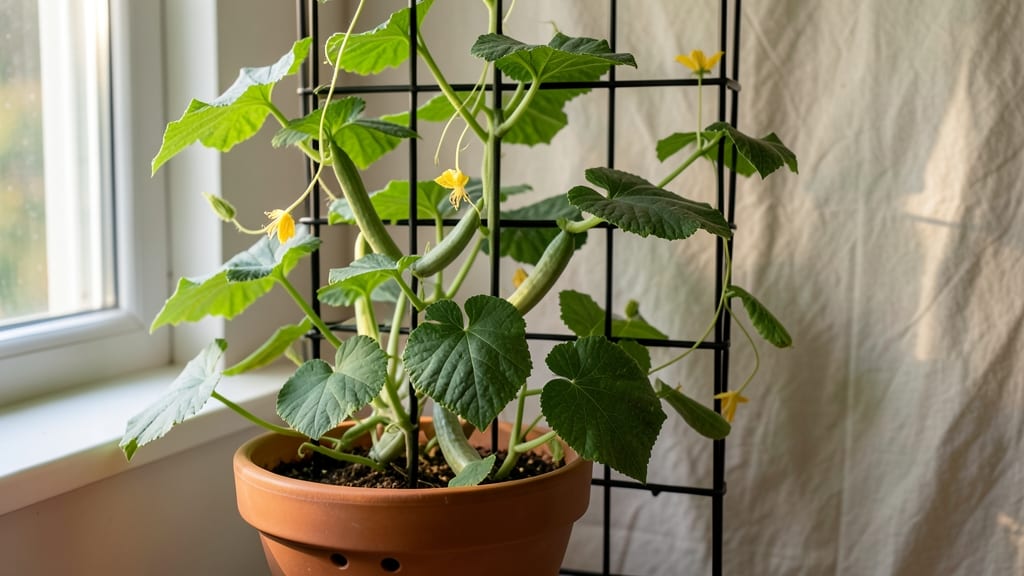
Yes, you can grow cucumbers indoors by selecting dwarf or bush varieties, providing adequate light from a south-facing window or grow lights, and using containers with proper drainage. Compact types like 'Bush Champion' or 'Spacemaster' thrive in limited spaces.
Indoor cucumber gardening is absolutely possible with the right approach. 🌱 The key lies in choosing varieties bred for small spaces—these compact plants eliminate the need for sprawling vines that outdoor cucumbers require.
I've found that bush varieties produce fruit faster than their trailing counterparts, making them ideal for container growing. For best results, pair your chosen variety with a 5-gallon container or larger, ensuring the soil stays consistently moist but never soggy.
Light is another critical factor—cucumbers need at least 6-8 hours of bright light daily. If natural light is insufficient, supplement with full-spectrum LED grow lights positioned about 6-12 inches above the plants.
Maintaining 70-80% humidity through misting or a humidity tray helps prevent common issues like powdery mildew, which can plague indoor gardens. With proper care, you can harvest fresh cucumbers year-round from your indoor setup!
💡 In This Article
- Best Indoor Cucumber Varieties for Small Spaces
- Indoor Cucumber Light and Care Essentials
Best indoor cucumber varieties for small spaces
Indoor cucumber success starts with selecting the right variety. Bush types like 'Bush Champion' grow only 2-3 feet tall, eliminating the need for trellises that trailing varieties require. These compact plants produce fruit along the entire stem rather than just the tips, maximizing yield in limited space.
Their growth habit makes them perfect for 5-gallon containers or larger, where roots can establish without becoming root-bound.
The key difference between bush and trailing varieties lies in their genetic structure. Bush cucumbers have been selectively bred to produce shorter, more compact vines with thicker stems that support fruit weight.
For example, 'Spacemaster' reaches just 3 feet tall while producing 12-15 cucumbers per plant, compared to outdoor varieties that may produce similar yields but require 6+ feet of growing space. These dwarf varieties also mature faster—typically in 50-60 days—giving you quicker harvests.
When choosing varieties, consider your space constraints and harvest preferences. 'Diva' is another excellent option, producing small, sweet cucumbers perfect for snacking that grow on compact vines. For those with slightly more vertical space, 'Patio Snacker' offers a middle ground with 4-foot vines that can be trained upward.
The smaller fruit size of these varieties also means less competition for nutrients in containers, resulting in more consistent production.
What most gardeners don't realize is how the growth habit affects pollination. Bush varieties often produce more female flowers earlier in the season, which means fruit production starts sooner. This is crucial indoors where natural pollinators are absent—you'll need to hand-pollinate by gently transferring pollen with a small brush.
The compact growth also makes this process easier since all flowers are within easy reach.
For maximum productivity in containers, consider planting 2-3 plants per 5-gallon container if your variety allows. The 'Bush Pickle' variety, for example, thrives in this configuration and produces small, crisp cucumbers perfect for pickling.
These varieties have been specifically developed to handle container growing stress, making them more forgiving for indoor conditions where temperature and humidity fluctuations are more common than outdoors.
One advanced consideration is choosing varieties with disease resistance. Look for types labeled 'powdery mildew resistant' or 'downy mildew resistant'—these traits are particularly valuable in indoor environments where poor air circulation can lead to fungal issues.
'Sweet Success' is one such variety that combines compact growth with disease resistance, making it an excellent choice for beginners.