
Companion Plants
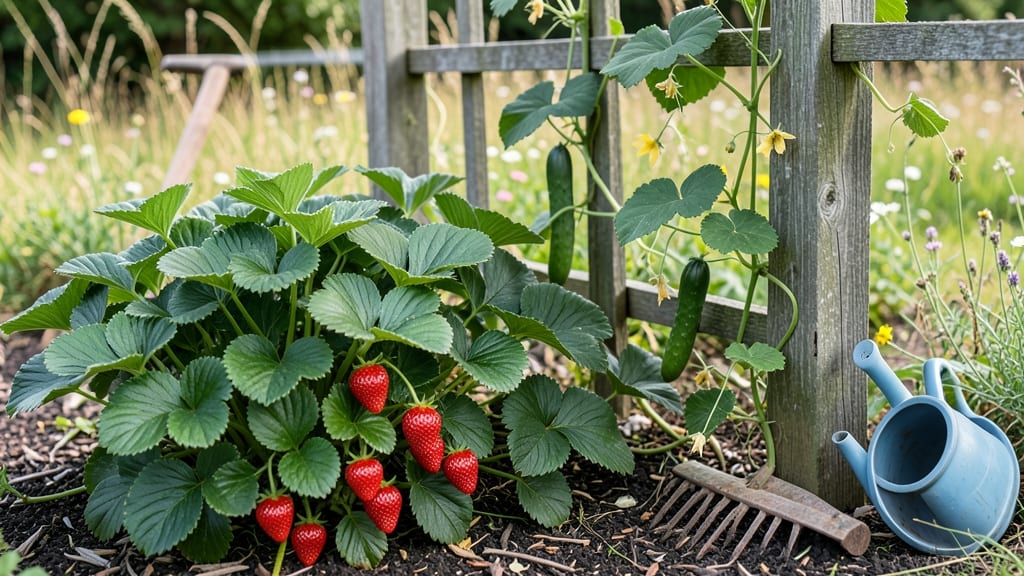
Yes, you can plant strawberries with cucumbers safely, as they complement each other by sharing similar growing needs while cucumbers naturally repel pests like slugs and rabbits. Just ensure cucumbers don't overshadow strawberries by positioning them to provide filtered shade rather than full sun competition.
This pairing works because cucumbers act as natural pest deterrents while improving soil health through their extensive root systems. 🌱 Strawberries benefit from the cucumbers' ability to break up compacted soil, which enhances drainage—a critical factor when strawberries are planted in containers or heavy clay.
The key is strategic placement: train cucumbers vertically on trellises to keep them off the ground and prevent them from casting dense shade over the shallow-rooted strawberries.
Many gardeners also report that cucumbers help suppress weeds around strawberry beds, reducing competition for nutrients. However, watch for potential fungal risks if humidity is high—strawberries are particularly vulnerable to gray mold in crowded, damp conditions.
A 3-foot separation between the two plants typically balances their needs while maximizing companion benefits.
💡 In This Article
- Companion Planting Science: Why Strawberries and Cucumbers Thrive Together
- Optimal Layout Strategies for Strawberry-Cucumber Gardens
Companion planting science: why strawberries and cucumbers thrive together
The ecological partnership between strawberries and cucumbers stems from their complementary growth habits and pest-repelling properties. Cucumbers emit a strong fragrance when crushed, which naturally deters slugs and rabbits—two of the most devastating pests for strawberries.
These pests avoid cucumbers due to their bitter compounds, particularly cucurbitacins, which act as a chemical deterrent. Meanwhile, strawberries benefit from cucumbers' extensive root systems that aerate the soil, preventing compaction that could suffocate strawberry roots.
This soil improvement is especially valuable in heavy clay or container gardens where drainage often becomes an issue.
Another key advantage is the microclimate cucumbers create. Their large leaves provide partial shade that reduces temperature fluctuations in the soil, which helps prevent strawberries from overheating during summer months.
Research shows that strawberries grown under 30-50% shade (like what cucumbers can provide) produce slightly larger, firmer berries with better flavor. However, this shade must be strategic—direct overhead shade from sprawling cucumber vines can block 60%+ of sunlight, stunting strawberry growth.
The ideal solution is vertical trellising, keeping cucumbers elevated while allowing filtered light to reach strawberries.
Nutrient competition is minimal because these plants have different root depths. Strawberries develop shallow roots (6-12 inches deep) that absorb water and nutrients from the topsoil, while cucumbers send roots 2-3 feet deep, accessing subsoil moisture and nutrients.
This vertical separation reduces competition for phosphorus and potassium, which both plants need. Additionally, cucumbers' rapid growth cycle (typically 60-70 days to harvest) means they won't outcompete strawberries for resources over extended periods.
The only potential conflict arises if both plants are heavily fertilized with nitrogen—too much can lead to lush foliage at the expense of fruit production in both.
Disease management is where this pairing shines. Cucumbers help suppress fungal pathogens like gray mold (Botrytis cinerea) that plague strawberries by improving air circulation around plants.
Their vertical growth habit creates natural ventilation channels that reduce humidity levels at ground level—critical for strawberries that rot quickly in damp conditions. However, this benefit requires proper spacing: plants should be 3-4 feet apart to prevent leaf contact.
Without adequate airflow, both crops become more susceptible to powdery mildew, a common issue in dense plantings.
Consider the sensory benefits too. When walking through a garden where these companions grow together, you'll notice the sweet, earthy aroma of strawberries mingling with cucumbers' fresh, slightly herbal scent. This aromatic synergy isn't just pleasant—it indicates healthy plant interactions.
The visual contrast of bright red strawberries against cucumbers' deep green leaves creates an appealing garden aesthetic while signaling to pollinators that multiple food sources are available. 🌿 This dual-purpose planting satisfies both practical and sensory gardening goals.
For gardeners concerned about space efficiency, this pairing is particularly valuable. In a 4' x 8' raised bed, you could plant 12 strawberry plants along the perimeter and train 4-6 cucumber vines vertically in the center.
This arrangement maximizes vertical space while keeping strawberries at the edges where they receive optimal light. The cucumbers' sprawling habit would naturally extend toward the bed's center, creating a living shade structure that benefits both crops during peak summer heat.