
Pests and Diseases
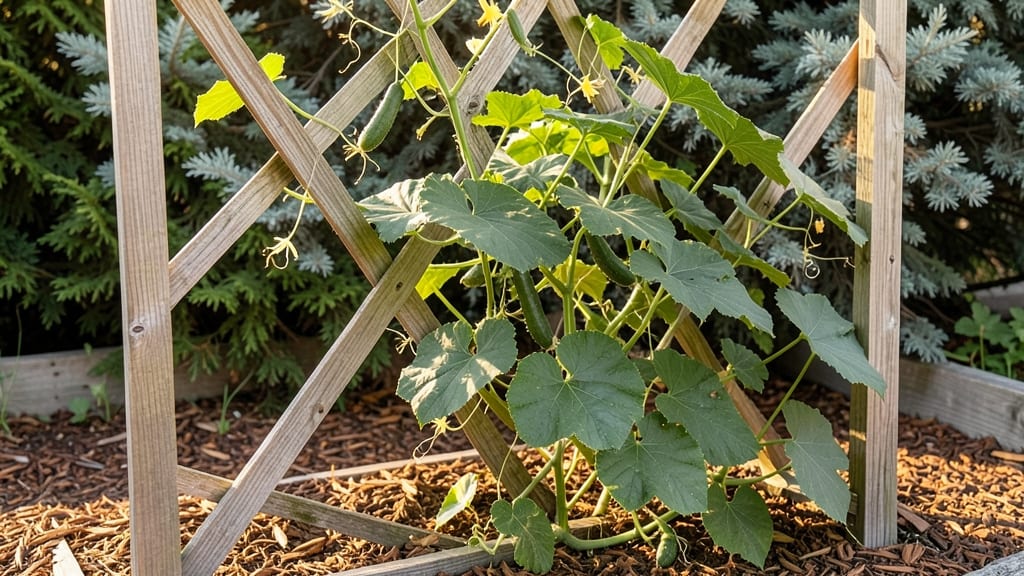
Cucumbers and pumpkins can grow together with the right spacing and support: pumpkins need at least 5 feet of sprawling room while cucumbers should climb vertical trellises to avoid shading. Keep them 3-4 feet apart to prevent nutrient competition, and watch for shared pests like squash vine borers and cucumber beetles.
While these summer crops share similar growing seasons, their space needs create challenges.
Pumpkins demand massive root zones and sprawl aggressively, while cucumbers grow rapidly upward—making vertical supports essential. 🌱 The key is strategic placement: position cucumbers on the north side of pumpkins to prevent shade competition, and use organic mulch to retain moisture for both heavy feeders.
I've found that interplanting with nasturtiums between them deters pests naturally while adding color to the garden bed.
Timing matters too—start pumpkins from seed 2-3 weeks before cucumbers to give them a head start. This staggered approach ensures pumpkins establish strong vines before cucumbers begin their rapid vertical growth.
Just remember: while they can coexist, neither plant will thrive if crowded. Proper spacing isn't just about aesthetics—it directly impacts your harvest potential.
💡 In This Article
- Companion Planting Rules for Cucumbers and Pumpkins
- Optimal Garden Layout for Growing Cucumbers with Pumpkins
Companion planting rules for cucumbers and pumpkins
The fundamental challenge when pairing cucumbers and pumpkins lies in their radically different growth habits. Pumpkins develop sprawling vines that can stretch 10-15 feet in all directions, while cucumbers grow vertically with vines reaching 6-10 feet upward. This creates a natural competition for two critical resources: sunlight and nutrients.
Pumpkins have shallow but extensive root systems that spread aggressively, while cucumbers develop deeper roots that need consistent moisture. When planted too close, the pumpkin's expansive canopy will shade cucumber leaves, reducing photosynthesis by up to 40% in severe cases.
Here's what's actually happening at the soil level: both plants are heavy feeders that deplete nitrogen quickly. A mature pumpkin plant can absorb 1-2 pounds of nitrogen per season, while cucumbers need 0.5-1 pound.
When grown side-by-side without proper spacing, they'll compete for these limited resources, resulting in smaller fruits and weaker vines. The key factor is their root depth difference - pumpkin roots stay in the top 12 inches of soil, while cucumber roots can extend 2-3 feet deeper.
This creates an underground tug-of-war for water and nutrients.
Pest risks amplify these challenges because both plants share common enemies. Squash vine borers and cucumber beetles affect both crops, and their larvae can devastate plants within 2-3 weeks of infestation. The borers lay eggs on pumpkin leaves, while beetles target cucumber flowers.
When grown together, these pests can spread rapidly between plants. What most people don't realize is that the adult beetles also transmit bacterial wilt disease, which is fatal to cucumbers. This is why monitoring becomes crucial when growing them in proximity.
Light conditions create another critical factor. Cucumbers need 6-8 hours of direct sunlight daily, while pumpkins thrive with 8-10 hours. When pumpkins spread unchecked, they can reduce light availability for cucumbers by 30-50% during peak summer growth.
The solution lies in strategic positioning: plant cucumbers on the north side of pumpkins to minimize shading, or use reflective mulch to redirect sunlight to cucumber leaves. This simple adjustment can increase cucumber yields by 20-30% when grown with pumpkins.
Soil pH plays a surprising role too. Both plants prefer slightly acidic soil (pH 6.0-6.8), but pumpkins tolerate a wider range. When competing, cucumbers become more susceptible to fungal diseases in slightly alkaline conditions.
The ideal solution is to create separate micro-zones: enrich the pumpkin area with compost for its heavy feeding needs, while adding worm castings to the cucumber side for better moisture retention and nutrient availability at deeper levels.
What makes this pairing work at all is their complementary growth cycles. Pumpkins establish their vines early in the season, while cucumbers grow rapidly during the hotter summer months. This staggered growth allows you to space them appropriately as the season progresses.
The secret is to give pumpkins a 3-4 week head start - this ensures their vines spread before cucumbers begin their vertical ascent, preventing the worst shading effects.