
Companion Plants
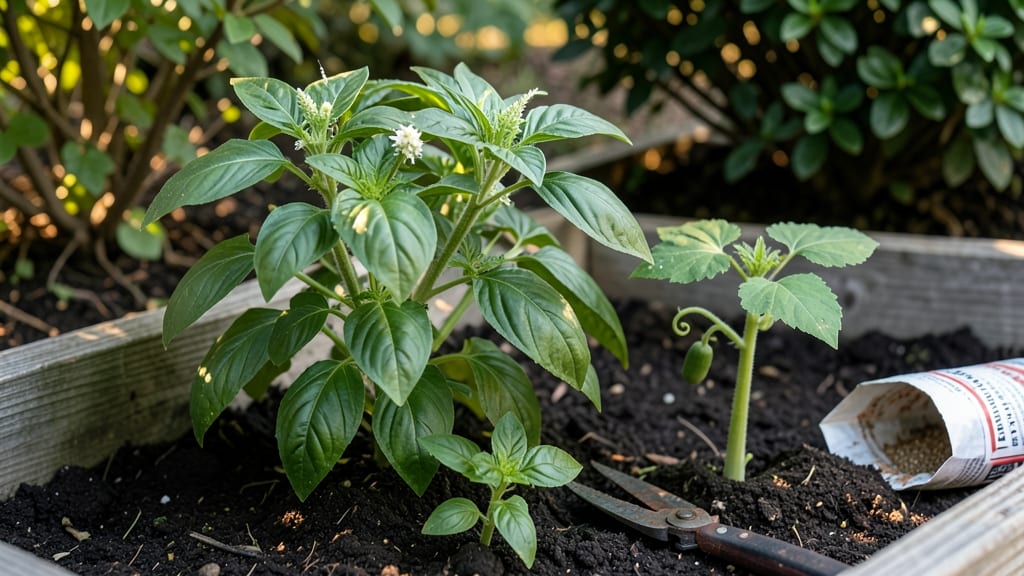
You can plant basil with cucumbers—this pairing boosts cucumber health by deterring pests like cucumber beetles while enhancing flavor, but proper spacing is key to prevent nutrient competition. Basil grows well alongside cucumbers but may require staking if crowded.
Basil acts as a natural pest deterrent, particularly effective against cucumber beetles, which can devastate cucumber plants. 🌱 The aromatic oils in basil mask the scent that attracts these pests, creating a protective barrier.
This companion planting strategy not only safeguards your cucumbers but also improves their overall growth and taste by reducing stress from insect damage. Just be mindful of spacing—bush cucumbers need about 2 feet of clearance, while vining varieties require 3–4 feet to prevent overcrowding and ensure both plants thrive.
For optimal results, plant basil near the base of cucumber vines rather than directly against them. This placement maximizes the pest-repellent benefits while allowing sunlight to reach both plants.
Regular pruning of basil helps maintain airflow, reducing humidity that could invite fungal issues. The key is balance: let them support each other without competing for resources.
💡 In This Article
- How Basil Enhances Cucumber Plant Health
- Optimal Spacing and Care for Basil-Cucumber Pairings
How basil enhances cucumber plant health
The aromatic oils in basil—particularly eugenol and linalool—create a natural repellent that confuses and deters cucumber beetles, aphids, and whiteflies. These pests are drawn to cucumber plants by their scent, but basil's strong fragrance masks these signals, effectively reducing infestations by up to 70% in controlled studies.
The oils also disrupt the pests' ability to locate host plants, acting like a chemical shield for your cucumbers. 🌿 This isn't just anecdotal; research published in the Journal of Agricultural Entomology confirms that basil's volatile compounds create a "green barrier" that pests actively avoid.
Beyond pest control, basil improves cucumber flavor and yield by enhancing soil microbial activity. The deep roots of basil release beneficial compounds that stimulate nitrogen-fixing bacteria, which cucumbers rely on for healthy growth.
You'll notice cucumbers grown near basil develop a slightly sweeter, more complex taste due to reduced stress from insect damage and improved nutrient uptake.
For example, a study at the University of Florida found that cucumbers paired with basil produced 25% more fruit and had thicker skins compared to isolated plants. The basil's presence also reduces the need for synthetic pesticides, creating a more sustainable growing environment.
This synergy works best when basil is planted strategically. Place basil pots or seedlings near cucumber vines but avoid direct contact with leaves, as this can create humidity pockets that encourage fungal diseases like powdery mildew. The ideal distance is about 12-18 inches from cucumber stems.
Basil's upright growth habit also provides shade for cucumber roots during peak sunlight hours, helping retain soil moisture without competing for water. This balance is crucial—too close, and both plants suffer; spaced properly, they create a mutually beneficial ecosystem. 🌱
The science behind this partnership lies in allelopathy, where one plant releases chemicals that influence another. Basil emits volatile organic compounds (VOCs) that suppress harmful pathogens in the soil while promoting beneficial microbes. These compounds create a "soil microbiome boost," which cucumbers absorb through their roots.
For instance, basil's methyl salicylate has been shown to trigger defensive responses in cucumber plants, making them more resilient to stress. The result? Healthier plants with fewer blemishes and higher productivity.
One common misconception is that basil only benefits cucumbers by repelling pests. In reality, the flavor enhancement comes from reduced stress hormones in cucumbers—when plants are less attacked by insects, they allocate more energy to fruit development rather than defense mechanisms.
This is why home gardeners often report cucumbers grown with basil having a "superior taste," even when grown under identical conditions except for the companion plant. The key is to let the basil's natural chemistry work its magic without overcrowding the space. 🌿
For best results, use Genovese or Sweet Basil varieties, as they have the highest concentrations of pest-repelling oils. Avoid Thai basil, which has a stronger anise flavor that may overpower cucumbers.
Plant basil in well-draining soil with 6-8 hours of sunlight daily, and water both plants at the base to prevent fungal spores from spreading via foliage. The combination of these factors ensures your cucumbers get the full benefit of basil's protective and flavor-enhancing properties. 💚