
Pests and Diseases
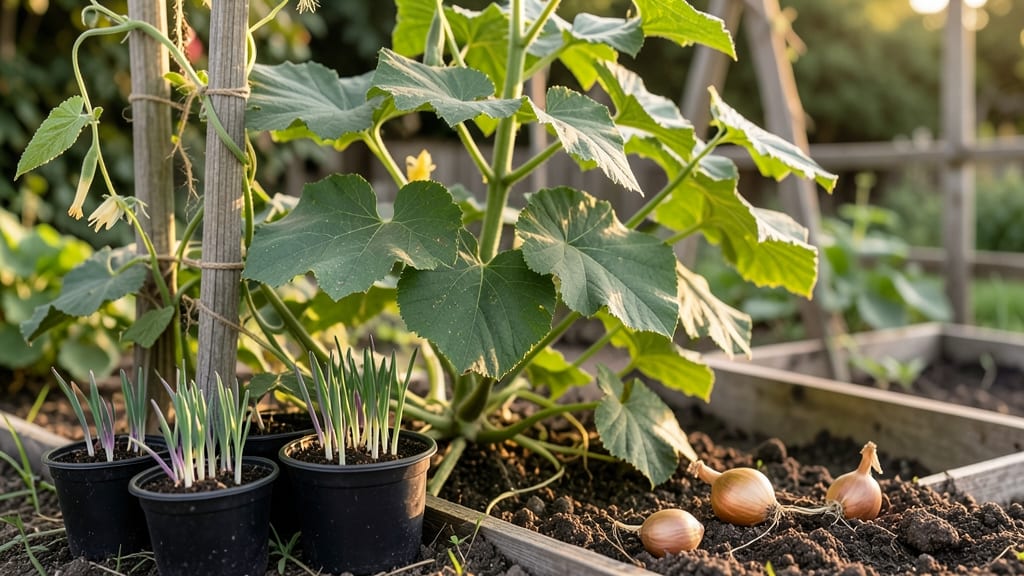
Cucumbers and onions should not be planted together because onions release compounds that inhibit cucumber growth, while cucumbers compete for soil nutrients and moisture. Opt for companion plants like beans, radishes, or lettuce instead for healthier yields.
Planting cucumbers and onions together creates a losing battle for both crops. Onions release natural chemicals called allelochemicals that slow cucumber root development, while cucumbers' sprawling vines compete aggressively for water and nutrients. 🌱 This dynamic isn't just about space—it's about soil chemistry working against your garden's success.
Studies show that onion roots can alter soil pH levels, creating an environment where cucumbers struggle to absorb essential minerals like nitrogen and potassium.
Instead of fighting this natural opposition, I recommend pairing cucumbers with plants that actively support their growth. Fast-growing radishes, for example, help break up compacted soil while their shallow roots don't compete for depth.
Lettuce and beans are other excellent partners—they shade the soil to retain moisture and fix nitrogen, giving cucumbers the nutrients they crave without the competition. The key is creating a balanced ecosystem where each plant plays to its strengths.
💡 In This Article
- Why Onions Harm Cucumber Growth: Soil Chemistry Explained
- Best Cucumber Companion Plants for Thriving Gardens
Why onions harm cucumber growth: soil chemistry explained
Onions release natural chemicals called thiosulfinates through their roots and bulb bases, a process known as allelopathy. These compounds disrupt cucumber root development by interfering with cell division and nutrient uptake, especially during the early growth stages when cucumbers establish their root systems.
Research from the University of California shows that onion allelochemicals can reduce cucumber root mass by up to 30% when planted within 12 inches of each other.
The soil chemistry gets even more complex because onions prefer slightly acidic soil (pH 6.0-6.8), while cucumbers thrive in neutral to slightly alkaline conditions (pH 6.0-7.0).
When planted together, onions can lower soil pH through organic acid excretion, creating an environment where cucumbers struggle to absorb essential minerals like nitrogen and potassium. 🌱 This nutrient competition becomes especially fierce during hot summer months when both plants demand maximum resources.
Cucumbers, with their sprawling vines, also compete aggressively for water and nutrients in the top 6-12 inches of soil—exactly where onion roots concentrate. This competition becomes visible through stunted cucumber growth, yellowing leaves, and smaller fruit production.
The problem isn't just about space; it's about creating a chemical imbalance that neither plant can overcome simultaneously.
What makes this dynamic particularly problematic is that onions are biennial plants that store energy in their bulbs, while cucumbers are annuals that require constant nutrient replenishment.
When grown together, the onion's energy conservation strategy directly conflicts with the cucumber's rapid growth demands, creating a biological mismatch that gardeners often overlook until it's too late.
Interestingly, this conflict isn't one-sided—cucumbers can also negatively affect onions by harboring pests like aphids that spread onion diseases. The two plants create a perfect storm of biological and chemical competition that makes them poor garden partners.
Understanding this soil chemistry helps explain why even experienced gardeners sometimes see disappointing results when planting these vegetables together.
The good news is that this conflict can be easily avoided by implementing proper garden planning. By separating these plants and choosing compatible companions, you create an environment where both cucumbers and onions can thrive in their own optimal conditions without competing for resources or releasing harmful compounds.