
Pests
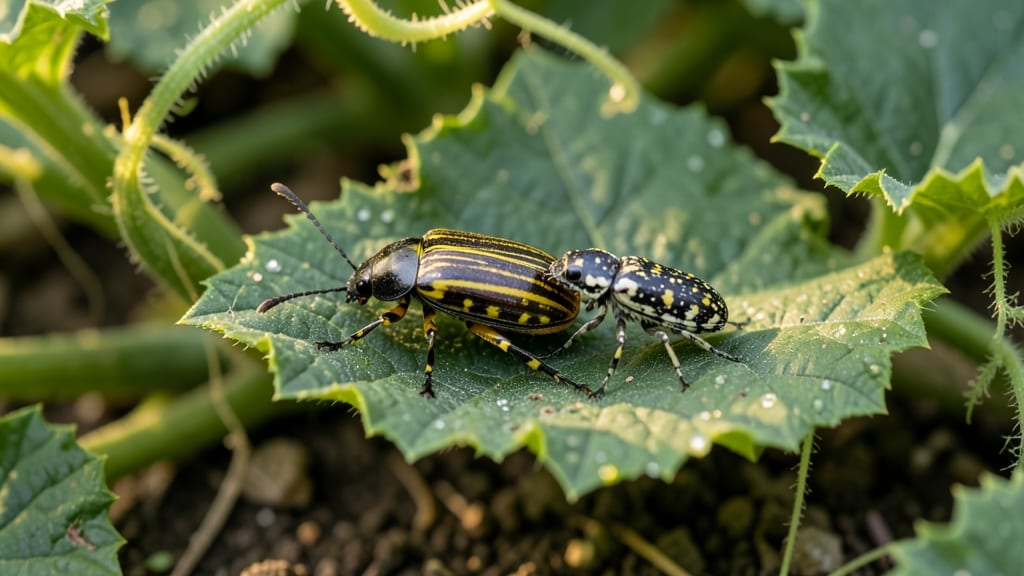
Natural predators like ladybugs, lacewings, parasitic wasps, and birds such as sparrows and starlings eat cucumber beetles, helping keep their populations in check organically.
These beneficial insects and birds play a crucial role in your garden's ecosystem by targeting cucumber beetles at different life stages. 🌿 Ladybugs, for example, devour both adult beetles and their eggs, while lacewings feast on larvae.
Birds like sparrows and starlings add another layer of control by snatching up adult beetles from foliage. The key to maximizing their effectiveness is creating a predator-friendly environment—think nectar-rich flowers, water sources, and pesticide-free zones.
What makes this natural approach so powerful is how it works in harmony with your garden's existing balance. Unlike chemical solutions, these predators don't harm your plants while they're busy controlling beetle populations.
I've found that even small changes—like adding a birdbath or planting dill—can significantly boost your garden's pest control capabilities over time.
💡 In This Article
- Natural Predators That Target Cucumber Beetles
- Encouraging Predators in Your Garden for Beetle Control
Natural predators that target cucumber beetles
Ladybugs are perhaps the most well-known cucumber beetle predators, with adult ladybugs consuming 50-60 beetles during their lifetime and larvae eating even more.
Their bright coloration isn't just for show—it's a warning to predators that they're toxic, while their rapid movement helps them intercept beetles crawling on plant leaves. 🔥 These beneficial insects are particularly effective against striped cucumber beetles, which emerge earlier in the season when ladybug populations are already active.
Lacewings are another powerhouse predator, with their delicate, net-winged appearance belied by their voracious appetites. Both adult lacewings and their larvae (called "aphid lions") target cucumber beetle eggs and young larvae, using their strong mandibles to pierce the beetle's exoskeleton.
A single lacewing larva can consume 100-200 beetle eggs in just two weeks! Their hunting strategy involves ambushing prey rather than chasing, making them especially effective in dense garden foliage where beetles hide.
Parasitic wasps play a crucial but often overlooked role in cucumber beetle control. Species like Tetrastichus brunnipennis lay their eggs inside cucumber beetle larvae, where the wasp larvae then develop and eventually kill their host.
This method is particularly effective because it targets beetles when they're most damaging—during their larval stage underground. The wasps don't sting humans and are completely harmless to plants, making them an ideal natural control method.
Birds add an aerial dimension to cucumber beetle control, with species like sparrows and starlings actively foraging for adult beetles on plant surfaces. These birds have keen eyesight that can spot beetles from 10-15 feet away, making them effective at reducing visible beetle populations.
A single sparrow can consume 50-100 beetles per day during peak foraging seasons. Their presence also creates a ripple effect, as they help control other garden pests that might compete with beneficial insects for resources.
The most fascinating aspect of these predators is their specialized hunting behaviors. Ladybugs use chemical cues to locate beetle-infested plants, while lacewings rely on visual cues to detect movement. Parasitic wasps have evolved to recognize specific chemical signals from cucumber beetle larvae, ensuring they target the right hosts.
This level of specialization means each predator plays a unique role in breaking the beetle's life cycle at different stages.
What's particularly encouraging is how these predators work synergistically. For example, ladybugs might control adult beetles while lacewing larvae handle the eggs, creating a multi-layered defense system. This natural balance is what makes organic pest control so effective when properly supported.
The key insight here is that cucumber beetles aren't invincible—they're simply outmatched by nature's arsenal when given the right conditions to thrive.