
Pests and Diseases
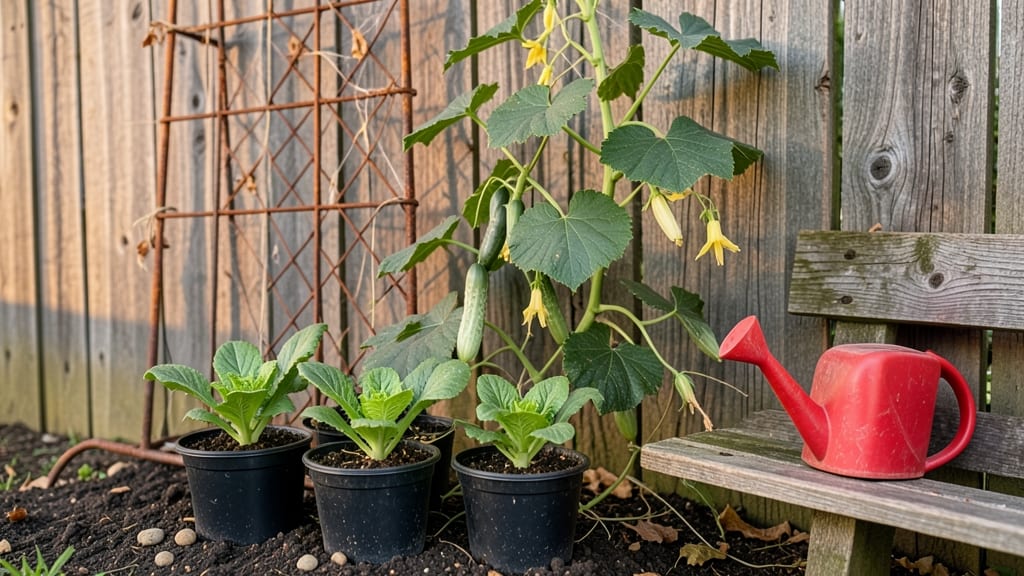
Cucumbers and lettuce can be planted together successfully, as they share similar growing conditions and cucumbers provide shade for lettuce while repelling pests like aphids. Space cucumbers 3-4 feet apart and lettuce 6-12 inches away to prevent competition for nutrients and sunlight.
This pairing works because both thrive in well-draining soil with consistent moisture, and cucumbers act as natural shade for lettuce during hot afternoons. 🌱 The vines also deter pests like aphids that might otherwise target your leafy greens, while lettuce helps suppress weeds and retain soil moisture.
I’ve found that planting lettuce near cucumber trellises creates an efficient use of vertical space, especially in smaller gardens where every inch counts.
For best results, start with fast-growing lettuce varieties like romaine or butterhead, which mature quickly before cucumbers spread. This way, you avoid competition for sunlight and nutrients during the cucumbers' rapid growth phase.
Just remember to thin seedlings early—lettuce needs room to breathe, and cucumbers will eventually dominate the space if left unchecked.
💡 In This Article
- Companion Planting Benefits of Cucumbers and Lettuce
- Optimal Spacing and Planting Layouts for Cucumbers and Lettuce
Companion planting benefits of cucumbers and lettuce
Cucumbers act as natural shade providers for lettuce, creating a microclimate that keeps leafy greens crisp and hydrated during peak afternoon heat.
The broad leaves of cucumber vines create a living canopy that reduces water evaporation from the soil by up to 30%, which is especially valuable during dry spells.
This shade effect is particularly beneficial for heat-sensitive lettuce varieties like iceberg or crisphead, which can bolt (prematurely flower) when exposed to temperatures above 75°F for extended periods.
The pest-repelling benefits go beyond just aphids—cucumber plants emit volatile organic compounds that confuse the landing patterns of cucumber beetles, a major lettuce predator.
These beetles are less likely to settle near cucumbers because the strong aromas from their leaves disrupt their navigation systems. 🌿 Additionally, cucumbers attract beneficial insects like ladybugs and lacewings, which actively prey on lettuce pests like slugs and spider mites.
The root systems of both plants also release different chemical signals that can suppress soil-borne pathogens, creating a healthier growing environment.
Lettuce contributes to this dynamic duo by acting as a living mulch, suppressing weeds that compete for nutrients and water. The dense foliage of lettuce varieties like romaine or oakleaf creates a ground cover that blocks sunlight from reaching weed seeds, reducing germination by 50-70% in some cases.
This natural weed suppression means less manual labor for gardeners and healthier soil structure over time. The shallow root systems of lettuce also help break up compacted soil, improving aeration around the deeper cucumber roots.
Soil health improves through this pairing because cucumbers are heavy nitrogen feeders that benefit from nitrogen-fixing bacteria in their root nodules, while lettuce has lighter nutrient requirements. The cucumbers' vigorous growth helps loosen the soil as they spread, creating better conditions for lettuce roots to penetrate.
This complementary relationship extends to nutrient cycling—when cucumber leaves drop, they decompose quickly, adding organic matter that benefits lettuce growth.
One often-overlooked advantage is the timing synchronization of these plants. Lettuce typically matures in 30-60 days, while cucumbers take 50-70 days to produce fruit. By planting lettuce first (about 2-3 weeks earlier), you ensure the leafy greens are harvested before cucumbers fully establish their canopy.
This staggered growth prevents competition for sunlight during the critical early stages of both crops.
For gardeners concerned about space, this combination maximizes vertical efficiency. Training cucumbers to grow on trellises or fences at 6-8 feet tall frees up ground space for additional lettuce rows. The vertical growth habit of cucumbers allows lettuce to thrive at their base while still receiving adequate light from above.
This dual-layer approach can increase your harvest yield by 25-40% in small garden plots compared to planting them separately.