
Planting
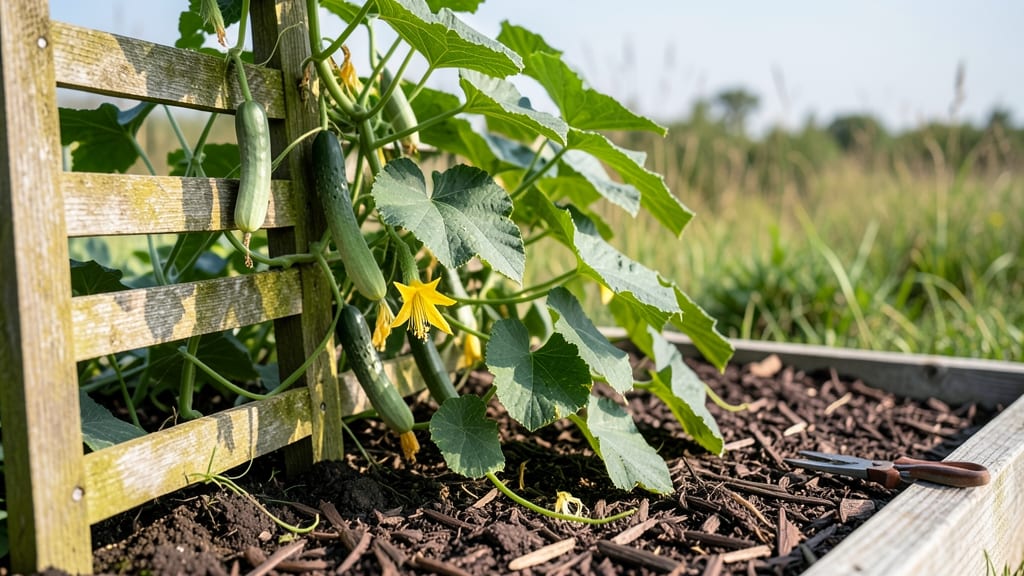
The cucumber plant growing trick that turns your garden into a jungle of vines in weeks is all about speed—skip the slow start, and you’ll get bold harvests faster. 🌱 The trick starts with soil warmth and moisture—cucumbers sprout best when the ground feels like a cozy bath, not a desert.
You'll need a sunny spot with loose, fertile soil that drains well (think crumbly, not compact), plus a way to keep seeds consistently moist. Direct sowing after frost works best—no need for fragile transplants.
Within 5-7 days, you'll see those first green hooks breaking through, and by week 3, vines will be ready to climb. The payoff? 30-day harvests of crisp, sweet cucumbers instead of waiting months. With proper spacing (12-24 inches apart) and trellising, you'll avoid mildew and crowded vines.
The key is patience—those first leaves are fragile, but they set the stage for a prolific summer. Works for both bush and vining types, even in containers. Let's get those seeds in the ground!
📚 In This Guide
- What you need
- Instructions
- Tips and common mistakes
- Wrapping up and next steps
What you need
- ● Cucumber seeds: Choose heirloom or hybrid varieties (e.g., 'Straight Eight,' 'Lemon,' or 'Marketmore'). Buy 5–10 seeds per plant (or pre-started seedlings if short on time).
- ● Seed-starting mix or potting soil: A sterile, well-draining blend (e.g., Pro-Mix or coconut coir) in 3–4 inch pots or seed trays.
- ● Containers or garden bed: For indoor/outdoor starts: 3–4 inch pots (biodegradable options like peat pots are great!).
- ● For direct sowing: A sunny garden bed (6+ hours of sunlight) with loamy, fertile soil (pH 6.0–6.8).
- ● For vertical growing: A trellis or cage (5–6 ft tall) to support vines.
- ● Watering can or spray bottle: A gentle misting nozzle for seeds or a watering can with a fine rose for seedlings.
- ○ Grow lights (optional but helpful): A full-spectrum LED grow light (12–16 hours/day) if starting indoors before last frost.
- ● Gloves and small trowel: For handling soil and planting seeds without fuss.
- ● Plant labels: Waterproof markers to track varieties (especially if growing multiple types!).
- ● Fertilizer: Balanced starter fertilizer (e.g., 10-10-10) or compost to enrich soil.
- ● Low-nitrogen, high-potassium fertilizer (e.g., 5-10-10) for flowering/vining stages.
- ● Mulch: Straw or black plastic to retain moisture and suppress weeds.
- ○ Pruning shears: For trimming vines and encouraging bushier growth (optional but handy!).
- ● Warmth: Cucumbers love heat—wait until soil is at least 60°F (15°C) before planting (or use a heat mat for indoor starts).
- ● Sunlight: 6+ hours of direct sunlight daily (more = faster germination and bigger yields!).
- ● Patience (but not too much!): Germination takes 5–10 days with ideal conditions.
Step-by-step instructions for growing cucumbers from seed
Here’s how to get your cucumber vines off to a flying start—no waiting weeks for germination.
🌱 Step 1: Prep Seeds for Fast Germination
Cucumber seeds germinate fastest when prepped right. Soak them in warm water for 12 hours—this softens the seed coat and speeds up sprouting. I use a small bowl with enough water to cover the seeds by an inch. After soaking, drain them and wrap in a damp paper towel. Place the towel in a sealed plastic bag and tuck it in a warm spot (75-85°F) for 24 hours. You’ll see tiny white sprouts peeking out—that’s your cue they’re ready to plant.
Don’t skip this step. Pre-soaking cuts germination time in half, from 7-10 days to just 3-5 days. If your kitchen runs cooler, try a seedling heat mat—it keeps the soil warm and gives those seeds the boost they need.
🪴 Step 2: Plant in Warm, Well-Draining Soil
Fill your containers or garden bed with loose, fertile soil mixed with compost. Cucumbers hate soggy roots, so add a handful of perlite or vermiculite to improve drainage. Plant the pre-sprouted seeds ½ inch deep, spacing them 12 inches apart if growing in rows or 2-3 seeds per hill for bush varieties. Gently press the soil around them—just enough to hold them in place.
Here’s the thing—cucumbers hate cold soil. If planting outside, wait until the soil is at least 60°F before sowing. Use black plastic mulch to warm the soil faster if your spring is slow to heat up. Water lightly after planting, keeping the soil damp but not soaked.
☀️ Step 3: Provide Warmth and Light for Rapid Growth
Cucumbers need full sun (6+ hours daily) to thrive, but they’ll bolt (flower too soon) if stressed. Start them indoors under grow lights if your climate has cool nights, then transplant after the last frost. Keep seedlings in a warm spot (70-80°F) until they develop 2-3 true leaves—this usually takes 7-10 days after planting.
Watch for leggy growth (long, weak stems). This happens when seedlings stretch toward light. If you see this, move them closer to the light source or rotate the container daily. Strong seedlings have short, stocky stems and dark green leaves—that’s your sign they’re ready for the garden.
💧 Step 4: Water Deeply and Keep Soil Consistent
Once cucumbers start vining, water them deeply 1-2 times per week, aiming for 1 inch of water total. Let the top 1-2 inches of soil dry out between waterings—this prevents blossom-end rot and powdery mildew. I use a soaker hose to keep leaves dry, which cuts down on fungal diseases. Mulch around plants with straw to retain moisture and keep roots cool.
Here’s a pro tip: Water in the morning so foliage dries quickly. Wet leaves at night invite pests and diseases. You’ll know your watering is right when the soil feels damp 2 inches down but not soggy at the surface.
✂️ Step 5: Train Vines and Harvest for Continuous Production
Cucumbers need support—trellises, cages, or stakes keep vines off the ground and improve air circulation. Train vines by gently weaving them through the trellis as they grow. Prune side shoots (suckers) that form in the leaf axils to direct energy to fruit production. Harvest when cucumbers are 6-8 inches long for the best flavor—this encourages more flowers and fruit.
Real talk: If you let cucumbers get too big, the plant thinks it’s done and stops producing. Check vines every 2-3 days during peak season. A well-maintained cucumber plant can yield 20-30 cucumbers in a single season—just keep harvesting!
Tips & tricks for growing thriving cucumber vines
Here's how to turn those 12 hours of soaking into a bumper crop of healthy cucumber plants.
Seed Prep Secret: When soaking your seeds for the required 12 hours, use filtered or dechlorinated water—tap water's chlorine can inhibit germination. I add a pinch of seaweed extract to the soaking water for extra nutrients. After the 12-hour soak, give them a quick rinse before wrapping in the damp towel to remove any residue that might slow sprouting.
Warmth Hack: Those 24 hours in a warm spot (75-85°F) are non-negotiable for speedy germination. If your kitchen doesn't stay that warm, place the bag near a sunny window during the day and move it to a warm spot at night. A simple solution is to set the bag on top of your fridge—it stays warm without overheating. You'll see those sprouts appear much faster than the 7-10 day average.
Soil Temperature Check: Before planting, test your soil temperature with a soil thermometer—it should be at least 60°F. If it's cooler, wait or use black plastic mulch to warm it up. I've found that planting in warmed soil cuts down on transplant shock and gets those vines growing faster. The roots will thank you for not starting them in cold ground.
Lighting Strategy: For Step 3's 7-10 day seedling stage, position grow lights just 2-3 inches above the seedlings. Rotate the containers daily so all sides get even light, preventing that leggy growth. I keep mine on a 16-hour light cycle to simulate summer days—this gives you stronger, stockier plants ready for transplanting in no time.
Pro Tips for Cucumber Plant Growing
- Here's how to turn those 12 hours of soaking into a bumper crop of healthy cucumber plants.
- Seed Prep Secret: When soaking your seeds for the required 12 hours, use filtered or dechlorinated water—tap water's chlorine can inhibit germination.
- Warmth Hack: Those 24 hours in a warm spot (75-85°F) are non-negotiable for speedy germination.
Frequently asked questions
Got questions about growing cucumbers like a pro? Here are some of the most common ones—plus quick, actionable answers to keep your vines thriving!
How long does it take for cucumber seeds to germinate?
With the right conditions (warm soil, 70–90°F, and moisture), cucumber seeds typically sprout in 3–10 days. Speed up germination by soaking seeds in warm water for 4–6 hours before planting. If soil stays too cool (<60°F), germination can stall for weeks—so use a heat mat if needed!
Why aren’t my cucumber plants growing fast?
Slow growth often means one or more of these: cool temps (cucumbers love heat!), poor soil (amend with compost), or lack of sunlight (they need 6–8+ hours daily). Check for pests like aphids too—spray with neem oil if you spot them. Overcrowding can also stunt vines, so thin seedlings to 12–24 inches apart.
Can I grow cucumbers in containers instead of a garden?
Choose large containers (at least 5 gallons) with drainage holes and fill with well-draining potting mix. Trellis varieties (like ‘Straight Eight’) save space by growing vertically. Just ensure containers get full sun and water regularly—container soil dries out faster than garden beds.
What’s eating my cucumber leaves, and how do I stop it?
Common culprits include cucumber beetles (yellow/orange striped), squash bugs (flat, gray), or deer (if you’re in a rural area). For beetles, handpick them or use row covers. For squash bugs, crush egg clusters (tiny white ovals on leaves). Deer? Try fencing or plant repellents like marigolds nearby.
How soon after planting can I harvest cucumbers?
Most cucumber varieties are ready to harvest in 50–70 days from planting, depending on the type. Pickling cucumbers (like ‘Boston Pickling’) mature in ~50 days, while slicing types (like ‘Marketmore’) take ~60–70 days. Harvest when firm and bright green—don’t let them yellow or turn bitter! Regular picking encourages more production.
Pro Tip:
If your cucumbers taste bland, they might be underwatered or over-fertilized with nitrogen (too much leafy growth, few fruits). Balance with phosphorus-rich fertilizer (like bone meal) at planting time to boost flowering and fruiting.
Wrapping up and next steps
Growing thriving cucumber plants is all about patience, the right conditions, and a little know-how! With these fast germination hacks—like soaking seeds, maintaining warmth, and providing proper support—you’ll be well on your way to a bountiful harvest. 🌱
Now that you’re armed with the best practices, it’s time to roll up your sleeves and get planting! Start small, experiment with these tips, and soon you’ll be enjoying crisp, homegrown cucumbers straight from your garden. Happy growing! 🌿