
Diseases
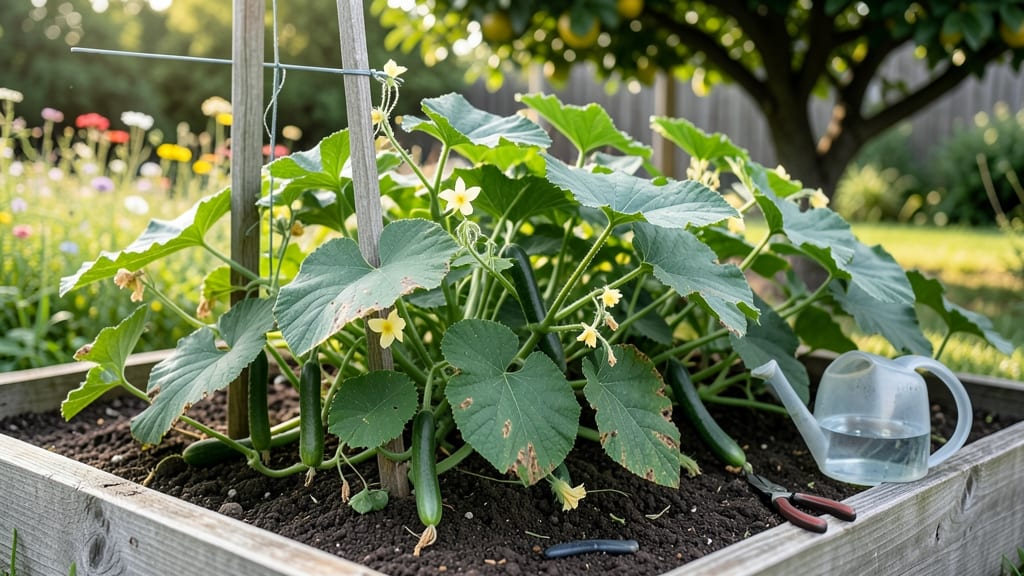
Those unsightly brown lines on your cucumbers aren’t just cosmetic—they’re a fungal infection called anthracnose, and it spreads fast if you ignore it. 🌱 I’ve seen healthy vines turn into a sad, spotted mess in just a few days, but the good news?
You can stop it in its tracks with three simple steps that don’t require fancy tools or chemicals. The problem starts when spores splash onto leaves during rain or watering, then thrive in warm, humid conditions.
Overcrowded plants make it worse by trapping moisture, while old plant debris in the soil gives the fungus a permanent home. The brown lines? Those are the telltale signs of fungal spots eating away at your cucumber’s ability to photosynthesize—and soon, you’ll see fewer fruits and weaker vines.
Here’s the game-changer: remove infected leaves immediately, space your plants for airflow, and treat them with a copper fungicide or neem oil spray (I’ve had the best luck with neem—it’s organic and works fast).
Within a week, new growth will push through, and your cucumbers will bounce back stronger than ever. The key is acting early—once the fungus gets a foothold, it’s harder to reverse. But with this approach, you’ll save your plants, protect your harvest, and keep your garden thriving all season long.
Trust me, your future cucumbers will thank you.
Why it happens
Brown lines creeping across your cucumbers aren’t just unsightly—they’re a sign of stress or infection. Let’s break down the key culprits behind these unsavory marks, so you can tackle them head-on. Whether it’s environmental factors or hidden pathogens, knowing the cause is half the battle.
Cucumbers thrive in consistent conditions, and sudden swings in temperature or humidity can trigger stress responses, including brown streaks. Here’s why:
- Cold Stress: When nighttime temps drop below 50°F (10°C), cucumbers struggle to absorb nutrients properly. This leads to oxidative stress, causing brown discoloration along the veins or fruit surface.
- Heat Stress: Temperatures above 90°F (32°C) for prolonged periods can scorch the fruit’s skin, resulting in sunburn-like brown lines. High heat also speeds up ethylene production, a plant hormone that accelerates aging and browning.
- Humidity Extremes: Low humidity (<30%) dries out the fruit, making it vulnerable to cracks and brown streaks. Conversely, high humidity (>80%) without airflow promotes transpiration imbalances, leading to uneven water uptake and discoloration.
💡 Pro Tip: Use a thermometer/hygrometer to monitor conditions. Aim for 70–85°F (21–29°C) days and 60–70°F (15–21°C) nights, with 40–60% humidity and good airflow.
Brown lines often signal fungal diseases that thrive in moist, warm conditions. Two common offenders:
| Disease | How It Starts | Brown Line Clues |
|---|---|---|
| Alternaria Leaf Spot | Spores land on leaves/fruit, germinate in wet conditions, and infect through wounds or natural openings. | Dark brown to black concentric rings (like bullseyes) on fruit, often with yellow halos. |
| Gummy Stem Blight (Didymella) | Spreads via rain splashes or contaminated tools. Thrives in humid, rainy weather. | Sunken, brown streaks that ooze gummy sap when pressed. Often starts at the stem. |
🔥 Warning: These fungi persist in soil and plant debris. Remove infected fruit immediately and sterilize pruners with 70% isopropyl alcohol.
Water is life for cucumbers—but improper hydration can backfire spectacularly. Here’s how:
- Overwatering: Soggy soil drowns roots, cutting off oxygen and triggering anaerobic conditions. This leads to brown, water-soaked streaks as cells die from lack of oxygen.
- Underwatering: Shallow watering causes uneven moisture distribution. Roots compete for water, leaving parts of the fruit dry and brown along the veins.
- Inconsistent Watering: Drought followed by sudden soaking causes cellular shock, leading to cracking and brown lines as the fruit expands rapidly.
🌡️ Ideal Fix: Water deeply 1–2 times per week (1–1.5 inches per week), using drip irrigation to keep foliage dry. Mulch with straw to retain moisture evenly.
Cucumbers are heavy feeders, and deficiencies—especially in calcium, magnesium, or boron—can manifest as brown lines. Here’s the breakdown:
- Calcium Deficiency (Blossom End Rot’s Cousin):
- Brown, leathery patches along the fruit’s surface, often near the stem.
- Caused by poor calcium uptake due to high nitrogen, dry soil, or root damage.
- Magnesium Deficiency (Interveinal Chlorosis):
- Brown lines between veins (starting at the edges) as chlorophyll breaks down.
- Common in alkaline soils or when potassium/nitrogen outcompete magnesium.
- Boron Deficiency:
- Brown, corky or cracked areas on the fruit, often with deformed growth.
- Boron helps cell wall formation—without it, cells weaken and brown.
💪 Quick Remedies:
- Add crushed eggshells (calcium) or Epsom salt (magnesium) to soil.
- Use a balanced fertilizer (10-10-10) with micronutrients.
- Avoid over-fertilizing with nitrogen—it starves other nutrients.
Fixing Brown Lines on Cucumbers
Brown lines or spots on your cucumbers can be frustrating, but the good news is that most issues are fixable with the right approach. Below, we’ve mapped out practical solutions tailored to the root cause, along with prevention tips to keep your plants healthy.
Whether it’s fungal pressure, environmental stress, or physical damage, these steps will help you restore your cucumbers to their crisp, blemish-free glory—fast!
If the brown lines are spreading, darkening, or accompanied by yellowing leaves, you’re likely dealing with a fungal disease like Alternaria or Septoria leaf spot. Act quickly to stop the spread!
🔥 Step 1: Remove Affected Leaves & Fruit
- 🍃 Snip off any leaves or cucumbers showing brown spots immediately—don’t compost them (fungi can survive). Toss them in the trash or burn them.
- 👨🍳 Prune with sterilized scissors (wipe with rubbing alcohol between cuts) to avoid spreading spores.
🍳 Step 2: Apply a Fungicide
- 💡 Organic option: Use a copper fungicide (like Cupric Hydroxide) or a baking soda spray (1 tsp baking soda + 1 quart water + a drop of dish soap). Spray early in the morning on dry leaves to prevent re-infection.
- 🌡️ Chemical option: For severe cases, a fungicide with chlorothalonil (like Daconil) works fast. Follow label instructions carefully.
⏰ Step 3: Improve Airflow & Reduce Humidity
- 🌬️ Space plants 12–18 inches apart to allow airflow.
- 💨 Avoid overhead watering—use a drip irrigation system or water at the base in the early morning so leaves dry quickly.
- 🌞 Increase sunlight—fungi thrive in shady, damp conditions. If possible, move plants to a sunnier spot (6+ hours of direct sun).
🎯 Prevention for Next Season:
- ✨ Rotate crops—don’t plant cucumbers (or other cucurbits like squash) in the same spot for 3+ years.
- 🌱 Start with disease-resistant varieties like ‘Straight Eight’ or ‘Lemon Cucumber’.
- 🔥 Solarize soil in late summer by covering beds with clear plastic for a week to kill fungal spores.
If the brown lines appear only on sun-exposed sides and look dry or papery, your cucumbers are suffering from heat or sun scorch. This isn’t a disease—it’s a physical stress response to too much direct sun.
🍳 Step 1: Provide Shade Cloth
- 🌿 Install shade cloth (30–50% coverage) if temperatures frequently exceed 90°F (32°C).
- 🌞 Train vines to grow upward (on a trellis) to reduce direct sun exposure on fruits.
💡 Step 2: Water Deeply & Consistently
- 💧 Water at the base (not leaves) early in the day to keep soil moist but not soggy.
- 🌱 Mulch with straw or grass clippings to retain moisture and cool roots.
⏰ Step 3: Harvest Early & Often
- 🍉 Pick cucumbers frequently—overripe fruits are more prone to scorch.
- 🥒 Choose heat-tolerant varieties like ‘Marketmore 76’ or ‘Poona Kheera’ if you live in a hot climate.
🎯 Prevention Tips:
- 🌡️ Plant in spring or fall when temps are milder (avoid peak summer heat).
- 💨 Use reflective mulch (like silver plastic) to bounce back some sunlight.
If the brown lines look ragged, uneven, or like tiny punctures, your cucumbers may have been physically damaged by hail, insects, or rough handling.
🍳 Step 1: Inspect for Pests
- 🐜 Check for cucumber beetles, aphids, or slugs—they can create small wounds that turn brown.
- 💡 Spray with neem oil (1 tbsp neem oil + 1 quart water + a drop of soap) to deter pests.
- 🌱 Set up beer traps for slugs or use diatomaceous earth around plants.
🔥 Step 2: Protect from Hail & Wind
- 🌪️ Use row covers if hail or strong winds are forecasted.
- 🌿 Train vines away from windy areas with sturdy trellises.
⏰ Step 3: Handle Gently When Harvesting
- 🥒 Pick cucumbers with care—avoid twisting or pulling; use pruners for larger fruits.
- 🍉 Store harvested cucumbers in a cool, dry place (not the fridge—it makes them mealy!).
🎯 Prevention Tips:
- 🌱 Choose bush varieties if your garden is exposed to wind.
- 💡 Monitor weather forecasts and cover plants in advance of storms.
Not all brown lines are harmful! If the spots are superficial, dry, and not spreading, they might just be sunburn or minor blemishes.
In this case: - 🥒 Harvest early—young cucumbers are less prone to cosmetic damage. - 🍉 Store in a cool, dark place (like a pantry) to slow down further browning. - 🥗 Use in cooking—blemishes don’t affect taste! Try pickling or slicing them for salads.
Final Tip: 💡 Act fast! The sooner you address brown lines—whether fungal, environmental, or physical—the easier it is to save your crop. With these solutions, your cucumbers will be back to their fresh, vibrant selves in no time! 🥒✨
Frequently asked questions
Are brown lines on cucumbers always a sign of disease?
Not necessarily! While fungal infections like anthracnose often cause brown lines, they can also result from heat stress (sun scorch), physical damage (hail or insect wounds), or even nutrient deficiencies. Always check for spreading, darkening spots or oozing sap—these are red flags for disease. Superficial, dry lines are often harmless cosmetic issues.
How can I tell if my cucumbers have anthracnose vs. sunburn?
Anthracnose brown lines appear as dark, sunken spots that often ooze gummy sap when pressed, while sunburn looks like dry, papery patches only on sun-exposed sides. Fungal spots also spread over time, whereas sunburn stays static. Check the underside of leaves—anthracnose often shows up there first.
Will removing infected leaves stop the spread of brown lines?
Yes! Removing infected leaves immediately breaks the fungal cycle by eliminating spore sources. Always sterilize your pruners with rubbing alcohol between cuts, and avoid composting infected plant material. For severe cases, combine pruning with a copper fungicide spray for best results.
Can I still eat cucumbers with brown lines?
If the brown lines are superficial and dry (like sunburn), they’re safe to eat—just peel affected areas. However, if the spots are sunken, oozing, or spreading (fungal infection), remove those cucumbers immediately. Fungal spores can contaminate healthy fruit through contact, so don’t risk it!
How do I prevent brown lines next growing season?
Start with crop rotation (don’t plant cucumbers in the same spot for 3+ years), choose disease-resistant varieties, and improve airflow by spacing plants properly. Use drip irrigation instead of overhead watering, and apply mulch to regulate soil moisture. Solarizing your soil in late summer also kills fungal spores.