
Planting
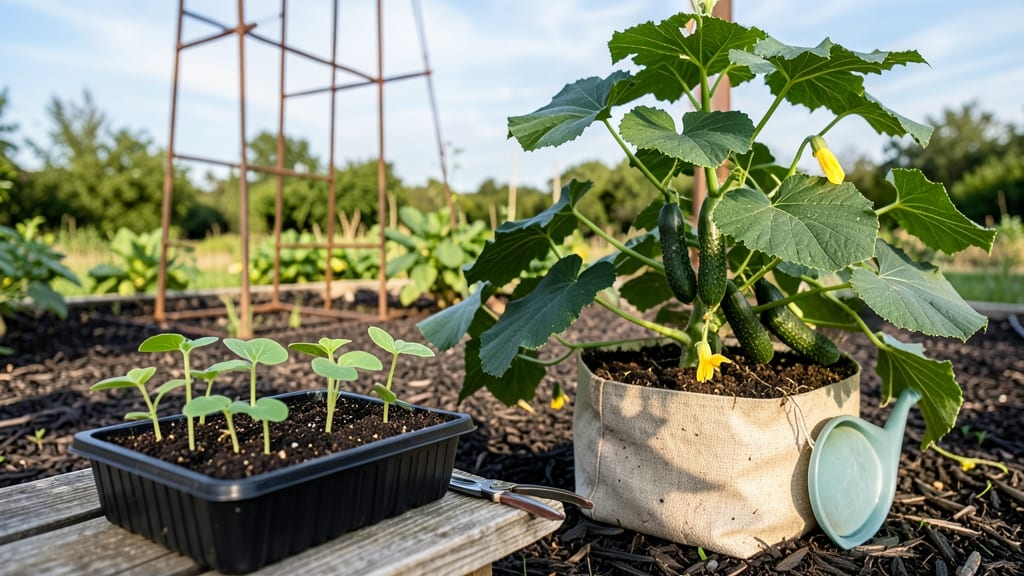
Planting cucumbers the right way means bushier vines, bigger yields, and fewer pests—and it starts with a trellis. 🌱 I’ve tried every method, from sprawling hills to vertical trellises, and the trellis approach cuts down on disease, improves airflow, and makes harvesting a breeze.
The secret isn’t just in the planting; it’s in how you train the vines from day one. You’ll need well-draining soil mixed with compost (no soggy roots here), cucumber seeds or transplants, a sturdy trellis (4–6 feet tall works best), and some twine or soft ties.
Space plants 12–24 inches apart—closer for bush varieties, wider for vining types—and plant seeds 1 inch deep, two per hole (thin to the strongest seedling later). Sunlight is non-negotiable: 6–8 hours of direct sun is the sweet spot for sweet, crisp cucumbers.
By week three, you’ll see tendrils climbing like crazy, and with proper training, those vines will produce more fruit in less space. The trellis keeps cucumbers off the ground, reducing rot and making them easier to spot (and pick) before they get too big.
Plus, the vertical growth looks stunning in any garden bed. This method works for both bush and vining cucumbers, and it’s especially great for small spaces or containers. Once you try it, you’ll never go back to letting cucumbers sprawl. Ready to transform your harvest?
📚 In This Guide
- What you need
- Instructions
- Tips and common mistakes
- Wrapping up and next steps
What you need
- ● Cucumber seeds: 3–5 seeds per plant (or 1–2 per hole if using transplants). Choose varieties like ‘Straight Eight’ or ‘Marketmore’ for trellising.
- ● High-quality potting soil or compost: 2–3 cubic feet per plant (or a 50/50 mix of garden soil and compost for in-ground planting).
- ● Trellis or support system: Option 1: Bamboo stakes (5–6 ft tall) + jute twine or garden twine (50 ft roll).
- ● Option 2: Metal or plastic trellis netting (4x8 ft panel, 1-inch mesh).
- ● Option 3: DIY A-frame trellis (2x4 lumber, chicken wire, or wire mesh).
- ● Fertilizer: Balanced fertilizer (10-10-10) or compost tea (1 tbsp per plant at planting).
- ● Slow-release organic fertilizer (e.g., worm castings or fish emulsion) for ongoing nutrients.
- ● Garden trowel or transplanting spade (for digging holes).
- ● Pruning shears (for trimming vines and removing suckers).
- ● Watering can or hose with a gentle spray nozzle (cucumbers need 1–2 inches of water weekly).
- ● Gloves (to protect your hands from thorns and soil).
- ● Measuring tape or ruler (to space plants 12–24 inches apart and trellis supports 3–4 feet apart).
- ● Mulch (straw or black plastic) to retain moisture and suppress weeds.
- ● Row covers (floating fabric) to protect young plants from pests.
- ● Plant ties or soft Velcro strips for securing vines to the trellis.
- ● pH test kit (ideal soil pH: 6.0–6.8).
- ● Companion plants like bush beans or marigolds to deter pests.
Step-by-step instructions for planting cucumbers with a trellis
Here's how I grow cucumbers that produce more fruit and stay healthy all season—no more tangled vines or wasted space.
🌱 Step 1: Choose the Right Spot and Prepare the Soil
Cucumbers thrive in full sun with at least 6-8 hours of direct sunlight daily. I always pick a spot that gets morning sun and afternoon shade if possible—this prevents the vines from overheating. Test your soil a week before planting by digging a 6-inch hole and checking if it drains within 2 hours after watering. If it stays soggy, amend with compost or aged manure to improve drainage.
Loosen the soil to a depth of 12 inches with a garden fork, breaking up any compacted layers. Cucumbers have shallow roots, so the top 6 inches should be especially loose. I add a handful of balanced fertilizer (10-10-10) to the planting hole—this gives them a strong start without burning the roots. Avoid fresh manure, as it can scorch young plants.
🪴 Step 2: Install the Trellis and Plant Seeds or Transplants
Set up your trellis before planting—cucumbers grow fast, and you don’t want to disturb the roots later. I use a 5-foot-tall trellis made of sturdy bamboo stakes and twine, positioned 18-24 inches apart for four plants. Plant seeds ½ inch deep and 2-3 inches apart in hills spaced 3-4 feet apart. If using transplants, place them 12 inches apart in the hill and firm the soil gently around the roots.
Water immediately after planting to settle the soil and remove any air pockets around the roots. Keep the soil consistently moist but not soggy—cucumbers need 1-2 inches of water per week, especially during flowering and fruiting. Mulch around the base with straw or shredded leaves to retain moisture and suppress weeds. This also keeps the fruit clean and off the ground, reducing rot.
☀️ Step 3: Train Vines and Maintain the Trellis
As the vines grow, gently guide them up the trellis using soft twine or plant ties. I avoid metal clips, as they can damage the stems. When the vines reach the top of the trellis, let them trail down the sides—this encourages more lateral growth and fruit production. Prune any vines that grow away from the trellis to focus energy on upward growth.
Check the trellis weekly for stability, especially after rain or wind. Loosen any tangled vines carefully to prevent breakage. If you notice yellowing leaves, it’s often a sign of overwatering or nutrient deficiency. In that case, fertilize lightly with a low-nitrogen, high-potassium fertilizer (like 5-10-10) to support fruiting. Harvest cucumbers when they’re 6-8 inches long for the best flavor and to encourage more production.
✂️ Step 4: Prune and Harvest for Continuous Production
Regular pruning keeps the plant focused on producing fruit rather than excessive foliage. Remove any yellow or diseased leaves immediately to prevent spread. I also pinch off the first few flowers that appear—this helps the plant establish stronger vines before flowering heavily. Once the plant is well-established, let the flowers bloom and pollinate naturally (or hand-pollinate if needed in enclosed spaces).
Harvest cucumbers frequently—every 2-3 days during peak production—to encourage more flowers and fruit. Use a sharp pair of pruners or scissors to cut the stem ½ inch above the fruit to avoid damaging the vine. Store harvested cucumbers in the fridge for up to 1 week to keep them crisp. If vines slow down in late summer, give them a final boost with a compost tea or fish emulsion to extend the season.
Tips & tricks for perfect cucumber trellising
These little tricks will help you grow cucumbers that produce like crazy—no more sprawling messes or wasted space.
Soil Test Timing: I test soil drainage a week before planting because cucumbers hate soggy roots. Dig that 6-inch hole and pour water in—if it drains within 2 hours, you're good. If not, mix in compost until it does. The top 6 inches of loose soil is non-negotiable for those shallow roots.
Trellis Stability: Your 5-foot trellis needs to stay upright, especially after rain. I drive bamboo stakes at least 12 inches deep and use heavy-duty twine—not cheap garden twine that stretches. For extra security, tie the trellis to a nearby post or use a second stake on the opposite side. You don't want your vines toppling when they're heavy with fruit.
Watering Strategy: The 1-2 inches of water per week is just a guideline—adjust based on rainfall. I check soil moisture by sticking my finger 2 inches down; if it's dry, water deeply. Morning watering prevents fungal diseases, and mulching with straw keeps moisture locked in while suppressing weeds. Don't skip the mulch—it's your secret weapon for happy cucumbers.
Pruning Insight: When you pinch off those first few flowers, you're actually helping the plant. This forces energy into vine development first. Once the vines hit the top of your trellis, let them trail down—those side branches produce the most fruit. And always use clean, sharp pruners to avoid tearing stems.
Pro Tips for Best Way To Plant Cucumbers
- These little tricks will help you grow cucumbers that produce like crazy—no more sprawling messes or wasted space.
- Soil Test Timing: I test soil drainage a week before planting because cucumbers hate soggy roots.
- Trellis Stability: Your 5-foot trellis needs to stay upright, especially after rain.
Frequently asked questions
Got questions about growing cucumbers like a pro?
Whether you're a first-time gardener or a seasoned green thumb, these answers will help you avoid common pitfalls and maximize your harvest. Let’s dive in!
When is the best time to plant cucumbers?
Cucumbers thrive in warm soil—wait until the average nighttime temperature stays above 50°F (10°C). In most regions, this means planting after the last frost, typically 2–3 weeks after your last spring frost date. For cooler climates, consider using black plastic mulch to warm the soil faster. If you’re in a hot zone, opt for shade cloth to protect young plants from scorching.
How long does it take for cucumbers to grow after planting?
With the right conditions, cucumbers can produce fruit in as little as 50–70 days after planting. However, this depends on the variety—bush types mature faster than vining ones. Expect 10–14 days for sprouts to emerge, followed by 4–6 weeks until the first flowers appear. Consistent watering and trellising speed up the process!
Can I plant cucumbers in containers or do they need a garden?
Cucumbers adapt well to containers, especially bush varieties. Use a 5-gallon pot or larger with drainage holes, and fill it with well-draining potting mix. Vining types need space—opt for a tall, narrow container (at least 12 inches deep) and a trellis. Just ensure they get 6–8 hours of sunlight daily and water regularly.
Why are my cucumber leaves turning yellow or curling?
Yellowing or curling leaves are often signs of overwatering, underwatering, or pests. Check the soil—it should be moist but not soggy. Powdery mildew (white fuzzy spots) or cucumber beetles (chewed leaves) are common culprits. Fix it by:
- Adjusting watering (deep watering 1–2x/week).
- Spraying neem oil for pests.
- Improving airflow with proper spacing.
Should I prune my cucumber plants for better growth?
Light pruning can boost airflow and fruit production, but cucumbers don’t need heavy pruning. Remove yellow leaves, dead vines, or excessive side shoots to redirect energy to fruit-bearing areas. For trellised plants, trim overly long vines to encourage bushier growth. Avoid pruning flowers or small fruits—they’re your future harvest!
Wrapping up and next steps
Planting cucumbers the right way—especially with a trellis—can transform your garden into a bushier, healthier, and more productive space! 🌱 By choosing the perfect spot, prepping the soil, and supporting your vines, you’ll enjoy fewer pests, better air circulation, and an abundance of crisp, homegrown cucumbers.
The key is patience and consistency—your vines will reward you with vigor and flavor.
Now that you’re armed with the best way to plant cucumbers, it’s time to grab your gloves and get growing! Start small if you’re new, or expand your trellis system for a bigger harvest. Happy planting—and may your cucumbers be plentiful! 🥒✨