
Diseases
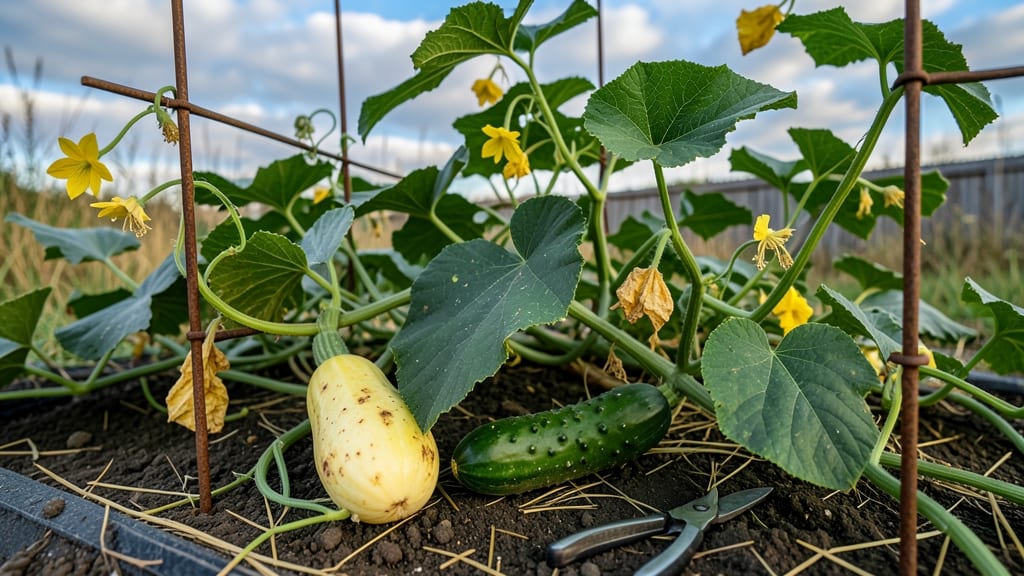
Your cucumbers turning yellow isn’t a death sentence—it’s a signal your plants need help. 🌱 I’ve seen this happen with overripe fruit, fungal infections, and even hidden nutrient problems, and there’s always a fix. The key is identifying the root cause before the whole vine gives up.
Overripe cucumbers are the most common culprit—yellow skin means they’ve outgrown their prime. But if the leaves also yellow or the stems wilt, you’re likely dealing with powdery mildew or bacterial wilt.
Both spread fast in humid conditions, so act quickly: prune affected areas, improve airflow, and spray with neem oil or baking soda solution.
Nutrient deficiencies show up as yellowing between leaf veins (nitrogen) or at the edges (potassium). A balanced fertilizer or compost boost usually turns things around in 2-3 weeks. For future harvests, focus on proper spacing, consistent watering at the base, and regular monitoring—catching issues early makes all the difference.
Prevention starts with healthy soil and smart spacing. Mulch to retain moisture, rotate crops yearly, and avoid overhead watering. With these adjustments, your next cucumber harvest will stay crisp, green, and productive from vine to table.
Why it happens
If your once-vibrant green cucumbers are turning yellow, don’t panic—it’s usually a sign that something specific (and often fixable) is happening in your garden. Yellowing cucumbers can stem from environmental stress, nutrient imbalances, or even plant diseases.
Let’s break down the most common culprits and what your cucumbers are really trying to tell you.
🌡️ Overripe or Over-Mature Fruit
Cucumbers, like many fruits, naturally transition from green to yellow as they mature. This is especially true for varieties like Lemon cucumbers, which are bred to turn yellow when ripe. However, even standard green cucumbers can yellow if left on the vine too long.
The process is driven by ethylene gas, a plant hormone that triggers ripening and eventual senescence (aging).
If your cucumbers are firm but yellowing, they may simply be overripe. Check the size and texture—soft, mushy cucumbers are past their prime, but firm yellow ones might still be edible (though often bitter or seedy). Actionable fix:
- 🔥 Harvest regularly: Pick cucumbers every 2–3 days to prevent overripening. Use sharp pruners or scissors to avoid damaging the plant.
- 🌱 Choose the right variety: If you love yellow cucumbers, opt for heirloom or lemon varieties like Lemon Cucumber or Bush Champion, which are bred for this trait.
- ⏰ Time your planting: Shorter-season varieties (like Straight Eight) ripen faster and are less likely to yellow prematurely.
💧 Water Stress or Irregular Watering
Cucumbers are thirsty plants—they need consistent moisture to stay lush and green. When they don’t get enough water (or too much), their cells struggle to maintain turgor pressure, leading to yellowing leaves and fruit. This is often confused with ripening, but the yellowing will be accompanied by:
- 🍃 Wilting or crispy leaves (underwatering)
- 🌧️ Yellowing between leaf veins (overwatering or poor drainage)
- 🌡️ Blossom-end rot (a brown, sunken spot on the fruit’s tip, caused by calcium deficiency from uneven watering)
The science behind this: Water stress disrupts the plant’s photosynthesis and nutrient uptake, particularly nitrogen and potassium. Without enough water, chlorophyll (the green pigment) breaks down, turning leaves and fruit yellow. Actionable fix:
- 💧 Water deeply and consistently: Aim for 1–2 inches of water per week, delivered at the soil level (not the leaves) to prevent fungal diseases.
- 🌱 Mulch heavily: Use straw or shredded leaves to retain moisture and regulate soil temperature.
- 🔄 Check your soil: Sandy soil drains too quickly; amend with compost to improve water retention.
🍄 Fungal Diseases or Bacterial Infections
If your cucumbers are yellowing unevenly, with spots, lesions, or a slimy texture, a pathogen is likely at work. Two common culprits are:
Disease
Symptoms
Cause
Powdery Mildew
Yellow patches on leaves and fruit, followed by a white, powdery coating. Fruit may develop yellow, sunken areas.
Fungal spores thrive in high humidity (70%+) and poor airflow. Common in crowded or shaded plants.
Alternaria Leaf Spot
Dark, concentric rings on leaves and fruit, often with yellow halos. Fruit may yellow prematurely and rot.
Fungal spores spread in wet conditions and through contaminated tools or seeds.
Bacterial Soft Rot
Yellow, mushy fruit with a foul odor. Often starts at the blossom end and spreads rapidly.
Bacteria (Erwinia spp.) enter through wounds (like insect bites or harvest cuts) and thrive in warm, wet conditions.
The yellowing in these cases is a secondary symptom—the real damage is happening internally. Fungal diseases block chlorophyll production, while bacterial infections cause cell death. Actionable fix:
- 🌿 Improve airflow: Space plants 12–24 inches apart and prune foliage to let light and air circulate.
- 💦 Water in the morning: Avoid evening watering to reduce humidity levels overnight.
- 🧪 Preventative sprays: Use neem oil or baking soda spray (1 tbsp baking soda + 1 quart water + a drop of dish soap) every 7–10 days.
- 🗑️ Remove infected plants: If disease is severe, pull and destroy affected plants (don’t compost them) to prevent spread.
🌱 Nutrient Deficiencies or Imbalances
Yellowing cucumbers can also signal a nutrient deficiency, particularly if the yellowing starts at the older leaves (a sign of nitrogen issues) or appears interveinally (a sign of magnesium or iron problems). Here’s what’s likely missing:
Nutrient
Symptoms
Solution
Nitrogen (N)
Older leaves turn yellow first, then brown and crisp. Stunted growth.
Apply blood meal or compost tea. Side-dress with well-rotted manure.
Magnesium (Mg)
Yellowing between leaf veins (interveinal chlorosis), starting on older leaves.
Apply Epsom salt (1 tbsp per gallon of water) as a foliar spray or soil drench.
Iron (Fe)
Young leaves turn yellow while veins stay green. Common in alkaline soil (pH >7.0).
Lower soil pH with sulfur or peat moss. Use chelated iron supplements.
Potassium (K)
Yellowing or brown edges on leaves, weak stems, and poor fruit development.
Add wood ash or potassium sulfate. Banana peels (composted) can help too!
Yellow fruit itself is rare in nutrient deficiencies (it’s usually leaves first), but severe
Fixing Yellow Cucumbers: Step-by-Step Solutions
Yellowing cucumbers can be frustrating, but the good news is that most causes have simple fixes—if you act quickly! Below, we’ve mapped out practical, actionable solutions for the top reasons your cucumbers are turning yellow, along with prevention tips to keep your next harvest vibrant and crisp.
Let’s get your plants back on track!
Signs: Yellowing starts at the stem end, fruit feels soft or mushy, or leaves wilt despite damp soil.
🔥 Fix It Fast: Harvest or Prune
- Harvest Immediately – If the cucumber is just overripe (not rotten), pick it and use it in salads, pickles, or stir-fries today. Overripe cucumbers won’t turn green again, but they’re still edible!
- Check Watering Habits – Yellowing from excess water often means the roots are suffocating. Stop watering for 2–3 days to let the soil dry out slightly, then resume with deep, infrequent watering (1–1.5 inches per week).
- Improve Drainage – If your soil stays soggy, amend it with compost or perlite to boost aeration. Raise containers or plant in well-draining soil to prevent root rot.
💡 Prevention Tips:
- Water at the base in the morning to reduce fungal risks.
- Use mulch (straw or grass clippings) to retain moisture without drowning roots.
- Pick cucumbers regularly—overcrowded vines produce smaller, faster-yellowing fruit.
Signs: Yellow patches on leaves, fruit turns pale yellow or develops sunken spots, wilting during peak sun.
🍳 Cool Them Down
- Provide Shade Cloth – If temps hit above 90°F (32°C), drape 30–50% shade cloth over vines for 2–4 hours during the hottest part of the day.
- Water Deeply in the Morning – A soaker hose or drip irrigation keeps roots cool.
Avoid wetting leaves to prevent mildew. 3. Harvest Early – Pick cucumbers when they’re firm and dark green (not waiting for full size) to reduce stress on the plant.
🌡️ Prevention Tips:
- Plant in partial shade if you live in a hot climate (e.g., late afternoon shade).
- Choose heat-tolerant varieties like ‘Straight Eight’ or ‘Lemon Cucumber’ for warmer regions.
- Mulch heavily with straw to keep soil temps stable.
Signs: Yellow leaves with white powdery spots (powdery mildew) or yellow, oily patches (downy mildew). Fruit may also yellow prematurely.
👨🍳 Treat and Prevent Spread
- Remove Infected Leaves/Fruit – Snip off yellowed leaves and toss them in the trash (not compost). This stops spores from spreading.
- Spray with Baking Soda Mix – Combine 1 tsp baking soda + 1 tbsp oil + 1 tsp soap per gallon of water. Spray every 7–10 days for powdery mildew.
- Use Fungicides – For severe cases, apply neem oil or copper fungicide (follow label instructions).
- Improve Airflow – Prune vines to 12–18 inches apart and stake them to reduce humidity around leaves.
✨ Prevention Tips:
- Water at the base (never overhead).
- Rotate crops—don’t plant cucumbers in the same spot next year.
- Start with disease-resistant seeds (e.g., ‘Armenian’ or ‘Tyria’ varieties).
Signs: Yellowing between leaf veins (chlorosis), stunted growth, or small, bitter cucumbers.
🥗 Boost Nutrients Naturally
- Test Your Soil – A DIY soil test kit (or lab test) can confirm if you’re low in nitrogen, magnesium, or iron.
- Add Compost or Fertilizer – - For nitrogen (leaf yellowing): Use alfalfa meal or a balanced 10-10-10 fertilizer. - For magnesium (yellow patches): Sprinkle Epsom salt (1 tbsp per gallon of water) every 2 weeks. - For iron (yellow new leaves): Apply chelated iron or use fish emulsion.
- Use Organic Matter – Mix well-rotted manure or worm castings into the soil before planting next season.
🎯 Prevention Tips:
- Side-dress plants with compost mid-season for a nutrient boost.
- Avoid over-fertilizing—too much salt can burn roots.
- Monitor pH (ideal: 6.0–6.8 for cucumbers).
Signs: Yellowing leaves with holes, chewed edges, or sticky residue (aphids, cucumber beetles).
🔪 Pest Control in Action
- Handpick Beetles – Look under leaves for striped cucumber beetles and drop them in soapy water.
- Spray Soap Solution – Mix 1 tbsp mild soap per quart of water and spray early in the morning.
- Use Row Covers – Protect young plants with floating row covers to block pests.
- Attract Beneficial Insects – Plant marigolds or dill nearby to draw ladybugs and lacewings.
💡 Prevention Tips:
- Rotate planting locations to disrupt pest life cycles.
- Clean up debris after harvest to remove hiding spots.
- Plant trap crops like radishes to lure pests away.
Not every yellow cucumber is a lost cause! Revive if: ✅ The plant still has green leaves and new growth. ✅ The yellowing is only on fruit (harvest and compost the rest). ✅ You’ve ruled out fungal diseases (no powdery spots or rot).
Replace if: ❌ Leaves are completely yellow and crispy (plant is dying). ❌ Fruit is mushy or moldy (disease spread is likely). ❌ Roots smell rotten when checked (root rot is irreversible).
Final Pro Tip: 🌟 Keep a garden journal to track watering, fertilizing, and pest issues. Next season, you’ll spot problems before they turn your cucumbers yellow!
Frequently asked questions
Are my cucumbers still safe to eat if they're yellow?
It depends! Firm, yellow cucumbers from overripeness are still edible but may taste bitter or seedy. Use them in cooked dishes like stir-fries or pickles. However, if the yellowing comes with soft spots, mold, or foul smells, toss them—they’ve gone bad. Always check for mushiness or sliminess before eating.
Why are my cucumbers yellow but the leaves look healthy?
This usually means your cucumbers are overripe or a nutrient deficiency is affecting fruit more than leaves. Check for yellowing between leaf veins (magnesium deficiency) or brown edges (potassium). Test your soil and add Epsom salt (for magnesium) or wood ash (for potassium) if needed.
Can I save my cucumber plant if the leaves are yellow?
Maybe! If only the older leaves are yellow (nitrogen deficiency), your plant can recover with compost or blood meal fertilizer. But if new leaves are yellow (iron deficiency) or leaves have white powdery spots (mildew), act fast—prune infected areas and treat with neem oil or baking soda spray.
How do I tell if my cucumbers are yellow from heat stress vs. disease?
Heat stress causes pale yellowing with crispy leaf edges and wilting during peak sun. Disease (like powdery mildew) shows white powder or oily spots on leaves and fruit. For heat stress, provide afternoon shade; for disease, improve airflow and spray fungicides. Check for other symptoms like wilting or spots to confirm.
Will yellow cucumbers turn green again if I harvest them?
Nope! Once cucumbers turn yellow from ripening, they won’t revert to green. The only way to prevent yellowing is to harvest regularly (every 2–3 days) and choose faster-maturing varieties. If you love lemon cucumbers, plant Lemon Cucumber or Bush Champion varieties—they’re bred to stay yellow when ripe!