
Pests and Diseases
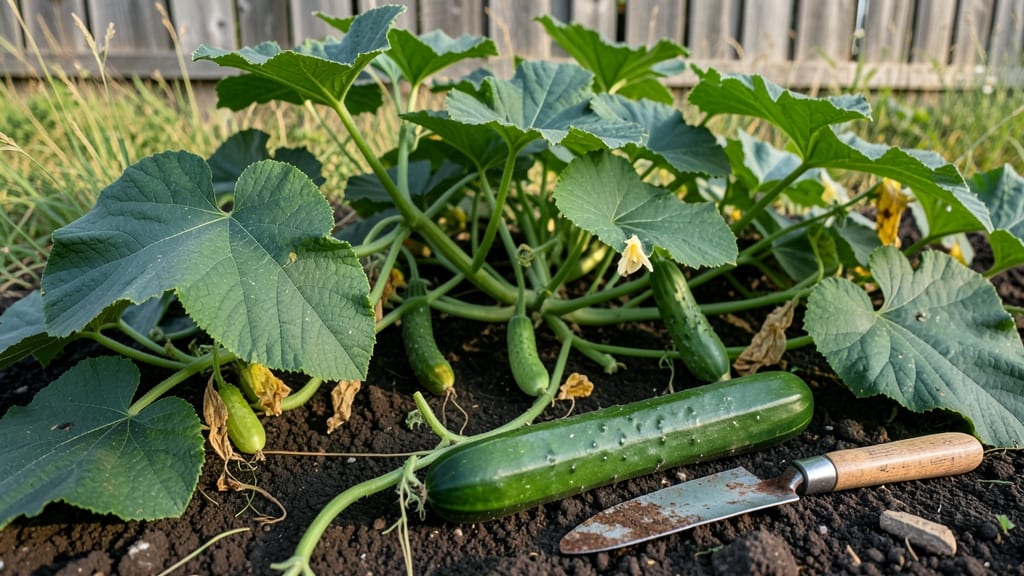
Your cucumbers are fat and yellow because the soil is drowning in water—literally. 🌱 I’ve seen this happen when gardeners overcompensate after dry spells, turning crisp harvests into sad, bloated messes.
The problem isn’t just the water; it’s how it stalls growth, invites rot, and leaves plants struggling to produce anything edible.
Overwatering creates a swampy environment where roots suffocate, and cucumbers swell with excess moisture instead of developing proper texture. Powdery mildew or nitrogen overload can mimic this look, but the real giveaway? Yellowing skin and a mushy center when you slice one open.
The fix starts with letting the soil dry out between waterings—aim for about 1 inch of moisture in the top layer before adding more.
Once you adjust the water, improve airflow by pruning crowded vines and spacing plants 2 feet apart. A balanced fertilizer (low in nitrogen) helps redirect energy to fruit instead of leafy growth. Within a week, you’ll notice firmer cucumbers with that satisfying snap—proof the plant’s back in balance.
This works for both in-ground and container cucumbers, though containers dry faster, so monitor them closely. The key is consistency: too much water now, not enough later. Trust the soil’s cues over a schedule, and your harvest will thank you.
Root Causes Behind Fat, Yellow Cucumbers
If your cucumbers are looking plump but unnaturally yellow, it’s often a sign that something’s off in their growing environment. Let’s break down the most common culprits—each with a clear scientific explanation and actionable fixes.
When cucumbers get too much water, their roots suffocate from lack of oxygen, leading to anaerobic stress. This triggers the plant to produce ethylene (a stress hormone) and break down chlorophyll, turning leaves and fruits yellow.
Overly moist soil also encourages fungal diseases like powdery mildew or root rot, which weaken the plant and cause abnormal fruit development.
Why it happens:
- Excessive irrigation (especially overhead watering) keeps soil soggy.
- Compacted or clay-heavy soil traps water instead of draining it.
- Lack of mulch leads to rapid evaporation and uneven moisture.
Actionable fix:
- Test soil moisture with your finger—water only when the top 1–2 inches are dry.
- Use drip irrigation or soaker hoses to deliver water directly to roots.
- Amend soil with perlite or compost to improve drainage.
Cucumbers that are fat but yellow often suffer from an overabundance of nitrogen. While nitrogen fuels leafy growth, it starves the plant of phosphorus and potassium, which are critical for fruit development.
Yellowing (especially on older leaves) paired with thick, underripe cucumbers is a classic sign of nitrogen burnout.
Why it happens:
- Over-fertilizing with high-nitrogen fertilizers (like blood meal or urea).
- Fresh manure applied too close to planting releases nitrogen too quickly.
- Weak or depleted soil forces plants to compete for nutrients, leading to imbalances.
Actionable fix:
- Switch to a balanced fertilizer (e.g., 5-10-10) or a low-nitrogen organic option like fish emulsion.
- Side-dress with compost or bone meal (high in phosphorus) mid-season.
- Avoid fresh manure—use composted versions instead.
Pests like cucumber beetles, aphids, and spider mites feed on plant sap, disrupting nutrient flow and causing yellowing, stunted growth, and misshapen fruits. Their saliva can also introduce bacterial wilt, a fatal disease that turns vines yellow and wilts them prematurely.
Why it happens:
- Lack of pest barriers (row covers, neem oil applications).
- Weedy or unkempt gardens attract beetles and mites.
- Drought-stressed plants are more vulnerable to infestations.
Actionable fix:
- Handpick beetles early in the morning (they’re sluggish then).
- Spray neem oil or insecticidal soap weekly as a preventive.
- Rotate crops annually to disrupt pest life cycles.
Fungal diseases like powdery mildew and downy mildew thrive in humid conditions, causing yellowing leaves and distorted fruit. Bacterial infections (e.g., angular leaf spot) create water-soaked spots that expand, leading to yellowing and premature fruit drop.
Why it happens:
- Poor air circulation (crowded plants or dense foliage).
- High humidity (especially in greenhouses or shaded areas).
- Contaminated tools or soil spreads pathogens.
Actionable fix:
- Prune plants to improve airflow—remove yellowed or diseased leaves immediately.
- Water at the base (never overhead) to keep foliage dry.
- Apply copper fungicide or baking soda spray (1 tsp baking soda + 1 quart water + a drop of dish soap) preventively.
Cucumbers are warm-season crops—they thrive between 70–90°F (21–32°C). Extreme heat or cold shocks disrupt photosynthesis, leading to chlorophyll breakdown (yellowing) and poor fruit development. Shady spots or late-season chills can also cause cucumbers to swell abnormally before turning yellow.
Why it happens:
- Sudden temperature drops (below 50°F/10°C) stunt growth.
- Intense afternoon sun (above 95°F/35°C) scalds leaves and fruit.
- Insufficient sunlight (less than 6–8 hours/day) weakens the plant.
Actionable fix:
- Use shade cloth (30–50%) during peak summer heat.
- Plant in full sun (6+ hours/day) and choose heat-tolerant varieties (e.g., ‘Straight Eight’ or ‘Marketmore’).
- Extend the season with row covers in early spring or fall.
Cucumbers are mostly self-pollinating, but they rely on vibration (from bees, wind, or even your hand) to trigger fruit set. Without proper pollination, flowers drop, and existing fruits may swell unevenly before turning yellow and bitter.
Why it happens:
- Lack of pollinators (bees or other insects).
- Overuse of systemic pesticides that repel bees.
- Excessive nitrogen leads to more leaves than flowers.
Actionable fix:
- Hand-pollinate by gently shaking plants in the morning or using a small brush to transfer pollen.
- Plant bee-friendly flowers (marigolds, borage) nearby to attract pollinators.
- Avoid systemic neonicotinoids—opt for pyrethrin-based sprays instead.
Quick Fixes for Plump, Yellow Cucumbers
Now that you know the root causes behind those fat, yellow cucumbers—whether it’s overwatering, nutrient overload, or pest stress—let’s roll up our sleeves and get them back to crisp, green perfection. Below are practical, step-by-step solutions tailored to each issue, plus pro tips to keep your plants thriving long-term.
If your soil is soggy and your cucumbers are bloated with yellowing skin, water management is your first priority.
🔥 Step 1: Drain the Excess
- Stop watering immediately for 2–3 days to let the soil dry out slightly. Yellowing from overwatering often resolves within 48 hours if the roots aren’t rotting yet.
- Test soil moisture: Stick your finger 1–2 inches deep.
If it’s damp, wait another day. If it’s bone-dry, water deeply once (see next step).
👨🍳 Step 2: Fix Your Watering Routine
- Water deeply but infrequently: Aim for 1–1.5 inches of water per week (including rainfall), delivered in long, slow sessions (30+ minutes) to encourage deep root growth.
Early morning (6–9 AM) is ideal to reduce fungal risks. - Use the “finger test”: Water only when the top 1–2 inches of soil feel dry.
Overwatering is the #1 killer of cucumbers—better to underwater slightly than drown them. - Upgrade your setup: - Drip irrigation (best for cucumbers) delivers water directly to roots, reducing waste and fungal spores. - Raise beds or containers if your garden floods easily.
Add a 1-inch layer of gravel at the bottom for drainage.
🌱 Step 3: Improve Soil Aeration
- Loosen compacted soil gently with a fork or trowel to help roots breathe. Avoid disturbing roots too deeply—cucumbers have shallow roots.
- Mulch heavily with straw or shredded leaves (2–3 inches) to retain moisture evenly and prevent surface evaporation.
💡 Pro Tip:
If your plants are already wilting or mushy, they may have root rot. Trim away blackened roots, repot in fresh, sterilized soil, and hold off on watering for 5–7 days to let roots recover.
If your cucumbers are fat but mealy with yellow patches, a nutrient imbalance (too much nitrogen, not enough potassium/magnesium) is likely the culprit.
🍳 Step 1: Flush the Soil
- Stop nitrogen-heavy fertilizers (like blood meal or high-first-number fertilizers like 10-5-5). Switch to a balanced or low-nitrogen feed (e.g., 5-10-10 or 3-4-6).
- Flush the soil: Water the plant heavily for 10–15 minutes to leach out excess salts.
Repeat 2–3 times over a week.
🔪 Step 2: Feed for Crispness
Cucumbers need potassium and magnesium for firm texture and green color. Try these: - Epsom salt boost: Mix 1 tablespoon of Epsom salt (magnesium sulfate) in a gallon of water.
Apply once every 2 weeks as a foliar spray or soil drench. - Banana peel tea: Soak 2–3 banana peels in a gallon of water for 24 hours, then use the liquid to water plants.
Bananas are rich in potassium. - Compost tea: Brew 1 cup compost in 5 gallons of water for 24–48 hours, strain, and water plants. Adds microbes and trace minerals without overfeeding.
⏰ Step 3: Adjust Fertilizer Schedule
- Feed lightly: Cucumbers are heavy feeders early on but need less fertilizer as they mature. Reduce applications to every 3–4 weeks once vines are established.
- Avoid fresh manure: It’s too strong and can burn roots.
Use aged compost or worm castings instead.
💡 Pro Tip:
Yellowing between veins? Magnesium deficiency. Yellowing at the edges? Potassium deficiency. Adjust your feed accordingly—no guesswork needed!
If aphids, cucumber beetles, or powdery mildew are the villains, quarantine and treat aggressively to save your crop.
🌡️ Step 1: Isolate and Inspect
- Remove infected leaves (especially yellowed or spotted ones) and dispose of them in the trash (not compost).
- Check undersides of leaves for pests like aphids or spider mites. A strong spray of water can knock them off.
🎯 Step 2: Natural Pest Control
- Neem oil spray: Mix 1 tablespoon neem oil + 1 teaspoon mild soap in a quart of water. Spray early morning or evening to avoid harming bees.
Reapply every 5–7 days. - Row covers: Use floating row covers to block cucumber beetles and squash bugs. Secure edges tightly. - Beneficial insects: Release ladybugs or lacewings (available at garden centers) to eat aphids naturally.
✨ Step 3: Fungal Disease Prevention
- Improve airflow: Prune vines to open up the plant and reduce humidity.
Aim for 12+ inches of space between plants. - Copper fungicide: For powdery mildew, spray with a store-bought copper fungicide (like Bonide Copper Fungicide) every 7–10 days until the issue clears. - Baking soda spray: Mix 1 teaspoon baking soda + 1 tablespoon oil + 1 quart water.
Spray every 7 days to prevent mildew.
💡 Pro Tip:
Prevent future outbreaks by rotating crops—never plant cucumbers (or squash family plants) in the same spot two years in a row.
To keep your cucumbers crisp, green, and productive, follow this maintenance plan: ✅ Soil: Test pH (ideal: 6.0–6.8).
Amend with compost if needed. ✅ Water: Drip irrigation + mulch = happy roots. ✅ Fertilizer: Low-nitrogen, high-potassium feeds (like 5-10-10) every 3–4 weeks. ✅ Pests: Weekly inspections + neem oil as a preventative spray. ✅ Harvest: Pick cucumbers frequently (every 2–3 days) to encourage more production and prevent overripe, yellowing fruits.
Final Thought: Fat, yellow cucumbers are usually a quick fix—just adjust water, balance nutrients, and tackle pests early. With these steps, you’ll be back to harvesting crunchy, vibrant cucumbers in no time! 🥒✨
Frequently asked questions
Why do my cucumbers turn yellow but stay fat?
Fat, yellow cucumbers usually signal overwatering or nutrient imbalances. Too much water suffocates roots, causing yellowing, while excess nitrogen (common in fresh manure) promotes leafy growth at the expense of fruit quality. Check soil moisture—it should dry slightly between waterings.
Can I still eat cucumbers that are fat and yellow?
Yes, but they may be less crisp and more seedy. Overripe cucumbers lose their signature crunch and can develop a bitter taste. If they’re firm and only slightly yellow, they’re still edible—just peel them before eating. For best flavor, harvest when dark green and firm.
How do I tell if my cucumbers are overwatered vs. diseased?
Overwatered cucumbers feel soft and mushy when squeezed, with yellowing skin. Diseased cucumbers (like powdery mildew) often have white powdery spots or water-soaked patches. Check the soil—if it’s soggy, it’s likely water-related. Fungal issues thrive in humid conditions.
Will adjusting my fertilizer fix yellow cucumbers?
If your cucumbers are fat but yellow, they’re likely getting too much nitrogen. Switch to a balanced fertilizer (5-10-10) or low-nitrogen organic options like fish emulsion. Add potassium-rich amendments like banana peels or wood ash to restore balance. Results appear in 1–2 weeks.
Can I save my cucumber plants if they’re already wilting?
Act fast! If wilting is due to overwatering, stop watering immediately and let the soil dry out for 3–5 days. Prune any blackened roots and repot in fresh, well-draining soil. For pests/diseases, remove infected leaves and apply neem oil or copper fungicide. Recovery depends on how far the damage has progressed.