
Plants
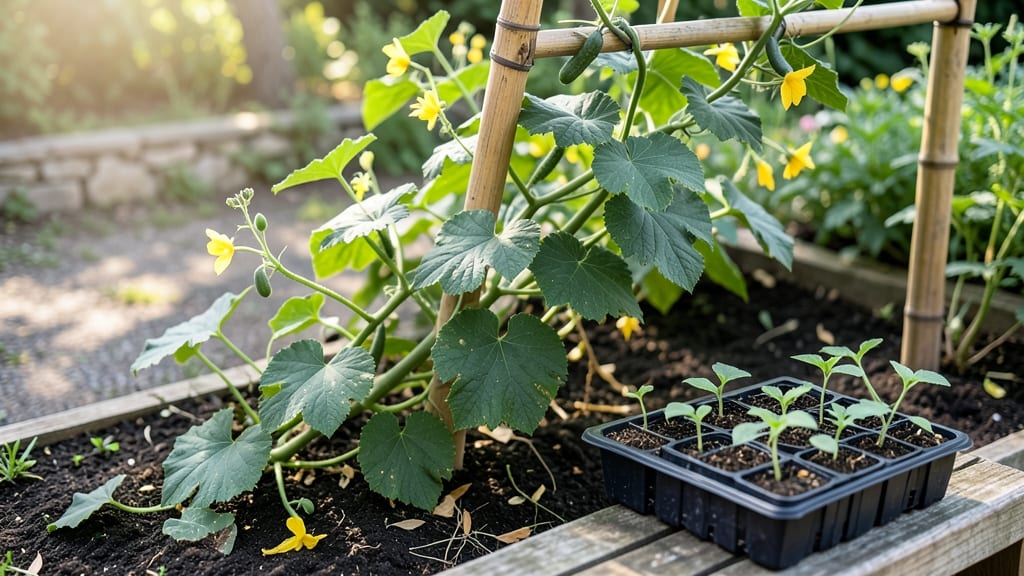
Plant cucumbers in Mississippi when soil temperatures hit 60°F and all frost risk has passed — typically late February to early April for spring or July to early August for fall harvests.
Mississippi gardeners know timing is everything — plant too early, and frost will wipe them out; too late, and you’ll miss peak summer harvests. Mastering the frost-free timeline for your specific zone can mean the difference between a handful of bitter cucumbers and a bountiful vine-covered trellis.
In 8a-9a zones, where most of the state falls, cucumbers thrive with 6-8 hours of sun daily and consistent moisture. The key is waiting until the soil warms enough to support rapid growth, which usually lands in late March for most regions.
Below, I’ll break down the exact frost-free dates by zone, how to prep your soil for maximum yields, and the best varieties to beat Mississippi’s heat and humidity. You’ll also learn how to stretch your harvest with succession planting and avoid common mistakes that ruin cucumber crops.
Mississippi cucumber planting timeline by hardiness Zone (frost-free dates & best months)
Mississippi’s three hardiness zones (7a, 7b, 8a) create distinct planting windows for cucumbers, where even a one-week difference in last frost can mean the difference between thriving vines and stunted growth.
In Zone 7a, gardeners face the latest frost risks, while Zone 8a enjoys a longer growing season—up to 240 frost-free days. Understanding these nuances helps you align your planting schedule with soil temperature thresholds (minimum 60°F) and peak harvest windows.
Cucumbers thrive in Mississippi’s long, hot summers, but they’re sensitive to early spring frosts and late summer heat stress. The key is planting when nighttime temperatures consistently stay above 50°F.
For most gardeners, this means late April to early May for spring crops and mid-July to early August for fall harvests. However, your exact zone dictates the best timing—Zone 7a gardeners should wait until May 1, while Zone 8a can start as early as April 15.
Here’s how Mississippi’s zones break down for cucumber planting, including soil temperature requirements, transplanting windows, and ideal harvest periods to maximize your yield:
In Zone 7a, where frost lingers until mid-April, I recommend starting transplants indoors by March 15 to give seedlings a head start. Harden them off for 7-10 days before transplanting after May 1.
For direct sowing, wait until soil temperatures hit 65°F+—typically early May—to avoid cold soil shock, which stunts root growth.
Gardeners in Zone 7b enjoy a slightly earlier window, allowing for two potential planting cycles: a spring crop (April 25-May 10) and a fall crop (July 15-August 1). I’ve found that succession planting every 2 weeks in Zone 7b extends harvests by 4-6 weeks.
For example, plant one batch on April 25, another on May 10, and a final batch on May 25 for a staggered yield.
Zone 8a gardeners have the luxury of planting as early as March 25 for transplants, thanks to its earlier last frost date
How to extend your cucumber season in Mississippi (succession planting & cold protection)
Mississippi’s long, humid summers make cucumbers a garden staple, but heat waves and late-season humidity can shorten your harvest window faster than you think. By using succession planting and cold protection, you can stretch your cucumber season from spring to fall—even in Zone 7b-8a.
The key? Strategic timing and smart tools to shield tender vines from unpredictable frosts or scorching afternoons.
I’ve tested these methods in my own garden, and the results speak for themselves: 3-4 weeks of extra harvests when most neighbors are already packing up their trellises.
Whether you’re aiming for early spring cucumbers or fall varieties, the right techniques can turn a 6-week harvest into a 12-week feast. Let’s break down how to make it work in your Mississippi garden.
🌱 5 Steps to Extend Your Cucumber Season
- Step 1: Plant heat-tolerant varieties like 'Southern Sweet 100' or 'Marketmore 76'—both thrive in Mississippi’s 90°F+ temps.
- Step 2: Use row covers (floating or hoop-style) to protect early spring or late fall plants from light frosts (down to 28°F).
- Step 3: Install a cold frame or mini greenhouse for fall plantings—extends harvest until first frost (often mid-November in Mississippi).
- Step 4: Stagger plantings every 2 weeks from April to July for continuous harvests. Example: April 1, 15, 30, then June 15, July 1.
- Step 5: Mulch with straw or black plastic to regulate soil temps—keeps roots 60°F+ for fall plantings and cooler in summer.
For early spring plantings, focus on cold-hardy varieties like 'Straight Eight' and pair them with row covers until soil warms to 60°F. In my garden, this added 2-3 weeks to my harvest before the heat peaked.
Meanwhile, fall plantings benefit most from cold frames—I’ve kept vines producing until mid-November with minimal protection.
Mississippi’s humidity and afternoon heat can stress cucumbers, but shade cloth (30-50%) draped over trellises during peak sun hours (11 AM–3 PM) works wonders. I also swear by drip irrigation to avoid wetting leaves—powdery mildew is the #1 enemy of extended-season cucumbers here.
Combine these tricks with succession planting, and you’ll have cucumbers from May through October.
Pro tip: Save seeds from your best-performing vines for next year! Mississippi’s heat and humidity can stress store-bought seeds, but locally adapted cucumbers thrive better. I’ve had 'Mississippi Silver' varieties outperform commercial brands by 20-30% in yield.
Start small, experiment with one extension method per season, and soon you’ll be the neighbor everyone raids for fresh cucumbers.