
Vegetables
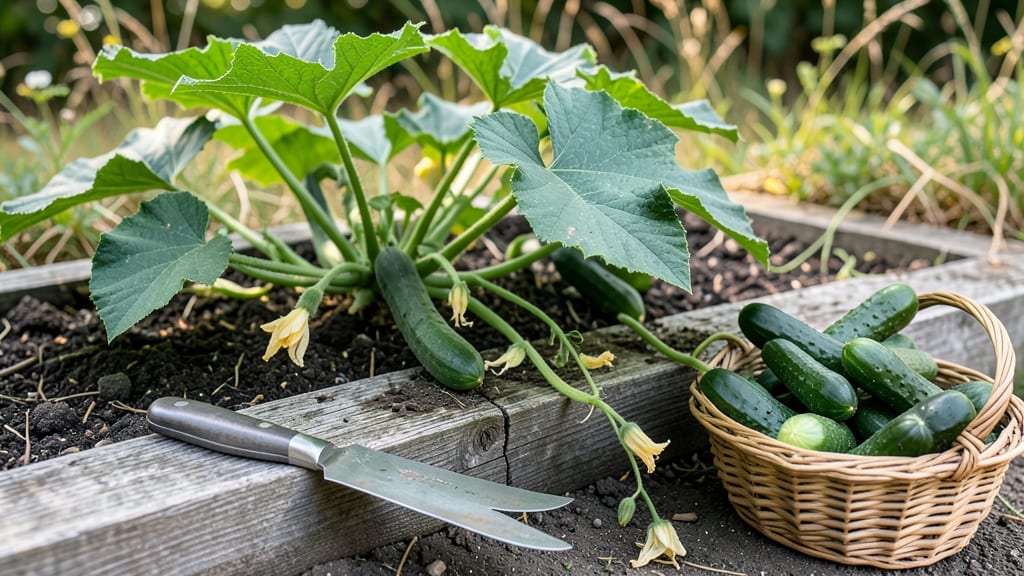
Knowing when are cucumbers ripe—at 6-8 inches with deep green, firm yet yielding skin—makes all the difference between a crisp salad and a bitter bite.
Picture this: you’re reaching for your first cucumber of the season, only to find it’s either rock-hard or already turning yellow and mushy. That’s the frustration of picking at the wrong time, and it happens more often than you’d think.
The key is knowing the subtle signs that tell you it’s time to harvest — or wait just a little longer.
From the color shift to the texture test, each variety has its own clues, and ignoring them can mean wasted harvests or missed opportunities. Whether you’re growing slicing cucumbers for salads or pickling varieties for jars, timing is everything.
Below, I’ll break down the exact visual and tactile cues to spot the perfect cucumber every time.
You’ll also discover how to adjust for your climate, avoid common mistakes, and keep your plants producing all season long. Let’s get started!


5 Visual and texture tests to determine cucumber ripeness
There's nothing worse than biting into a cucumber that's either too seedy or overly bitter—both signs of picking at the wrong time. The good news? Cucumbers give clear visual and tactile cues when they're ready.
Mastering these 5 simple tests will ensure you harvest crisp, flavorful cucumbers every time, whether you're slicing them for salads or pickling for later.
Timing matters because cucumbers continue ripening even after harvest. If you pick too early, you'll end up with underripe, tough-skinned produce. Wait too long, and you risk bitter, watery, or overly seedy fruits.
The secret lies in checking these key indicators 2-3 times per week during peak growing season (typically July through September in most climates).
- 1 Color Consistency Test: Look for deep, uniform green (or variety-specific colors like yellow or white for some types). Uneven coloring means underripe—wait 2-3 more days.
- 2 Size Guidelines: Slicing types should be 6-8 inches long; pickling cucumbers 2-3 inches. Measure from blossom end to tip—this prevents overgrowth.
- 3 Firmness Check: Press gently with your thumbnail. The skin should yield slightly (like a ripe avocado) but not feel mushy. A hard cucumber is underripe; a squishy one is overripe.
- 4 Bump Texture: Run your fingers over the skin surface. Perfectly ripe cucumbers have small, raised bumps (not smooth or waxy). Smooth = too early; wrinkled = too late.
- 5 Stem Test: Bend the stem end gently. If it snaps cleanly, the cucumber is ready. A green stem end means keep waiting; a brown/yellow stem signals peak ripeness.
Pro tip: For pickling cucumbers, harvest when they're 1-2 inches long—this prevents them from becoming too large and seedy. Use a sharp pair of pruning shears to avoid damaging the vine, and always cut 1/4 inch above the fruit to promote faster regrowth.
Morning is the best time to check cucumbers because they're cooler and firmer. If you're unsure, slice one open: the seeds should be small and pale yellow, not large and dark. Overripe cucumbers develop hollow centers and bitter-tasting flesh, which is a waste of your garden's effort.
Remember, regular harvesting encourages more production. Once you start seeing 5-7 cucumbers on a single vine, it's time to check daily—these plants are prolific! If you notice yellowing leaves or powdery mildew, reduce watering slightly but keep soil moist to avoid stressing the plant during its productive phase.
For container growers, these tests work the same, but watch for faster ripening due to limited root space. In hot climates, cucumbers may ripen 2-3 days earlier—adjust your checks accordingly. The key is consistency: once you master these tests, you'll never waste another cucumber again!
🥒
How cucumber varieties affect ripeness timing (and when to harvest each)
Not all cucumbers ripen on the same schedule, and choosing the wrong variety for your needs can mean harvesting at the wrong time. Slicing cucumbers like 'Straight Eight' mature faster than pickling types such as 'Boston Pickling,' while heirloom varieties often take longer to reach peak ripeness compared to hybrid varieties.
Understanding these differences ensures you enjoy crisp, flavorful harvests instead of bitter or seedy disappointments.
Your growing conditions also play a crucial role—hotter climates accelerate ripening, while cooler temperatures can delay it by 1-2 weeks. For example, a slicing cucumber in Arizona might be ready in 50 days, but the same variety in Michigan could take 60 days.
Let’s break down the key differences so you can time your harvests perfectly.
| Variety Type | Days to Ripeness | Harvest Size | Best For | Climate Notes |
|---|---|---|---|---|
| Slicing (e.g., 'Straight Eight') | 50-60 days | 6-8 inches | Fresh eating | Faster in heat |
| Pickling (e.g., 'Boston Pickling') | 45-55 days | 2-3 inches | Preserving | Slower in cool weather |
| Heirloom (e.g., 'Lemon Cucumber') | 60-75 days | Varies (4-12 in) | Gourmet dishes | Needs warm soil |
| Hybrid (e.g., 'Dasher II') | 45-55 days | 5-7 inches | High yield | Disease-resistant |
If you’re growing slicing cucumbers, aim to harvest when they’re 6-8 inches long and deep green with a firm texture. Pickling cucumbers, on the other hand, should be picked smaller—around 2-3 inchesyellowing stem ends or slight softness as indicators.
Hybrid varieties like 'Dasher II' are bred for consistency, meaning they ripen more uniformly than heirlooms. This makes them ideal for gardeners who want predictable harvests. However, hybrids may lack the unique flavors of heirlooms, so choose based on your priorities—flavor or reliability. For example, I planted 'Dasher II' last summer and harvested 30 cucumbers in 6 weeks, while my heirloom 'Armenian' took 8 weeks but had a sweeter taste.
Growing conditions can shift ripening timelines by 10-15 days. In hot, dry climates, cucumbers may ripen faster but can become seedy and bitter if left too long.
In cooler regions, they’ll take longer to mature, so start harvesting when they reach 70% of their expected size to encourage more production. For instance, in my Zone 5 garden, I harvest slicing cucumbers at 5 inches to avoid overripening.
Pro tip: Check your cucumbers every 2-3 days during peak season (July-August) to catch them at the perfect moment. Use a gentle thumb press—if the skin gives slightly but doesn’t feel mushy, it’s ready. Overripe cucumbers develop a yellowish hue and a waxy texture, signaling it’s time to pick or compost. Regular harvesting also