
How To
Struggling with cucumber pests or poor yields? The right companion plants can transform your garden by deterring insects, improving soil health, and even enhancing cucumber flavor. These 10 science-backed companions will help you grow healthier, more productive cucumber plants naturally.
Dill for Pest Control and Pollination
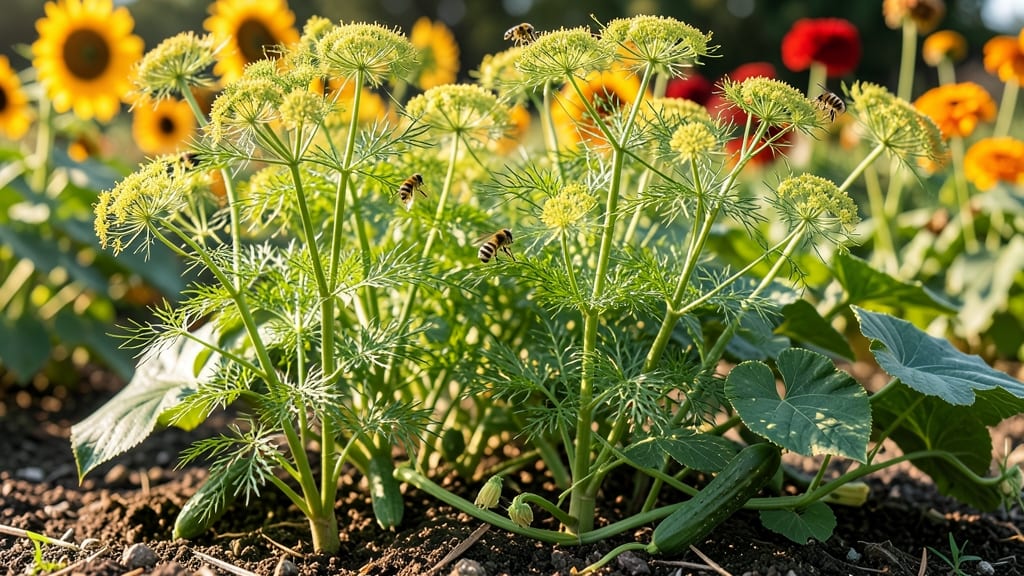
Tired of cucumber beetles devouring your cucumbers before they even ripen? Dill is your secret weapon—it doesn’t just repel pests, it turns your garden into a predatory wasp buffet, luring natural enemies of cucumber beetles while inviting pollinators for better fruit set.
Plant dill just 12–18 inches away from cucumbers to let predatory wasps like Sphex and Bembix set up shop. These wasps hunt cucumber beetles, reducing damage by up to 70% in organic gardens. Plus, dill’s flat-topped umbels attract bees, ensuring your cucumbers develop properly. For best results, sow dill seeds 2–3 weeks before cucumbers or after harvest to avoid competing for nutrients.
Organic gardeners and those avoiding chemical sprays will love this low-maintenance solution—just avoid planting dill too close to carrots or fennel, as they’re all in the same family and can cross-pollinate. 🌿
Nasturtiums to Trap Aphids and Cucumber Beetles
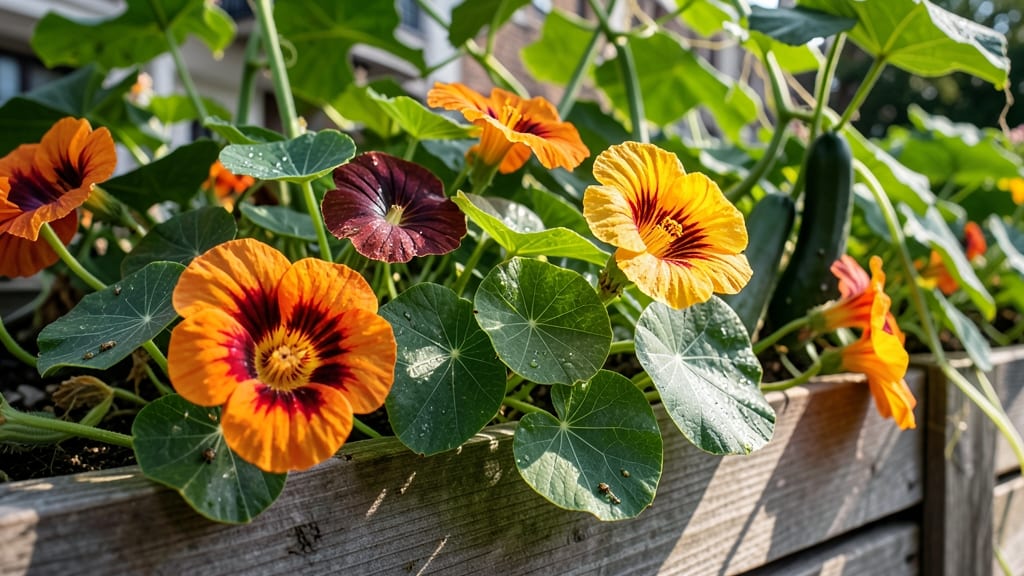
Tired of cucumber beetles munching on your prized vines? Nasturtiums are the unsung heroes of urban gardens, acting as a natural pest trap with their peppery leaves and vibrant blooms. These edible flowers lure aphids and cucumber beetles away from your cucumbers, giving your plants a fighting chance without harsh chemicals.
Plant nasturtiums around the edges of your cucumber patch or intersperse them every 18 inches for maximum effect. Their fast growth and sprawling habit make them perfect for small spaces, containers, or hanging baskets. Plus, you can harvest the leaves for salads—double duty as both pest control and edible garnish!
Urban gardeners with limited space will love nasturtiums for their dual role in pest management and aesthetics. Just watch for powdery mildew in humid climates and deadhead spent blooms to encourage more flowers. 🌻
Marigolds for Natural Pest Deterrence
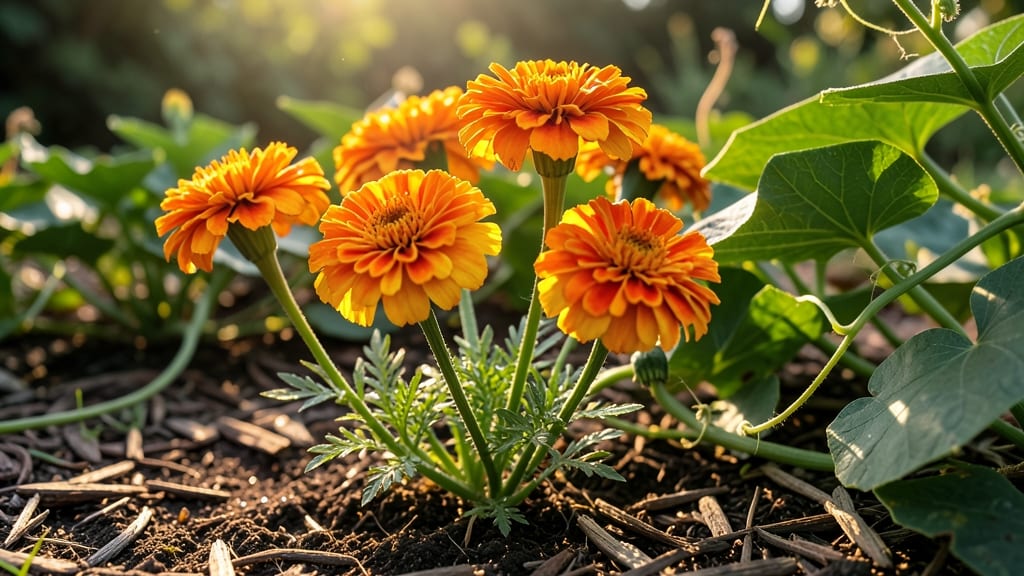
Want a low-maintenance way to keep cucumber beetles and nematodes away without chemicals? Marigolds release limonene, a natural compound that disrupts pests' ability to locate your cucumbers—while adding bold color to your garden.
These sun-loving annuals thrive in full sun and well-draining soil, making them perfect for container gardens or borders. Plant them 6-12 inches away from cucumber vines to maximize their repellent effect. French marigolds (with their deep orange blooms) work best, but any variety will help deter pests like squash bugs and aphids too.
Urban gardeners and container growers will love marigolds—they’re compact, easy to grow, and their bright blooms attract pollinators while keeping pests at bay. 🌻
Beans for Nitrogen Fixation and Space Efficiency
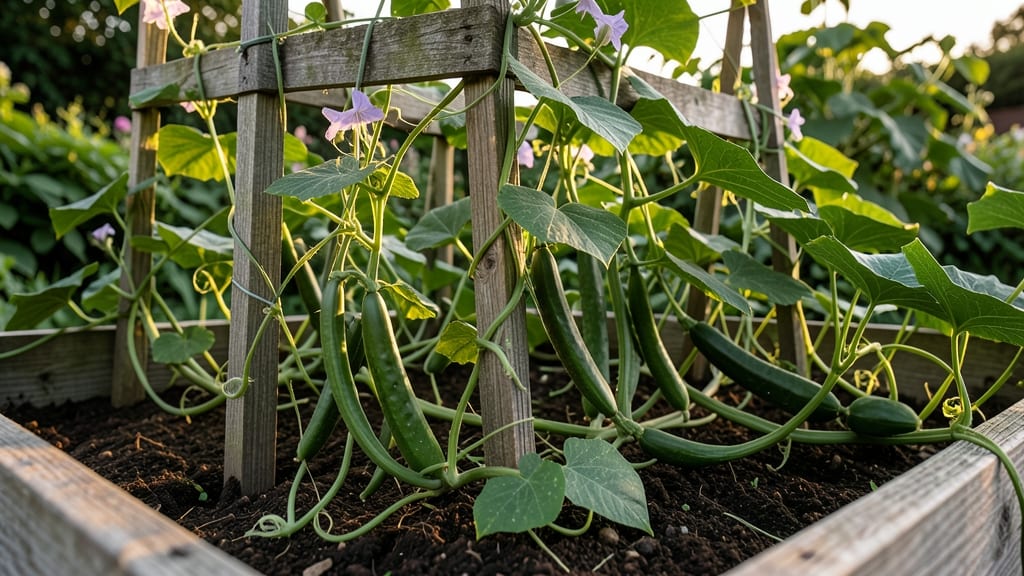
Small-space gardeners, rejoice—pole beans are the ultimate multi-taskers for cucumber beds. They don’t just fix nitrogen in the soil (cutting your fertilizer costs by up to 50%), but their vertical growth habit also frees up precious ground space for your trellised cucumbers.
Plant bush or pole varieties like Kentucky Wonder or Blue Lake alongside cucumbers in early spring. The beans will climb a trellis or fence, keeping their vines off the ground while their roots work underground to enrich the soil. For best results, interplant them 6-12 inches from cucumber vines—close enough to benefit from the nitrogen but not so tight they compete for sunlight.
This dynamic duo is especially valuable for container gardens or urban plots where space is limited. The beans’ ability to thrive in poor soil means you’ll get double the harvest benefits with minimal extra effort. 🌱
Radishes to Deter Cucumber Beetles

If you're battling cucumber beetles in your garden, radishes might be the unsung hero you need. These fast-growing vegetables create a natural barrier that confuses beetles with their strong scent and rapid growth, giving your cucumbers a head start.
Plant radishes like Cherry Belle or French Breakfast varieties just 6-12 inches away from your cucumber seedlings. Their quick growth (ready in as little as 3 weeks) means they’ll establish themselves before beetles become a major threat. The key is to sow radish seeds 2-3 weeks before transplanting cucumbers—this early planting gives them time to mature and deter pests naturally.
This strategy is especially helpful for gardeners in early spring or cooler climates where beetles are less aggressive. Radishes also provide an edible bonus, so you’ll get a double reward from this simple companion planting trick. 🌱
Basil for Flavor Enhancement and Mosquito Control
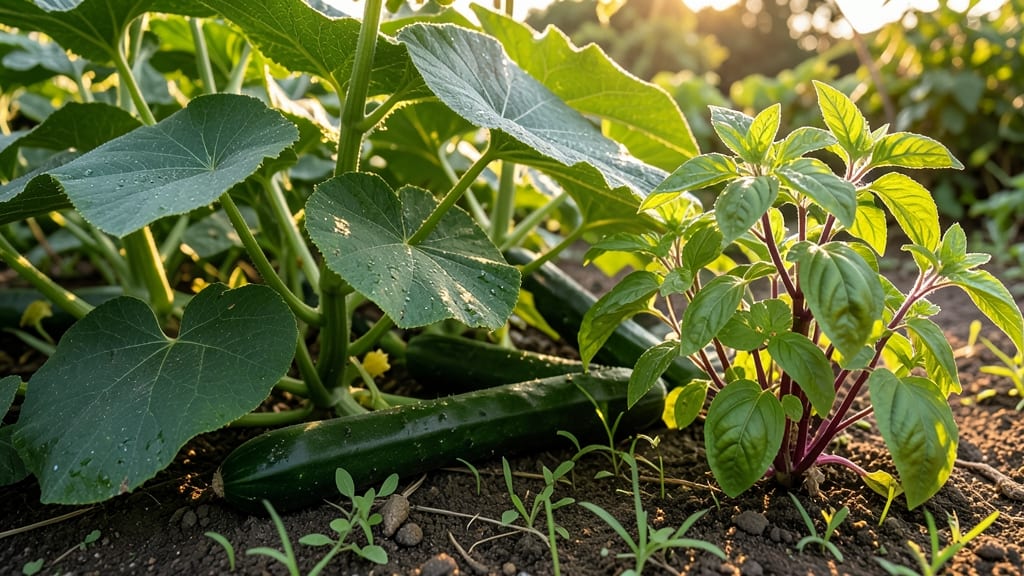
Want cucumbers that taste like they came straight from a gourmet garden? Plant basil nearby—its citrusy aroma doesn’t just repel mosquitoes but also infuses your cucumbers with a subtle, sweet complexity. This dual-purpose herb thrives in the same sunny conditions as cucumbers and grows quickly, giving you fresh leaves for cooking within weeks.
Position basil plants about 12-18 inches away from cucumber vines to maximize flavor transfer while keeping mosquitoes at bay. The herb’s strong scent masks cucumbers from pests, and its dense foliage provides light shade for tender leaves. For kitchen gardeners, this combo means year-round pest control and harvests ready for salads or pesto.
Urban gardeners with limited space will love how basil’s compact growth fits perfectly in containers alongside cucumbers. It’s the ultimate multi-tasker for small plots! 💚
Sunflowers for Shade and Pest Confusion
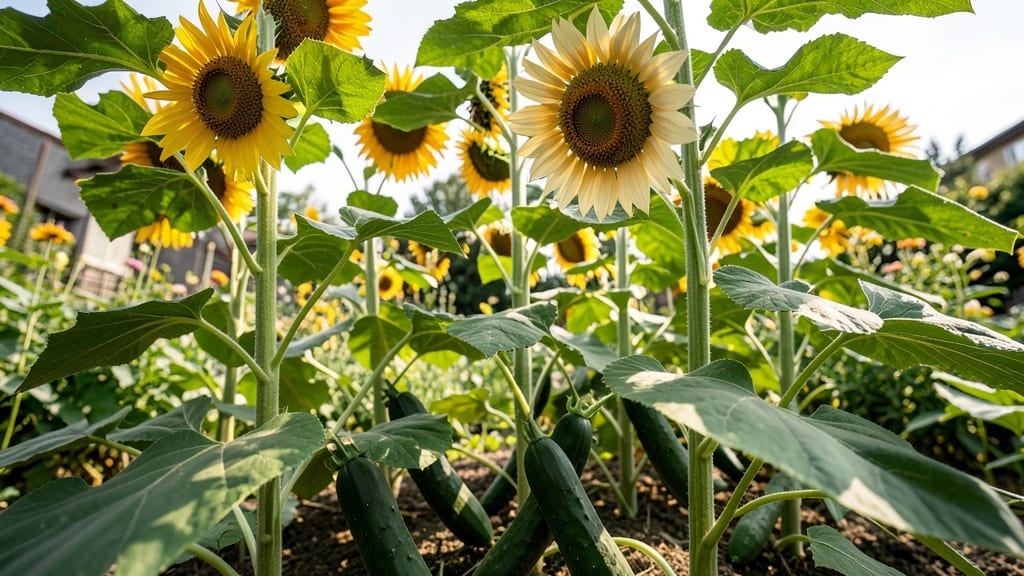
If your cucumbers are wilting under the midday sun or attracting pests that seem to find them effortlessly, sunflowers might be the unexpected hero your garden needs. Their towering presence doesn’t just add drama—it creates a natural shade canopy that keeps cucumber leaves from scorching while confusing pests with their disorienting height.
Plant tall sunflower varieties like 'Mammoth' or 'Autumn Beauty' at least 3 feet away from cucumber vines to avoid root competition. The sunflowers’ broad leaves will cast afternoon shade, reducing heat stress on cucumbers, while their height forces pests like cucumber beetles to navigate awkwardly around them. This dual benefit makes them especially valuable in hot, dry climates where cucumbers often struggle.
Gardeners in small spaces can even use dwarf sunflowers (like 'Teddy Bear') near trellised cucumbers to achieve the same effect without sacrificing growing area. The cheerful blooms also attract pollinators, giving you a triple win. 🌻
Oregano for Soil Health and Weed Suppression
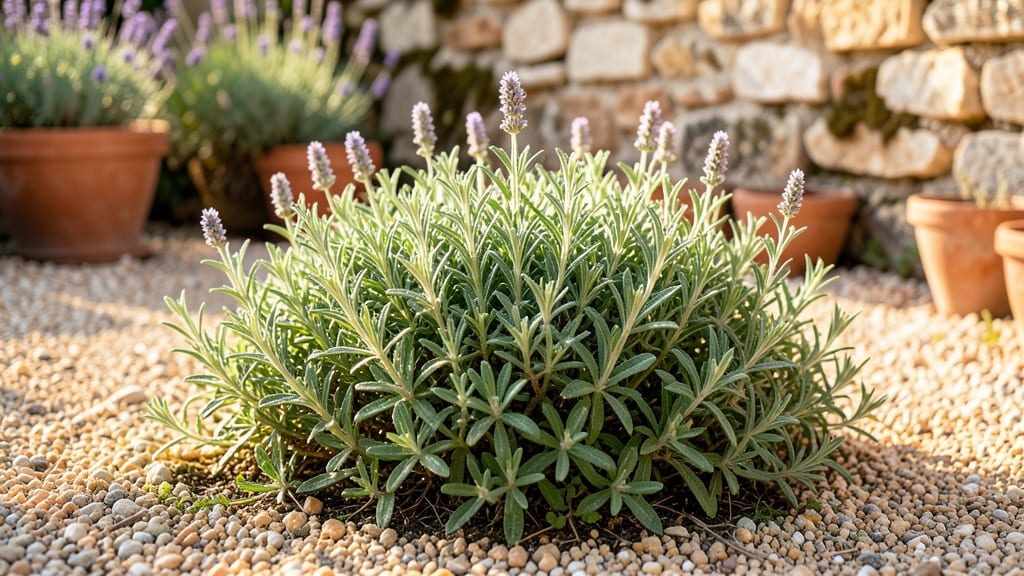
If you're dreaming of a Mediterranean-style garden with minimal weeding and fewer pests, oregano is your secret weapon. This hardy perennial not only deters weeds with its dense, spreading growth but also improves soil structure by preventing erosion and encouraging beneficial microbes.
Plant oregano in well-draining soil with full sun to partial shade, and its strong scent will naturally repel pests like cabbage moths and carrot flies—common cucumber nuisances. The plant thrives in USDA zones 5-9, making it versatile for most climates, and its low-growing habit won’t compete with cucumber vines for space.
Perfect for gardeners who love aromatic herbs, oregano doubles as a culinary staple while silently protecting your cucumbers. Just snip a sprig for cooking, and let the rest work its magic below. 💚
Lettuce for Shallow Root Competition
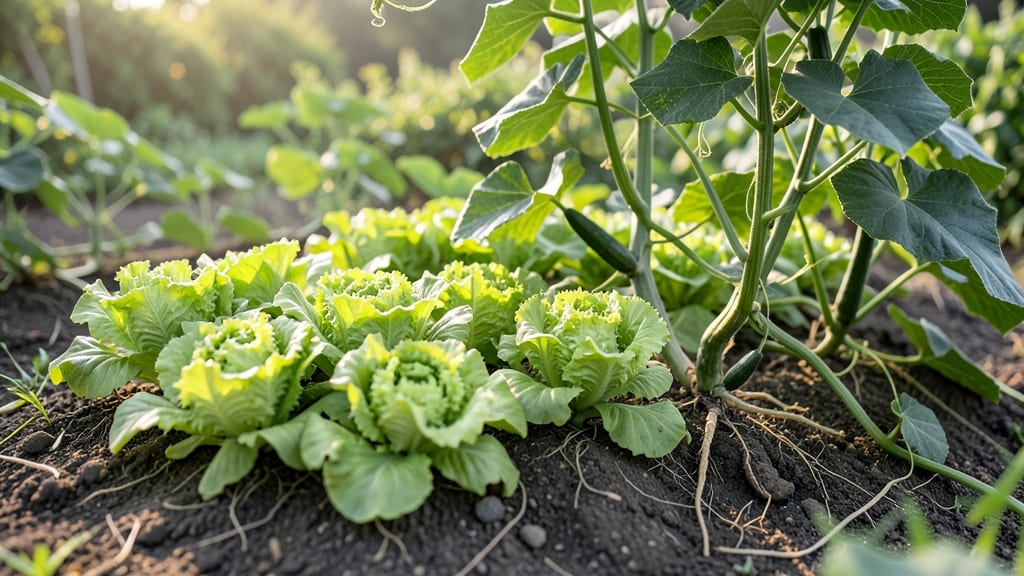
Want to maximize your cucumber patch without overcrowding or nutrient competition? Leaf lettuce is the secret weapon—its shallow roots leave deep soil nutrients untouched for your cucumbers while delivering fresh greens in just 30-45 days.
Plant butterhead or romaine varieties 6-12 inches away from cucumber seedlings, and you’ll get two harvests before the cucumbers need all the space. Lettuce thrives in cooler weather, so it’s perfect for early spring or late summer succession planting when cucumbers are already established. The key is to harvest lettuce leaves regularly to encourage continuous growth without shading the cucumber vines.
This pairing is especially valuable for small-space gardeners or those practicing intensive planting, as it doubles your edible yield from the same square footage. 🌱
Carnations for Aphid and Spider Mite Control

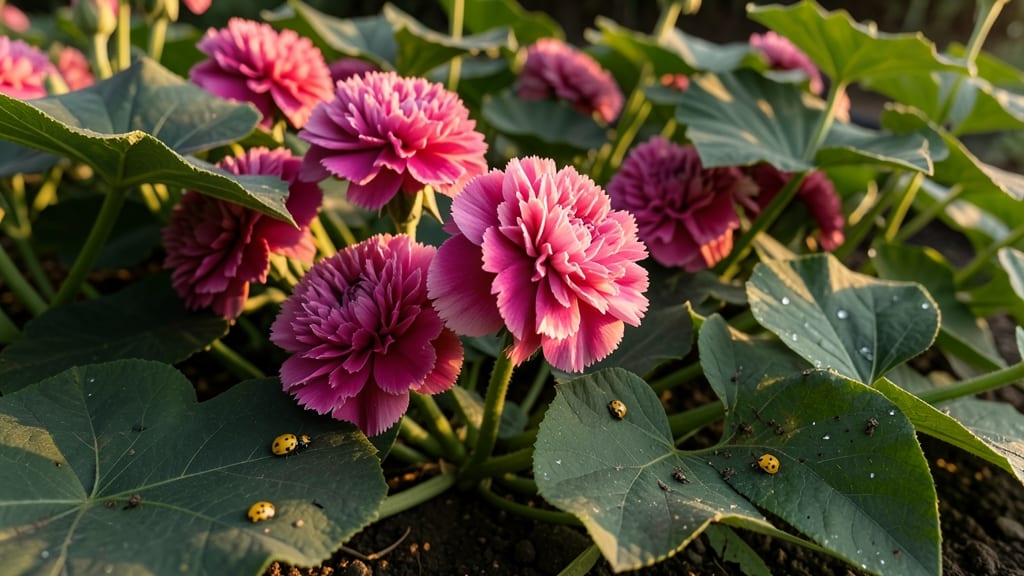
If your cucumber plants are battling aphids or spider mites, carnations might be the unsung hero you’ve been missing. These fragrant flowers release natural compounds that deter soft-bodied pests while also attracting ladybugs—the ultimate pest-fighting allies. Unlike other companions that focus on one pest, carnations create a two-pronged defense system.
Plant carnations around the perimeter of your cucumber patch, spacing them about 12-18 inches away to avoid competition. Their delicate blooms thrive in full sun to partial shade and prefer well-draining soil. Deadhead spent flowers to encourage continuous blooming, which keeps the pest-repelling compounds active all season long. Carnations also add a touch of elegance to your garden with their classic, old-fashioned charm.
This companion is especially valuable for gardeners with a history of pest issues, as it provides both immediate and long-term protection. For those who love cutting flowers, carnations double as a beautiful addition to bouquets while keeping your cucumbers thriving. 🌷