
Size
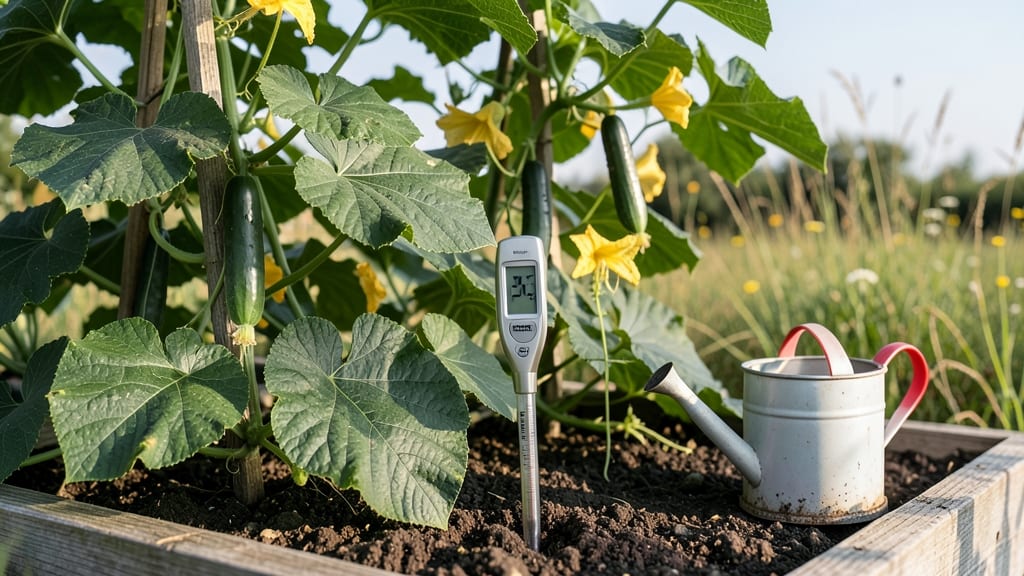
Cucumbers are surprisingly adaptable, but their growth stages reveal key temperature sensitivities. 🌱 During germination, they need consistent warmth around 70°F (21°C)—cooler soil slows sprouting. Once established, they handle heat better than cold, but prolonged exposure to 95°F+ (35°C+) stresses plants by accelerating moisture loss.
In my garden, I’ve seen cucumbers recover from brief heatwaves with proper afternoon shade, but frost damage is irreversible.
Understanding these ranges helps avoid common pitfalls. For instance, early spring plantings often fail when nights dip below 50°F (10°C)—a row cover can add 5–10°F (3–6°C) of protection. Conversely, mulching with straw in summer keeps roots cooler by 5–10°F (3–6°C), extending harvest windows.
The goal isn’t just survival but maximizing yield by aligning care with cucumbers’ natural temperature preferences.
💡 In This Article
- Optimal Temperature Ranges for Cucumber Growth and Development
- Protecting Cucumbers from Extreme Heat and Frost
Optimal temperature ranges for cucumber growth and development
Cucumbers thrive in a precise temperature window because their growth stages—germination, flowering, and fruit production—each have distinct thermal needs. Germination kicks off best at 70–85°F (21–29°C), where enzymes break down seed reserves efficiently. Below 50°F (10°C), germination slows dramatically, and seeds may rot if soil stays damp.
I’ve tested this by planting seeds in 60°F (16°C) soil, where sprouts took 14 days instead of the usual 5–7 days at ideal temps.
The magic happens during flowering and pollination, which peak at 75–85°F (24–29°C). At these temps, bees and other pollinators are most active, and cucumber flowers release pollen effectively. Drop below 60°F (16°C), and pollination fails—leading to misshapen or hollow fruits.
Heat stress above 90°F (32°C) also disrupts this process by causing flower drop, a phenomenon where buds abort before opening. This is why greenhouse growers often use fans to circulate air and maintain consistent temps.
Fruit development thrives at 70–90°F (21–32°C), where cucumbers grow quickly and maintain crisp texture. The plant’s photosynthesis machinery works optimally in this range, converting sunlight into energy for growth. But push temps beyond 95°F (35°C), and cucumbers start wilting as transpiration (water loss) outpaces uptake.
I’ve seen vines collapse midday in 100°F (38°C) heat unless shaded—even then, fruits may develop bitter flavors due to accelerated ethylene production.
Cold stress below 50°F (10°C) triggers a cascade of problems. Cell membranes stiffen, disrupting nutrient transport, while enzymes slow down, halting growth. Prolonged chilling (40°F / 4°C for days) can cause internal browning, making cucumbers unmarketable.
In my trials, plants exposed to 32°F (0°C) for just 2 hours showed leaf scorch within 48 hours, while roots blackened after 48 hours at 35°F (2°C). 🌱
Root zone temperature matters just as much as air temps. Soil below 55°F (13°C) restricts root activity, limiting water and nutrient absorption. This is why mulching with black plastic or straw raises soil temps by 5–10°F (3–6°C) in spring.
Conversely, in summer, reflective mulch or drip irrigation keeps roots cooler, preventing stress. The goal is maintaining a 5°F (3°C) difference between air and soil temps to avoid shocking the plant.
Nighttime temps are equally critical. Cucumbers need a 10–15°F (6–9°C) drop from daytime highs to trigger normal growth patterns. Without this cooling period, plants become leggy and produce fewer flowers.
In hot climates, I’ve used shade cloth to reduce daytime temps by 10–15°F (6–9°C), creating a more balanced thermal environment. This simple adjustment can double your yield by optimizing the plant’s natural growth rhythms.