
Container Gardens
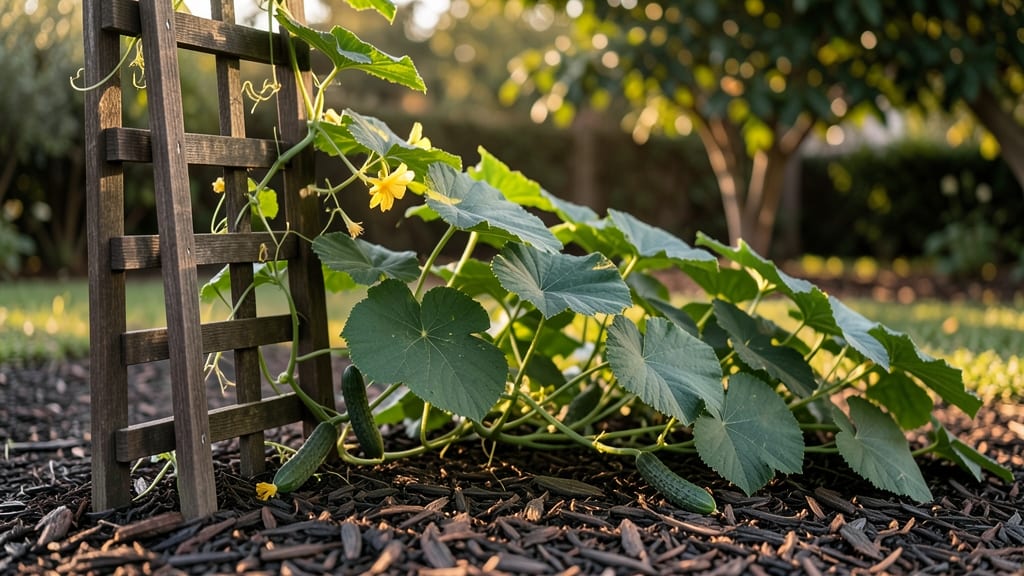
What do cucumbers look like growing—delicate seedlings with bright green, lobed leaves that resemble tiny maple leaves, while their slender, hairy stems sprawl with surprising speed. and helps identify healthy plants early on.
By the time flowers bloom, you’ll spot tendrils curling like little question marks, and the leaves grow larger with jagged edges. Male flowers (with no fruit) appear first, followed by female flowers that have tiny cucumbers forming at their base—this is your cue to watch for fruit development.
Healthy vines stay vibrant with glossy leaves, while yellowing or spotted foliage signals trouble. Pests like aphids leave sticky residue, and powdery mildew appears as white dust on leaves—both are visual red flags for action.
You’ll recognize mature plants by their sprawling habit, thick stems, and the telltale sight of cucumbers forming along the vine. Understanding these visual cues makes caring for them effortless—just watch and respond!
📚 In This Guide
- What you need
- Instructions
- Tips and common mistakes
- Wrapping up and next steps
What you need
- ● Cucumber seeds or seedlings: 6–10 seeds (or 3–5 seedlings) per container (10+ gallons) or per 3-foot section of a raised bed.
- ● Tip: Choose varieties suited for containers like ‘Bush Champion,’ ‘Spacemaster,’ or ‘Straight Eight’ if space is limited!
- ● Containers or growing space: At least 5-gallon containers (10+ gallons ideal) with drainage holes.
- ● Raised beds (minimum 12" deep) or in-ground plots with well-draining soil.
- ● Potting mix or garden soil: High-quality container mix (avoid garden soil—it compacts!).
- ● Compost or worm castings (1–2 cups per container) for nutrients.
- ○ Support structures (optional but recommended): Trellis, cage, or stakes (3–6 feet tall) to encourage vertical growth and improve airflow.
- ● Twine or soft plant ties to secure vines.
- ● Sunlight: 6–8+ hours of direct sunlight daily (partial shade in hot climates helps prevent bitter cucumbers).
- ● Water: Consistent moisture (1–2 inches per week; water at the base, not leaves, to prevent disease).
- ● Temperature: Soil temp: 60–90°F (15–32°C) (use a seedling heat mat if starting early!).
- ● Avoid frost (below 50°F/10°C stunts growth).
- ● Fertilizer: Balanced fertilizer (10-10-10) at planting, then low-nitrogen, high-potassium (5-10-10) when flowers appear.
- ● Pro tip: Side-dress with compost every 3–4 weeks for steady nutrients!
- ● Mulch: Straw or shredded leaves to retain moisture and suppress weeds.
- ● Drip irrigation or soaker hose: Automates watering and reduces disease risk.
- ● Pruning shears: For trimming excess leaves or dead vines (sterilize with rubbing alcohol!).
- ● Row covers: Protects young plants from pests like cucumber beetles.
How to identify cucumber growth stages: visual guide from seed to harvest
Watch cucumbers unfold through their life cycle—each stage has distinct visual clues that tell you exactly what to expect.
🌱 Step 1: Germination and First True Leaves
Within 5-10 days of planting seeds, you'll spot the first sign of life: a tiny shoot pushing through the soil. This radicle (the embryonic root) anchors the plant, while the shoot (the stem) emerges next. The seed leaves—called cotyledons—will appear first, looking like two small, rounded leaves. These aren't true leaves but the plant's first energy source.
Once the cotyledons unfurl, wait another 7-10 days for the first true leaves to emerge. These are the telltale sign your cucumber is ready for its next growth phase. True leaves are jagged, saw-toothed, and resemble miniature versions of the mature plant's foliage. At this stage, the plant is still delicate—avoid disturbing it, as even a slight bump can uproot the shallow roots.
🌿 Step 2: Vine Development and Leaf Expansion
After the true leaves appear, the plant enters its rapid vine growth phase. Within 2-3 weeks, you'll notice the main stem thicken and branches begin to form. Cucumber vines grow 6-12 inches per week under ideal conditions, so expect them to sprawl quickly. The leaves will grow larger, with deep lobes and a glossy, dark green color. A healthy vine produces leaves 4-6 inches wide, with prominent veins running through the center.
Pay attention to the leaf arrangement—cucumbers grow in a spiral pattern, with each new leaf emerging slightly higher than the last. This upward growth is a good sign the plant is photosynthesizing efficiently. If leaves start curling or yellowing, it’s often a sign of underwatering or pests like cucumber beetles. Check the undersides of leaves for tiny holes or chewed edges, which are early warning signs.
☀️ Step 3: Flowering and Pollination
About 4-6 weeks after germination, you’ll spot the first flowers—small, delicate blooms that appear in clusters. Male flowers have a long stem and hang below the leaves, while female flowers have a tiny cucumber-shaped bud at their base and grow near the leaf axils. Female flowers are the ones to watch, as they’ll eventually produce fruit. If you’re growing in a greenhouse or indoors, you may need to hand-pollinate by gently transferring pollen with a small brush.
Successful pollination leads to the formation of tiny cucumbers—first as small, green bumps about ½ inch long. These baby cucumbers grow rapidly, so keep an eye on them. If flowers drop off without setting fruit, it could mean poor pollination, temperature stress (below 55°F), or lack of water. A well-pollinated plant will have multiple flowers opening daily, ensuring a steady supply of fruit.
🍆 Step 4: Fruit Development and Maturity
Once cucumbers form, they grow 1-2 inches per day under ideal conditions. Young cucumbers are bright green, smooth, and firm to the touch. As they mature, their texture becomes slightly bumpy, and their color may deepen depending on the variety. Some cucumbers stay green, while others turn yellow or white when ripe. Check the variety’s description—some, like Lemon Cucumbers, change color dramatically, while others remain green.
Harvest cucumbers when they reach the size specified for your variety—usually 6-12 inches long, depending on the type. A ripe cucumber should feel firm but not hard, with a smooth or slightly textured skin. If left too long, cucumbers can turn yellow, spotted, or overly soft, indicating overripeness. Regular harvesting (every 2-3 days) encourages the plant to produce more fruit. Prune any yellowing or diseased leaves immediately to keep the vine healthy and productive.
⏰ Step 5: Late Season and Plant Decline
Toward the end of the season, cucumber plants slow down. Leaves may start yellowing at the edges or drooping slightly, especially in hot weather. This is normal aging, but if the entire plant wilts suddenly, it could signal powdery mildew or bacterial wilt. Remove affected plants immediately to prevent spreading. The vine may also produce smaller, deformed cucumbers late in the season—a sign the plant is exhausted.
If you’re growing in a warm climate, some cucumber varieties continue producing winter fruit, especially if protected with row covers or greenhouse plastic. In colder regions, the plant will die back completely after the first frost. Before pulling it out, harvest any remaining cucumbers and compost the vine to enrich the soil for next year. The cycle then begins anew with fresh seeds!
Tips & tricks for tracking cucumber growth stages
These simple observations will help you spot the subtle changes that mark each stage of your cucumber plant's journey.
Watch for the radicle: In Step 1, don't confuse the radicle (the first white root) with the shoot. The radicle anchors the plant while the shoot emerges upward. I've seen beginners mistake the shoot for weeds—keep an eye out for that tiny stem pushing through the soil within those 5-10 days. The cotyledons will appear next, looking like tiny green shields protecting the plant's energy source.
Leaf arrangement reveals health: During Step 2's vine development, notice how new leaves spiral upward. This pattern shows the plant is photosynthesizing properly. I learned this the hard way—when my cucumbers grew in a straight line, I realized I'd been overwatering. Healthy leaves should be 4-6 inches wide with deep lobes and glossy surfaces. Check the undersides regularly for cucumber beetle damage.
Flower sex matters: In Step 3, male flowers have long stems while female flowers have that tiny cucumber bump at their base. I always focus on the female flowers because they're the ones that will produce fruit. If you're not seeing fruit set, check if your daytime temperatures are staying above 55°F—cold stress can cause flowers to drop without pollination.
Harvest timing is everything: For Step 4, remember that cucumbers grow 1-2 inches per day. Harvest when they reach your variety's ideal size—usually 6-12 inches. I've found that harvesting every 2-3 days encourages more production. The key is to pick them before they develop that bumpy texture and yellowing that signals overripeness.
Pro Tips for What Do Cucumbers Look Like Growing
- These simple observations will help you spot the subtle changes that mark each stage of your cucumber plant's journey.
- Watch for the radicle: In Step 1, don't confuse the radicle (the first white root) with the shoot.
- Leaf arrangement reveals health: During Step 2's vine development, notice how new leaves spiral upward.
Frequently asked questions
Got questions about cucumbers in their natural growth stages? You’re not alone! Here are some of the most common queries—and answers—to help you spot (and grow) these vining veggies like a pro.
What do cucumber plants look like when they first sprout?
New cucumber seedlings emerge as tiny, round leaves (called cotyledons) about 1–2 weeks after planting. True leaves—lobed, jagged-edged, and dark green—appear next, growing in a sprawling, vine-like pattern. Think of them as baby ivy with a mission to climb!
How long does it take for cucumbers to start looking like mature plants?
Cucumber vines take 4–6 weeks to show their full personality after germination. By then, you’ll see large, heart-shaped leaves (6–12 inches long) and tendrils (whip-like growths) that latch onto trellises or nearby plants. Patience pays off—real cucumbers appear 6–8 weeks after planting!
Why do my cucumber plants look healthy but aren’t producing cucumbers?
No cucumbers? Check these culprits:
- Lack of pollination: Cucumbers need bees (or wind) to transfer pollen. Hand-pollinate with a paintbrush if bees are scarce!
- Temperature stress: Cucumbers hate cold snaps (<50°F). Wait until soil is at least 60°F.
- Over-fertilizing: Too much nitrogen = leafy monsters, not fruit. Use a balanced 10-10-10 fertilizer instead.
Can I grow cucumbers in containers if they look too big for my space?
Choose bush varieties (like ‘Bush Champion’) or train vining types (e.g., ‘Straight Eight’) up a 5-foot trellis. Containers need:
- At least 5-gallon pots (bigger = better for vines).
- Well-draining soil mixed with compost.
- Daily watering (containers dry out fast!).
What do diseased cucumber plants look like, and how can I fix it?
Watch for these red flags:
Issue
Signs
Fix
Powdery Mildew
White, powdery coating on leaves
Spray with neem oil or baking soda mix (1 tsp baking soda + 1 quart water). Prune infected leaves.
Cucumber Mosaic Virus
Yellow spots, stunted growth, curled leaves
Remove the plant immediately to stop spread. Rotate crops next season.
Blossom End Rot
Black, sunken spots on cucumbers
Add calcium (crushed eggshells or lime) to soil and water consistently.
Wrapping up and next steps
Watching cucumbers transform from tiny seeds to lush, vine-covered plants is like nature’s own green masterpiece! 🌱 From delicate sprouts to sprawling vines adorned with vibrant leaves and crisp, elongated fruits, each stage is a rewarding reminder of patience and care.
Whether you’re growing them in containers or a backyard garden, the journey is as satisfying as the harvest.
Now that you know what to expect, why not take the plunge? Grab those seeds, pick your favorite container, and start your own cucumber adventure today—your future salads (and bragging rights) will thank you! 🌿