
How To
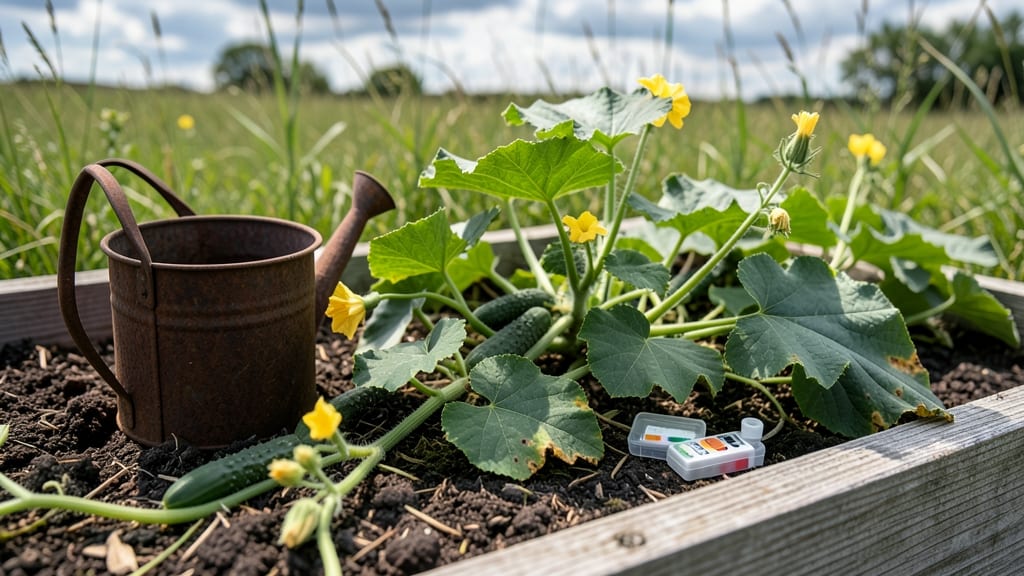
What causes cucumber leaves to turn yellow—and how to fix it—starts with understanding the hidden issues beneath the soil.
That first sickly look can mean your plants are crying for help—before you lose the harvest. 🌱 I’ve seen this happen after heavy rain, when soil stays soggy for days, or when pests move in unnoticed. The good news? Most causes are fixable with simple checks and quick actions.
Start by feeling the soil—if it’s damp 2+ inches down, you’re overwatering. Yellowing often starts at the bottom leaves first, signaling nitrogen deficiency or poor drainage. But if the yellow spreads with white powdery spots, you’re dealing with powdery mildew, a fungal foe that thrives in humid conditions.
The fixes depend on the cause: adjust your watering, add compost for nutrients, or spray neem oil for pests. I’ve saved entire vines by catching these early—don’t wait until the yellow spreads to the whole plant. Prevention is easier than cleanup.
For stubborn cases or fast-spreading disease, a local extension office can help diagnose. But 90% of the time, you’ll find the fix right in your garden shed or compost pile. Let’s troubleshoot yours!
The Root Causes Explained
When your cucumber plants start showing yellow leaves, it’s usually their way of signaling distress—like a tiny, leafy SOS. But what’s really triggering this change? Let’s break down the science behind the most common culprits, so you can diagnose the problem like a pro. 🌱🔍
Yellowing cucumber leaves often start at the bottom of the plant and feel soft or mushy to the touch. This is a classic sign of overwatering or waterlogged roots, which cut off oxygen supply and drown the roots.
Cucumbers thrive in well-draining soil with a moisture level similar to a wrung-out sponge. When soil stays soggy for too long, beneficial microbes suffocate, and harmful fungi (like Pythium) take over, rotting roots.
Even if your plant looks thirsty, check the soil first—stick your finger 1-2 inches deep. If it’s damp, hold off on watering.
Actionable Fix:
- ✅ Test your soil: Use a moisture meter or the finger test before watering.
- ✅ Improve drainage: Amend heavy clay soil with compost or perlite. Raise beds if needed.
- ✅ Water deeply but less often: Aim for 1-1.5 inches per week, letting the top inch dry out between waterings.
- ✅ Avoid wetting leaves: Use drip irrigation or soaker hoses to keep foliage dry.
If yellowing appears first on older leaves but the soil is bone-dry, your cucumbers are thirsty. Unlike overwatering, underwatering causes leaves to curl, crisp, or turn yellow at the edges (a condition called scorch). Cucumbers are 90% water, and they can’t photosynthesize properly when dehydrated.
Prolonged drought stress weakens the plant’s vascular system, forcing it to shed leaves to conserve energy. In extreme cases, it can lead to blossom end rot (though that’s more common in tomatoes).
Actionable Fix:
- ✅ Water consistently: Cucumbers prefer even moisture—never let them go completely dry.
- ✅ Mulch heavily: Use straw or shredded leaves to retain soil moisture and block weeds.
- ✅ Water in the morning: Reduces evaporation and gives roots time to absorb moisture before nightfall.
- ✅ Consider shade cloth: If temps exceed 90°F (32°C), provide afternoon shade to prevent rapid water loss.
Yellow leaves can also signal a lack of essential nutrients, with each deficiency targeting different parts of the plant:
| Nutrient Missing | Where Yellowing Starts | Other Clues |
|---|---|---|
| Nitrogen (N) | Older leaves (bottom) | Leaves turn pale yellow or yellow-green; stunted growth. |
| Magnesium (Mg) | Interveinal yellowing (between veins) | Yellow patches with green veins; crispy edges. |
| Potassium (K) | Leaf edges and tips | Brown scorched edges; weak stems. |
| Iron (Fe) | Young leaves (top) | Chlorosis (yellowing between veins) in new growth. |
Cucumbers are heavy feeders, especially when flowering and fruiting. If your soil is alkaline (pH > 7.0), iron and manganese become unavailable, even if they’re present. A simple soil test can reveal imbalances.
Actionable Fix:
- ✅ Fertilize right:
- For nitrogen: Use a balanced fertilizer (10-10-10) or compost tea.
- For magnesium: Sprinkle Epsom salt (1 tbsp/gallon water) every 2 weeks.
- For iron: Apply chelated iron or use acidifying agents (like sulfur) to lower pH.
- ✅ Adjust pH if needed: Aim for 6.0–6.8; add sulfur to lower pH or lime to raise it.
- ✅ Avoid over-fertilizing: Too much salt burns roots—always water after fertilizing.
If yellowing is paired with spots, holes, or sticky residue, pests or pathogens are likely the culprits. Here’s how to spot them:
- Spider Mites: Tiny yellow speckles or stippling on leaves; webbing on undersides.
- Aphids: Curled, yellowing leaves with sticky honeydew (leads to sooty mold).
- Powdery Mildew: White powdery coating on leaves; yellowing underneath.
- Bacterial Leaf Spot: Water-soaked yellow/brown spots with yellow halos.
- Root-Knot Nematodes: Stunted growth, yellowing from the bottom, gnarled roots.
Pests and diseases stress the plant, forcing it to divert energy from leaves to defense—leading to yellowing. Some, like Pythium (a water mold), thrive in overwatered conditions, creating a vicious cycle.
Actionable Fix:
- ✅ Isolate infected plants to prevent spread.
- ✅ Spray with neem oil (1 tbsp/quart water) for pests; repeat every 5–7 days.
- ✅ Use copper fungicide for bacterial/mildew issues.
- ✅ Encourage beneficial insects: Ladybugs eat aphids; predatory mites combat spider mites.
- ✅ Rotate crops next season to break disease cycles.
Fix Yellowing Cucumber Leaves Fast
Yellowing cucumber leaves can be frustrating, but with the right fixes, your plants can bounce back—and even thrive! Below are targeted solutions for each common cause, plus prevention tips to keep your cucumbers lush and green. Let’s get your garden back on track!
Fix it:
- Stop watering immediately 🚰—soggy roots suffocate plants and invite rot.
- Check soil moisture with your finger: If the top 1–2 inches are damp, wait before watering again.
- Improve drainage by amending soil with perlite, sand, or compost (aim for a 50/50 mix of potting soil and amendments).
- Repot if needed (for container plants) into a pot with drainage holes and fresh, well-draining soil.
- Water deeply but less often—aim for 1–1.5 inches per week, letting the soil dry slightly between waterings.
Prevention tips: ✅ Use raised beds or containers if your garden soil drains poorly. ✅ Mulch around plants (with straw or shredded leaves) to retain moisture without overwatering. ✅ Water in the morning to allow foliage to dry, reducing fungal risks.
Fix it:
- Water thoroughly at the base (not the leaves) using a drip irrigation system or soaker hose to deliver moisture slowly.
- Provide afternoon shade with a lightweight shade cloth (30–50%) if temps exceed 90°F (32°C).
- Mist leaves gently in extreme heat (early morning only) to cool them down.
- Move potted cucumbers to a slightly shadier spot if they’re wilting.
Prevention tips: 💡 Group plants together to create a microclimate with shared shade. 🌡️ Monitor humidity—cucumbers love 60–70% humidity; use a humidifier tray for containers. 🌱 Choose heat-tolerant varieties like ‘Straight Eight’ or ‘Marketmore 76’ if you live in a hot climate.
Fix it:
- Remove infected leaves immediately (wear gloves!) and dispose of them in the trash—not the compost.
- Spray with a fungicide like:
- Baking soda mix (1 tsp baking soda + 1 quart water + a drop of dish soap).
- Neem oil (1 tbsp neem oil + 1 quart water + a few drops of soap).
- Commercial fungicide (e.g., copper-based or sulfur-based).
- Improve airflow by pruning crowded vines or spacing plants 12–24 inches apart.
- Water at the base only—avoid wetting leaves to prevent spores from spreading.
Prevention tips: 🔥 Rotate crops—don’t plant cucumbers in the same spot yearly. ✨ Use reflective mulch (like aluminum foil) to deter fungal spores. 🌿 Plant companion crops like marigolds or basil to repel pests that spread disease.
Fix it:
- Blast pests off with a strong spray of water (early morning works best).
- Apply insecticidal soap (follow label instructions) or neem oil for mild infestations.
- Set up yellow sticky traps to catch flying pests like aphids.
- Handpick beetles (they’re easy to spot!) and drop them in soapy water.
- Introduce beneficial insects like ladybugs or lacewings to eat pests naturally.
Prevention tips: 🎯 Cover young plants with floating row covers until they’re established. 💡 Interplant with herbs like dill or cilantro to attract pest-eating wasps. 🌱 Rotate planting locations to disrupt pest life cycles.
Fix it:
- Test your soil (use a DIY kit or send a sample to a local extension office).
- Add organic matter based on the deficiency:
- Yellow lower leaves (nitrogen): Apply compost, fish emulsion, or blood meal.
- Yellow with brown veins (magnesium): Sprinkle Epsom salt (1 tbsp per gallon of water) around the base.
- Yellow with green veins (iron): Use chelated iron or iron sulfate.
- Water deeply after applying amendments to help roots absorb nutrients.
Prevention tips: 📊 Fertilize regularly with a balanced 10-10-10 or 5-5-5 fertilizer every 3–4 weeks. 🌿 Use compost tea as a gentle, nutrient-rich soil booster. 🥗 Avoid over-fertilizing—too much salt can burn roots!
Fix it:
- Gently loosen roots if repotting (for container plants) to encourage regrowth.
- Water deeply and keep soil consistently moist (not soggy) for 1–2 weeks.
- Provide shade (50% shade cloth) for the first week post-transplant.
- Avoid fertilizing for 7–10 days—let roots recover first.
Prevention tips: 🌱 Hardening off seedlings before transplanting (acclimate them to outdoor conditions over 5–7 days). 🌿 Use self-watering pots or drip irrigation to maintain steady moisture. ⏰ Plant at the right time—wait until night temps stay above 50°F (10°C).
Final Pro Tip: 🌟 Keep a garden journal to track watering, fertilizing, and pest issues—this helps you spot patterns and prevent future problems! With these fixes, your cucumber plants should perk up in 1–2 weeks. Happy gardening! 🥒✨
Frequently asked questions
Why do cucumber leaves turn yellow first at the bottom?
This is often a sign of overwatering or nitrogen deficiency. Cucumbers prioritize nutrient delivery to new growth, so older leaves yellow first when they're starved. Check soil moisture—if it's damp 2+ inches down, you're likely overwatering. For nitrogen issues, apply compost or a balanced fertilizer.
Can yellow cucumber leaves spread to the fruit?
Not directly, but severe stress from yellowing can reduce fruit quality. If leaves are yellow due to disease (like powdery mildew) or pests, the plant may divert energy away from producing healthy cucumbers. Address the root cause quickly—healthy leaves mean better-tasting fruit and higher yields.
How do I tell if my cucumber plants are overwatered vs. underwatered?
Overwatered plants have soft, mushy leaves that yellow from the bottom up, while underwatered plants show crispy, dry edges and curl. Stick your finger 1-2 inches deep—if damp, you're overwatering; if bone-dry, you need to hydrate. Both extremes stress plants, but overwatering is more dangerous as it invites root rot.
Will Epsom salt fix all yellow cucumber leaves?
No—Epsom salt (magnesium sulfate) only helps if your plants lack magnesium, which causes interveinal yellowing (yellow between green veins). For other issues like nitrogen deficiency or overwatering, Epsom salt won't help. Test your soil first or observe where yellowing starts to diagnose the real problem.
How long does it take to fix yellowing cucumber leaves?
With proper care, you'll see improvement in 3-7 days. For nutrient deficiencies, apply amendments and water deeply. For pests/diseases, treat immediately and repeat applications every 5-7 days. If roots are rotted from overwatering, recovery may take 2-3 weeks—prune damaged leaves and improve drainage first.