
Picking
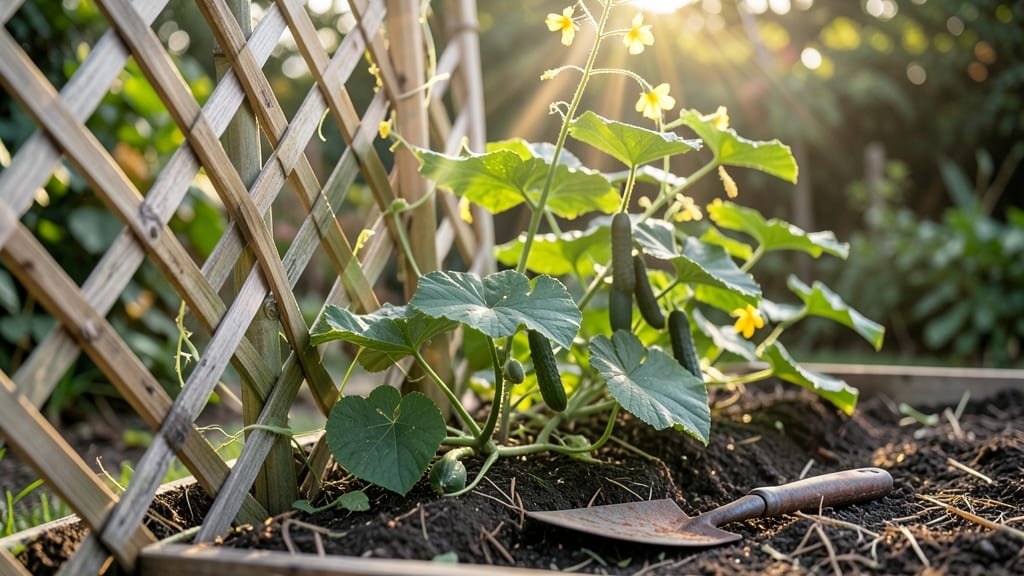
Sunlight for cucumbers is non-negotiable—6 to 8 hours of direct sun daily—or they’ll stretch into sad, leggy vines with bitter, stunted fruit. 🌞 I learned this the hard way when my first cucumber patch yielded only a handful of pathetic harvests.
The secret isn’t just sunlight—it’s how you position those vines to make every ray count.
Most gardeners fail because they treat cucumbers like tomatoes—planting them flat in the ground and hoping for the best. Instead, vertical training (trellises, cages, or stakes) keeps leaves out of the shade, boosts air circulation, and sends energy into fruit production.
My plants now produce 3-4 times more cucumbers in the same space—all because they’re not wasting energy sprawling.
You’ll spot the difference fast: healthy vines grow 2-3 feet tall in weeks, leaves stay deep green (not yellow), and cucumbers form within 4-6 weeks of flowering. The key is positioning the trellis south-facing (in the Northern Hemisphere) to catch morning sun, then adjusting as the season shifts.
Even partial shade in summer afternoons works if you prune aggressively.
Spring and fall? Cucumbers still need full sun, but cooler temps slow growth—so extend your season with row covers or a mini greenhouse. The payoff?
A continuous harvest from early summer until frost, with plants that look like they’re from a commercial farm, not your backyard. Let’s get those vines climbing!
📚 In This Guide
- What you need
- Instructions
- Tips and common mistakes
- Wrapping up and next steps
What you need
- ● Cucumber seeds or seedlings: Choose disease-resistant varieties like 'Straight Eight' or 'Marketmore 76' (6–10 plants, depending on space).
- ● Vertical trellis or support: DIY option: Wooden stakes (8 ft tall), bamboo poles, or PVC pipes (2–3 per plant).
- ● Store-bought: Apex trellis net or A-frame cucumber cages (1–2 per 10 sq ft).
- ● Growing medium: Well-draining potting mix (50% compost, 30% peat/coir, 20% perlite) or nutrient-rich garden soil (amend with compost).
- ● Containers (if not in-ground): 5-gallon fabric grow bags or large pots (12–18" deep) with drainage holes (1 per plant).
- ● Fertilizer: Balanced organic fertilizer (10-10-10) or compost tea (mix 1 tbsp per gallon of water).
- ● Mulch: Straw or shredded leaves (2–3 inches thick) to retain moisture and regulate soil temp.
- ● Pruning shears: For trimming vines and removing suckers (clean with rubbing alcohol between uses).
- ● Soft plant ties: Velcro strips or jute twine (to secure vines to trellis without damaging stems).
- ● Watering can or drip irrigation: 1–2 gallons capacity (avoid overhead watering to prevent disease).
- ○ Sunlight meter (optional): To track light intensity (6,000–8,000 lux for optimal growth).
- ○ Shade cloth (optional): 30–50% coverage for hot climates (hang above plants to filter direct sun).
- ● Full-sun location: 6–8 hours of direct sunlight daily (south-facing windows or outdoor space).
- ● Warm soil temps: 70°F+ (use a soil thermometer or wait until frost risk passes).
- ● Space: 3–4 feet between plants (or 1 plant per 10 sq ft in containers).
How to optimize sunlight for cucumbers and train them vertically
Here's how to maximize sunlight exposure for cucumbers while transforming them into bushy, high-yielding vertical vines.
☀️ Step 1: Position Plants for Maximum Sunlight Exposure
Cucumbers need 6-8 hours of direct sunlight daily to produce their best fruit. I always place them in the southernmost part of the garden where they won't be shaded by taller plants or structures. If your garden has afternoon shade, position the trellis so vines grow toward morning sun instead.
Watch for sun scorch—you'll see it as pale, papery patches on leaves during hot afternoons. This is normal in intense sunlight but can be prevented by providing afternoon shade cloth (30-50% shade) when temperatures exceed 90°F. The goal is to balance light exposure with temperature control.
🪴 Step 2: Install a Strong Vertical Trellis System
Use a 6-foot tall trellis made of sturdy materials like metal or thick wooden stakes. I like to use a combination of a central post with horizontal strings or a mesh netting system—both work well for cucumbers. Space plants 12-18 inches apart along the base of the trellis so vines can spread evenly.
Train the main vine upward immediately by gently tying it to the trellis with soft plant ties or old fabric strips. Avoid wire or anything that can cut into the stems as they grow. You'll see lateral tendrils form within 3-5 days—these are your plant's natural way of gripping the trellis.
🌿 Step 3: Prune Strategically to Improve Airflow and Sun Penetration
Remove any leaves that grow below the first 12 inches of the vine—these block sunlight from reaching lower fruit. I also prune off any lateral shoots that grow downward instead of upward, as they'll compete for energy with your main producing vines. Use clean, sharp pruners to make cuts at a 45-degree angle just above a leaf node.
Watch for yellowing leaves—this often signals overcrowding or poor airflow. If you see this, prune additional leaves to improve circulation. The goal is to keep the plant's energy focused on producing fruit rather than maintaining excessive foliage.
⏰ Step 4: Adjust Sunlight Exposure as Plants Mature
As cucumbers grow taller, their lower leaves will naturally yellow and die back. This is normal and actually beneficial—it allows more sunlight to reach the developing fruit. When you see the vines reach the top of the trellis (5-6 feet), consider extending the trellis or allowing vines to trail along the ground if your climate stays warm.
In cooler climates, bring potted cucumbers indoors during late afternoon if nighttime temperatures drop below 55°F. Cucumbers are sensitive to cold, and even brief exposure can stunt growth. You'll notice new growth slow down or stop entirely if the plant gets chilled.
💧 Step 5: Monitor Sunlight and Water Consistently
Water cucumbers deeply 1-2 times per week rather than frequent shallow watering. This encourages deep root growth, which helps the plant access moisture and nutrients even when sunlight is intense. I water in the early morning to allow foliage to dry completely before evening, reducing disease risk.
Pay attention to the color of the leaves—deep green indicates proper sunlight, while pale yellow suggests insufficient light or nutrient deficiency. If you notice fruit turning bitter or small, it's often a sign the plant isn't getting enough sunlight. In this case, consider moving the trellis to a sunnier location or supplementing with a grow light for 4-6 hours daily.
Tips & tricks for perfect vertical cucumber growth
Between us, getting cucumbers to thrive vertically takes more than just sticking plants on a trellis. These hard-won insights will help you maximize sunlight while avoiding common pitfalls that sabotage growth.
Light Balance is Everything: The 6-8 hours of direct sunlight in Step 1 should be spread across morning and afternoon—morning light is gentler, while afternoon light (before 4 PM) is more intense. If your plants show sun scorch (pale, papery patches) during hot afternoons, I've found that moving the trellis to face east-west rather than north-south can help distribute light more evenly throughout the day.
Trellis Height Matters More Than You Think: That 6-foot trellis in Step 2 isn't just about height—it's about creating a vertical gradient. The top 3 feet should get full sun, while the bottom 3 feet can tolerate partial shade (especially in hot climates). This mimics natural vine behavior and actually increases fruit production by preventing overcrowding at the base.
Pruning Timing Makes All the Difference: When removing leaves below the first 12 inches in Step 3, don't overdo it all at once. Spread pruning over 2-3 sessions during the first 2 weeks of growth. This gradual approach prevents shock while still improving airflow—you'll notice new lateral shoots forming within 3-5 days after each pruning session, just like the instructions mention.
Climate-Specific Adjustments: The 90°F threshold for shade cloth in Step 1 is a good starting point, but I've learned to adjust based on your specific microclimate. In desert regions, consider shade cloth at 85°F, while in humid climates, you might need it at 95°F. For cooler climates where nighttime temps drop below 55°F, I've had success using row covers instead of bringing plants indoors—just remove them during the day for full sunlight exposure.
Pro Tips for Sunlight For Cucumbers
- Between us, getting cucumbers to thrive vertically takes more than just sticking plants on a trellis.
- Light Balance is Everything: The 6-8 hours of direct sunlight in Step 1 should be spread across morning and afternoon—morning light is gentler, while afternoon light (before 4 PM) is more intense.
- Trellis Height Matters More Than You Think: That 6-foot trellis in Step 2 isn't just about height—it's about creating a vertical gradient.
Frequently asked questions
Got questions about maximizing sunlight for your cucumbers? You’re not alone! Here are some of the most common queries—plus straightforward answers to keep your vines thriving.
How much sunlight do cucumbers really need per day?
Cucumbers are sun-loving plants and need 6–8 hours of direct sunlight daily. If your garden gets less, opt for vertical trellising to stretch vines toward light. Morning sun (6 AM–12 PM) is ideal—it warms the soil and prevents fungal issues. Shade cloth (30% coverage) can help in scorching climates.
Can cucumbers survive with only partial sun?
Yes, but with trade-offs! Cucumbers in partial shade (3–6 hours of sun) will grow slower, produce fewer fruits, and may develop small, bitter-tasting cucumbers. If your space is shady, choose compact varieties (like ‘Bush Champion’) or supplement with grow lights. Monitor for pests—shady plants are more prone to aphids and powdery mildew.
What’s the best way to give cucumbers sunlight if my garden is shaded?
Try these hacks:
- Vertical trellising: Train vines upward to capture light from multiple angles.
- Reflective surfaces: Place white walls or mirrors near plants to bounce light.
- Container mobility: Move pots to follow the sun’s path (e.g., rotate daily).
- Prune strategically: Remove lower leaves to reduce shade on the plant itself.
Why are my cucumber leaves turning yellow in full sun?
Yellowing leaves (chlorosis) often signal overheating, nutrient burn, or root stress. Check these fixes:
- Provide afternoon shade (use shade cloth or a temporary cover).
- Ensure consistent watering—dry soil + heat = stress.
- Test soil pH (ideal: 6.0–6.8) for magnesium/iron uptake.
- Reduce fertilizer if using high-nitrogen blends—it can scorch roots.
Do cucumbers need sunlight before they start flowering?
Cucumbers need plenty of light during vegetative growth (leafy stage) to build energy for flowering and fruiting. Skimping on sun early leads to weak stems, sparse vines, and fewer blooms. Aim for full sun from transplanting (or seedling stage) to encourage robust growth. Once flowers appear, maintain light levels to boost pollination.
Wrapping up and next steps
Growing thriving cucumber vines is all about harnessing the power of sunlight—6 to 8 hours of direct light daily is your golden ticket to bushy, prolific plants! 🌞 Whether you’re trellising vertically or letting them sprawl, proper light exposure boosts flavor, yield, and plant health.
With the right setup—like reflective surfaces or strategic placement—you’re already on your way to a bountiful harvest.
Ready to put it into action? Start by observing your cucumbers’ progress—adjust their sunlight exposure as needed, and watch those vines flourish. Happy growing! 🌱