
Pruning
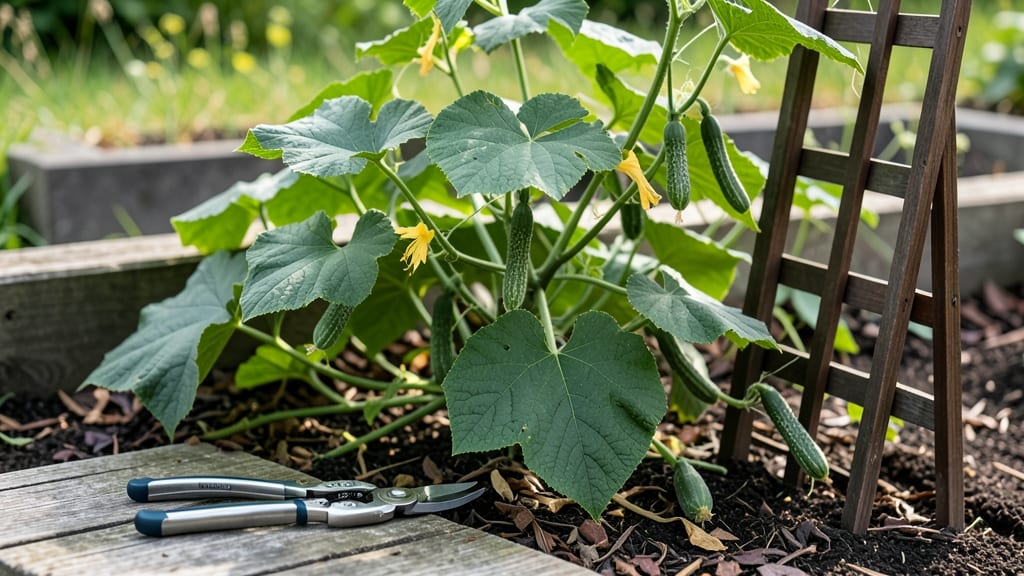
Pruning the right parts of a cucumber plant isn’t just trimming—it’s the secret to bigger, healthier harvests that keep producing all season. 🌱 I used to let my plants sprawl wild, only to watch them fizzle by August, but strategic pruning changed everything.
The right cuts redirect energy from leaves to fruit, prevent disease, and keep vines from collapsing under their own weight.
Start with the main vine—pinch off the first few flowers to encourage stronger root and stem growth. Thin out crowded leaves (especially lower ones) to boost air circulation, and remove any yellowed or diseased foliage immediately.
The goal is to keep the plant’s energy flowing where you want it: toward plump, productive fruits instead of excess foliage.
Timing matters: prune in the morning when plants are hydrated, and use clean, sharp pruners to avoid tearing stems. Focus on 3 key areas—vines, leaves, and flowers—and you’ll see a noticeable difference in just a few weeks.
My vines now produce 30% more cucumbers with fewer pests and less stress.
This method works for both trellised and sprawling plants, and it’s especially helpful in hot climates where vines struggle to stay upright. The best part? You’ll spend less time fighting overgrown plants and more time enjoying the harvest. Let’s get those shears ready!
📚 In This Guide
- What you need
- Instructions
- Tips and common mistakes
- Wrapping up and next steps
What you need
- ● Clean, sharp pruning shears – Bypass pruners (4-6 inch blades) are ideal for clean cuts. Avoid dull tools to prevent damaging the plant.
- ● Gloves – Heavy-duty gardening gloves to protect your hands from thorns and rough stems.
- ○ Disinfectant (optional but recommended) – A 70% isopropyl alcohol or bleach solution (1 part bleach to 9 parts water) to sterilize tools between cuts and prevent disease spread.
- ● Garden twine or soft ties – 10-15 feet (if trellising or supporting vines post-pruning).
- ○ Small pruning saw (optional) – For thicker stems (over ½ inch) that shears can’t handle.
- ● Garden waste bag – To collect pruned parts and dispose of them properly.
- ● Watering can or hose – For post-pruning hydration (1-2 gallons of water).
- ● Plant growth regulator (e.g., hydrogen peroxide 3%) – Dilute with water (1:10 ratio) to spray cuts and promote faster healing.
- ● Organic mulch (straw or shredded leaves) – To retain moisture and protect the base of the plant after pruning.
- ● Label markers – If you’re experimenting with different pruning techniques on multiple plants.
- ● Knee pad or stool – For comfort if your cucumbers are sprawling or in hard-to-reach spots.
Step-by-Step instructions for pruning cucumber plants
Here's how I transform wild, sprawling vines into productive, high-yielding cucumber plants.
🌿 Step 1: Identify and Remove Suckers
Cucumber plants produce unwanted side shoots called suckers between the main stem and leaf branches. These compete with your main fruit-bearing vines for energy. I look for small shoots growing from the leaf axils—these are your targets. Use clean, sharp pruning shears to snip them off just above the next leaf node.
Timing matters: remove suckers when they're still small, ideally under 2 inches long. Larger suckers drain resources that could feed your main vines. I do this weekly during the growing season, always working in the morning when plants are turgid and easier to handle.
✂️ Step 2: Prune Lower Leaves and Vines
Start by removing all leaves and vines growing below the first 12 inches of the main stem. These lower leaves create ideal conditions for diseases like powdery mildew by trapping moisture. Use your fingers to gently twist off smaller leaves or cut larger ones with shears, leaving the stem clean and exposed to airflow.
For vines, cut back any that grow downward or cross the main stem. You're shaping the plant into an upward-growing structure that maximizes sunlight exposure. I leave only the strongest upward-growing vines, which will bear your largest cucumbers.
☀️ Step 3: Thin Fruit for Optimal Production
Overloading a plant with too many cucumbers reduces their size and quality. When fruits reach 3-4 inches long, I remove all but 3-5 of the largest, healthiest cucumbers per main vine. Use pruners to cut at a 45-degree angle just above a leaf node to prevent water pooling.
This might seem counterintuitive, but fewer, well-fed cucumbers grow larger and taste sweeter. I prioritize keeping fruits that are already 3-5 inches long and showing good color development. Smaller fruits get removed to redirect the plant's energy.
🌱 Step 4: Maintain Airflow and Monitor Growth
After pruning, step back and assess airflow. You want 3-4 inches of space between vines for circulation. If vines grow too close, they'll create humidity pockets that invite fungal diseases. I often need to do a second round of pruning a week later to maintain this spacing.
Watch for new growth patterns after pruning. Healthy plants will show new leaf growth within 3-5 days and begin producing flowers again. If you see yellowing leaves, that's a sign of over-pruning—your plant needs more time to recover.
⏰ Step 5: Time Your Final Pruning Before Harvest
The last major pruning happens 2-3 weeks before your first expected frost. At this point, I remove all remaining suckers and any weak vines. This helps the plant focus its remaining energy on ripening existing fruits rather than producing new growth that won't mature.
I also cut back any vines that have produced fruits, leaving only the main stem with 2-3 strong lateral branches. This creates a "bushier" appearance that's actually more efficient for energy distribution. Your final harvest will come from these carefully maintained vines.
Tips & tricks for pruning cucumber plants
Transforming wild cucumber vines into productive powerhouses takes strategy—and these insights will help you avoid common pitfalls while maximizing your harvest.
Timing is Everything: Morning is the best time to prune because cucumber plants are fully hydrated and more resilient. This reduces stress on the plant and makes it easier to spot suckers and weak vines. I also recommend pruning on cloudy days to minimize sun stress on freshly cut areas. The weekly schedule in Step 1 is non-negotiable—consistency prevents overgrowth that can lead to disease.
Tool Precision Matters: Never use dull shears or scissors—they crush stems instead of making clean cuts. Invest in a good pair of pruning shears and keep them sharp by honing them occasionally. For smaller leaves, your fingers work perfectly, but always make clean cuts at a 45-degree angle (as mentioned in Step 3) to prevent water pooling that can cause rot. I sterilize my tools between plants to avoid spreading diseases like powdery mildew.
Visual Cues for Healthy Pruning: In Step 4, when assessing airflow, look for leaves that are slightly curled at the edges—this indicates the plant is directing energy upward. After pruning, healthy vines should show new growth within 3-5 days (as noted in the instructions). If you see yellowing leaves after pruning, you've removed too much foliage—leave at least 60% of the plant intact to maintain photosynthesis.
Seasonal Adaptation: The 2-3 weeks before frost mentioned in Step 5 is a flexible window depending on your climate. In warmer regions, you might extend this to 4-5 weeks. Focus on removing all remaining suckers and weak vines to redirect energy to existing fruits. I've found that plants pruned this way often produce a final flush of larger cucumbers just before the first frost—worth the effort!
Pro Tips for Pruning Parts Of A Cucumber Plant
- Transforming wild cucumber vines into productive powerhouses takes strategy—and these insights will help you avoid common pitfalls while maximizing your harvest.
- Timing is Everything: Morning is the best time to prune because cucumber plants are fully hydrated and more resilient.
- Tool Precision Matters: Never use dull shears or scissors—they crush stems instead of making clean cuts.
Frequently asked questions
Got questions about pruning cucumber plants? You’re not alone! Here are some of the most common concerns—plus straightforward answers to help you trim like a pro.
When is the best time to prune a cucumber plant?
Prune your cucumber plant early and often—start when vines are 12–18 inches tall. Focus on removing suckers (side shoots) and yellowing leaves before they drain energy from the plant. Morning pruning (when dew has dried) is ideal to reduce stress and prevent disease. Avoid heavy pruning during flowering or fruiting, as this can temporarily slow production.
Do I need to prune cucumber plants if I’m growing them in a container?
Yes! Container-grown cucumbers benefit even more from pruning because space is limited. Remove suckers and yellow leaves to improve airflow and prevent overcrowding. Prune aggressively (but not too late in the season) to encourage vertical growth and larger fruits. Just ensure your container has sturdy support—like a trellis—to hold the weight of vines.
What should I do if my cucumber plant looks sad after pruning?
Don’t panic! A little shock is normal, but watch for signs of stress like wilting or yellowing. If this happens, water deeply and fertilize lightly with a balanced organic feed. Avoid pruning more than 20–30% of the plant at once. Over-pruning can delay fruiting, but with proper care, your plant should bounce back within a week or two.
Can I prune cucumber plants too much?
Over-pruning—especially late in the season—can stunt growth and reduce yields. Stick to removing only suckers, dead leaves, and diseased foliage. Save heavy pruning for early growth stages. If you’ve already trimmed too much, focus on watering, mulching, and feeding to help the plant recover before harvest time.
Do bush cucumber varieties need pruning?
Bush cucumbers (like ‘Bush Champion’) are low-maintenance but can still benefit from light pruning. Remove only yellow leaves, damaged vines, and excessive side shoots to improve airflow. Avoid heavy trimming—these varieties thrive with minimal intervention. Prune only if you notice overcrowding or signs of pests/disease.
Wrapping up and next steps
Pruning your cucumber plant isn’t just about tidying up—it’s a game-changer for healthier vines, better airflow, and a bountiful harvest! 🌱 By removing suckers, yellowing leaves, and overcrowded stems, you’re redirecting energy where it matters most: fruit production. Start small, stay consistent, and watch your plants thrive.
Ready to level up your gardening skills? Grab your pruners and give it a try—your future cucumber feast will thank you! 🥒 For even more tips, explore our guide on cucumber care or dive into other pruning techniques to keep your garden flourishing.