
Vegetables
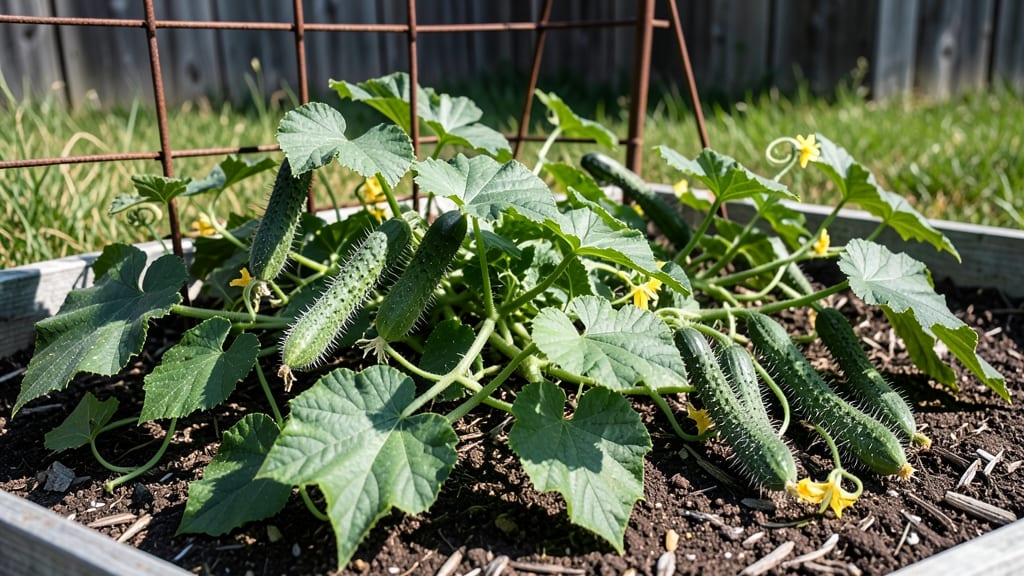
The prickly cucumber's scientific name is Echinocystis lobata, often called wild balsam pear or wild cucumber, recognized for its spiky fruit and rapid vine growth in garden settings.
The prickly cucumber, also known as wild balsam pear, belongs to the Cucurbitaceae family but isn't related to cultivated cucumbers. 🌱 Its distinctive spiky, balloon-like fruit serves as a natural birdseed dispenser, while its aggressive vines can reach up to 20 feet long.
This plant thrives in North America and parts of Europe, often popping up in disturbed soils or along fences. The name "prickly cucumber" comes from its hard, spiky exterior that protects the soft interior pulp.
While the fruit itself isn't typically eaten, young shoots and seeds were historically used by Native Americans for food and medicine. 💛 Gardeners sometimes cultivate it as an ornamental plant or living fence due to its fast growth and unique appearance.
The common name "wild cucumber" reflects its cucumber-like shape, though it's more closely related to pumpkins and squash botanically.
This plant's aggressive growth habit makes it both a nuisance and a valuable ecological player. Its hollow fruits contain seeds that birds love, helping with natural seed dispersal. If you're dealing with it in your garden, consider its ecological benefits before removing it completely!
💡 In This Article
- Scientific Classification of Prickly Cucumber (Echinocystis lobata)
- Garden Uses and Varieties of Wild Cucumber Plants
Scientific classification of prickly cucumber (Echinocystis lobata)
The prickly cucumber belongs to the Cucurbitaceae family, which includes squashes, pumpkins, and melons—but it's not a true cucumber. Its genus name, Echinocystis, comes from Greek words meaning "spiny bladder," perfectly describing its hard, spiky fruit that resembles a miniature pumpkin covered in sharp, needle-like projections.
The species name, lobata, refers to its lobed leaves, which can grow up to 6 inches wide with jagged edges. 🌿
Botanists classify it under the Cucurbitoideae subfamily, placing it closer to gourds than cucumbers. The spines on its fruit serve as a defense mechanism against herbivores, while the fruit's hollow interior contains seeds that birds disperse.
Unlike cultivated cucumbers (Cucumis sativus), which have smooth skin and watery flesh, Echinocystis lobata develops a papery, balloon-like structure that can grow up to 3 inches in diameter when mature. This adaptation helps seeds survive harsh conditions until germination.
The plant's rapid growth—vines can extend 15-20 feet in a single season—makes it an aggressive colonizer in disturbed soils. Its roots produce a chemical called cucurbitacin, a natural pesticide that inhibits competing plants. This trait explains why it thrives in gardens, often smothering weaker vegetation.
The plant's native range spans North America (east of the Rocky Mountains) and parts of Europe, where it favors sunny, moist environments like fields, roadsides, and forest edges.
What sets Echinocystis lobata apart is its two-phase fruit development: young fruits are green and soft, while mature ones turn yellowish-brown and harden into a spiky shell. This dual nature makes it a fascinating study in plant evolution—balancing seed dispersal with protection.
The fruit's spines also create a natural windbreak for seeds, ensuring they land in optimal growing conditions. 🌱
In taxonomic terms, it's classified under the order Cucurbitales, alongside other economically important crops like watermelons and okra. However, its lack of edible fruit (despite its cucumber-like appearance) distinguishes it from cultivated varieties.
The plant's scientific name reflects its spiny, lobed characteristics, while its common names—wild balsam pear or wild cucumber—highlight its ecological role and superficial resemblance to edible cucumbers.
For gardeners, understanding this classification helps explain why Echinocystis lobata behaves differently from ornamental gourds. While it shares the Cucurbitaceae family, its aggressive growth and defensive spines make it a unique challenge—and opportunity—for landscape design.
The plant's self-seeding habit means it can return year after year, making it a persistent (if unwelcome) feature in many gardens. ✨