
Container Gardens
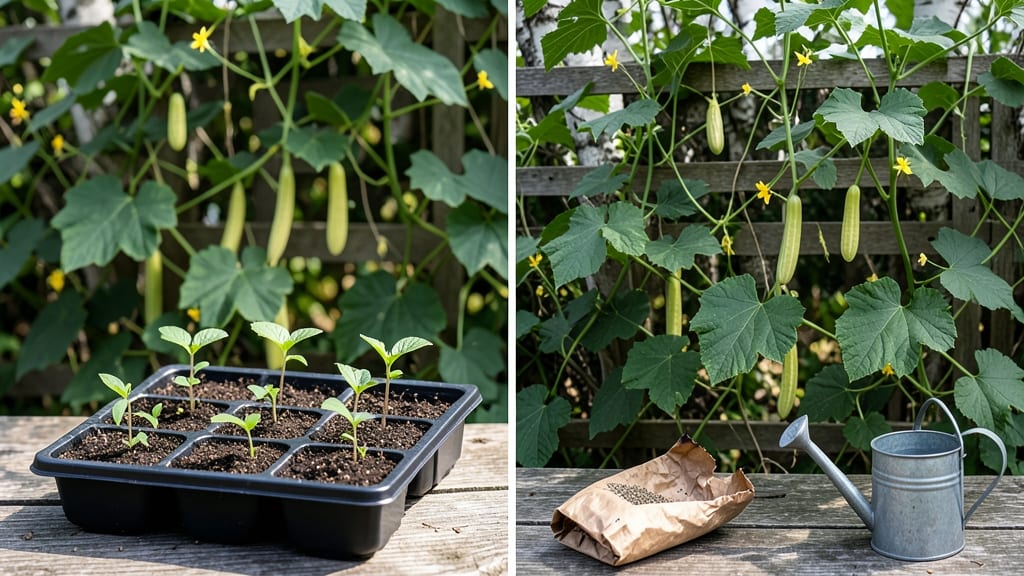
Planting lemon cucumbers in containers gives you zesty, vine-ripened fruit without yard space. ✨ The secret to success starts with the right variety—true lemon cucumbers (like 'Bush Champion') aren't melons but crisp, tangy cucumbers perfect for containers.
I've grown them in 5-gallon pots for years, and the key is matching their needs to your balcony or patio.
You'll need a 5-gallon container (or larger for bushier varieties), well-draining potting mix, and a trellis—these plants climb like crazy. Plant seeds 1 inch deep, 2 inches apart, and keep soil moist but not soggy.
Lemon cucumbers love full sun (6+ hours daily) and warm soil, so wait until night temps stay above 50°F before planting.
In just 60 days, you'll harvest bright green, lemon-shaped cucumbers that taste like a cross between a cucumber and a mild lemon. The vines produce prolifically if you keep them fed with balanced fertilizer and prune regularly.
I've had neighbors ask for cuttings after tasting my first harvest—they're that addictive.
Containers let you grow lemon cucumbers even in small spaces, and the vertical growth saves room. Just watch for powdery mildew (spray with neem oil if you see it) and keep watering consistent.
By midsummer, your balcony will smell like a Mediterranean garden, and your kitchen will never lack fresh, zesty cucumbers again.
📚 In This Guide
- What you need
- Instructions
- Tips and common mistakes
- Wrapping up and next steps
What you need
- ● Lemon cucumber seeds – 3–5 seeds per container (or 1–2 seedlings if starting with transplants). Look for varieties like ‘Lemon Cucumber’ or ‘Bush Champion’ for compact growth.
- ● Container – A 5-gallon pot or larger (at least 12–18 inches deep and wide) with drainage holes. Self-watering containers are a game-changer!
- ● High-quality potting mix – A lightweight, well-draining mix (avoid garden soil). Add 10–20% perlite or vermiculite for extra aeration.
- ● Compost or organic fertilizer – A balanced 10-10-10 or 5-10-10 blend to kickstart growth. Fish emulsion or worm castings are great organic options.
- ● Support structure – A trellis, cage, or sturdy stakes (3–4 feet tall) to guide vines upward and save space.
- ● Gloves & trowel – For planting and soil prep.
- ● Watering can or hose with a gentle spray nozzle – Cucumbers love consistent moisture but hate soggy roots.
- ○ Mulch (optional but helpful) – Straw or shredded leaves to retain moisture and suppress weeds.
- ● Pruning shears – For trimming vines and harvesting.
- ○ pH test kit (optional) – Aim for a soil pH of 6.0–6.8 for optimal growth.
- ● A sunny spot with 6–8 hours of direct sunlight daily (lemon cucumbers are sun-worshippers!).
- ● Warmth – Soil temps should be at least 60°F (15°C) for planting. Start seeds indoors 4–6 weeks before the last frost if your climate is chilly.
- ● Patience & consistency – These cucumbers thrive with regular watering, feeding, and gentle training on their support.
Step-by-step instructions for planting lemon cucumbers in containers
Here's how to grow crisp, zesty lemon cucumbers in containers—fast, productive, and perfect for small spaces.
🪴 Step 1: Choose the Right Containers and Soil Mix
Lemon cucumbers need at least 12-inch-deep containers with drainage holes to prevent root rot. I use 5-gallon fabric grow bags because they allow roots to breathe and expand while keeping weight manageable. Fill each with a sterile potting mix blended with 20% compost—this gives roots the nutrients they crave without compacting like garden soil.
Moisten the mix until it feels like a damp sponge—you should see moisture bead on the surface but not pool. Press it gently into the container, leaving 1 inch of space at the top for watering. The reason we avoid garden soil is that it compacts in containers, suffocating roots and inviting fungal diseases. Lemon cucumbers are heavy feeders, so I always add a slow-release fertilizer at planting time.
🌱 Step 2: Plant Seeds or Transplants at the Right Depth
If starting from seed, plant 2-3 seeds per container at a depth of ½ inch. Sowing too deep delays germination because the seedling must push through more soil. Cover lightly with additional mix, then mist gently with water until the surface looks uniformly damp. I like to use biodegradable seed-starting pellets for seeds—they eliminate transplant shock entirely.
For transplants, dig a hole twice as wide as the root ball and place the plant so the top of the root ball sits ½ inch below the soil surface. This ensures stability and prevents stem rot. Water deeply right after planting to settle the soil around roots. You’ll know you’ve done it right when the soil surface looks slightly firm but not packed—like a well-tamped dirt road.
☀️ Step 3: Provide Full Sun and Consistent Watering
Lemon cucumbers thrive in full sun (6+ hours daily). Place containers where they’ll receive morning sun and afternoon shade if temperatures exceed 85°F—this prevents sunscald on young vines. I use self-watering containers to maintain moisture, but if not available, water deeply every 2-3 days until the top 2 inches of soil feel dry. Overwatering is the #1 killer of container cucumbers.
Watch for yellowing leaves—this usually means either underwatering or poor drainage. If the soil feels dry, water immediately. If the pot feels heavy and water pools, your drainage is inadequate. Lemon cucumbers are 90% water by weight, so consistent moisture is non-negotiable. A mulch layer (like straw) helps retain moisture and keeps roots cool.
🌿 Step 4: Train Vines and Fertilize for Maximum Yield
As vines grow, guide them along a trellis or cage to save space and improve airflow. Lemon cucumbers produce best when vines climb—this prevents fruit rot from sitting on wet soil. Prune side shoots (suckers) that form in the leaf axils to direct energy into fruit production. I pinch off the first few flowers to encourage stronger vine growth before harvest.
Feed plants every 2 weeks with a balanced liquid fertilizer (10-10-10) once flowers appear. You’ll see new leaves emerge within a week—that’s your signal everything is working. Lemon cucumbers are heavy feeders, so don’t skimp. If leaves yellow between veins, that’s a classic sign of magnesium deficiency, and a foliar spray of Epsom salt fixes it fast.
⏰ Step 5: Harvest at Peak Ripeness for Best Flavor
Harvest when fruits reach 3-4 inches long and develop their signature lemon-yellow hue. Use pruning shears to snip stems cleanly—this encourages more flowers to form. Check containers every 2-3 days in peak season, because overripe cucumbers turn bitter and attract pests. The first harvest usually comes 50-60 days after planting, but with proper care, you’ll get a steady supply all summer.
Store harvested cucumbers in the fridge for up to 5 days to preserve crispness. If vines slow production in late summer, give them a final boost of compost and watch for a second flush of flowers. Lemon cucumbers are prolific—one well-cared-for plant can yield 20+ fruits in a season. That’s why container growing is perfect: no wasted space, no wasted effort.
Tips & tricks for perfect container-grown lemon cucumbers
These game-changing insights will help you avoid common pitfalls and maximize your harvest in containers.
Container Selection Wisdom: The 12-inch depth requirement isn't arbitrary—lemon cucumbers develop extensive root systems that need room to spread. I've found that fabric grow bags actually outperform traditional plastic pots because they allow roots to breathe and expand naturally. If you're using standard plastic containers, make sure they have at least 4 drainage holes (not just one at the bottom) to prevent waterlogging. The extra airflow helps prevent fungal diseases that plague container-grown cucumbers.
Soil Moisture Mastery: That "damp sponge" texture I mention for soil moisture is crucial—it should hold together when squeezed but not drip water. I've learned this the hard way after watching seedlings drown in overly saturated soil. For the first 2 weeks after planting, check moisture by sticking your finger 1-2 inches deep daily. If it feels dry at that depth, water thoroughly until you see moisture bead on the surface again. Overwatering is the silent killer of container cucumbers, causing root rot that you won't see until it's too late.
Heat Management Strategy: The 85°F threshold mentioned for afternoon shade isn't just about preventing sunscald—it's about protecting your plants from heat stress that can reduce fruit set. I've noticed that when temperatures climb above 90°F, even with shade, cucumbers often drop flowers before they can pollinate. To combat this, I place a reflective heat shield (like aluminum foil) on the north side of containers to bounce back some heat while still allowing sunlight. This simple trick can double your yield in hot climates.
Fertilizer Timing Technique: The "every 2 weeks" feeding schedule works perfectly, but there's a secret to making it even more effective. I switch to a fish emulsion fertilizer (5-5-5) during flowering and fruiting stages because it provides readily available nitrogen, phosphorus, and potassium without the risk of burning young roots. The key is to apply it in the morning when temperatures are cooler—this prevents the fertilizer salts from concentrating too quickly in the soil. You'll notice new leaves emerging within 5-7 days, signaling your plants are getting exactly what they need.
Pro Tips for Planting Lemon Cucumbers
- These game-changing insights will help you avoid common pitfalls and maximize your harvest in containers.
- Container Selection Wisdom: The 12-inch depth requirement isn't arbitrary—lemon cucumbers develop extensive root systems that need room to spread.
- Soil Moisture Mastery: That "damp sponge" texture I mention for soil moisture is crucial—it should hold together when squeezed but not drip water.
Frequently asked questions
Got questions about growing lemon cucumbers in containers? You’re not alone! Here are answers to the most common queries to help you crush your harvest—no lemons (or cucumbers) left behind.
When is the best time to plant lemon cucumbers in containers?
Plant after the last frost when soil temps hit at least 60°F (15°C). For most regions, this means late spring (May–June). If you’re in a warm climate (zones 8–10), you can start as early as March! Just ensure containers are fully warmed by the sun—cold roots = unhappy plants.
How long do lemon cucumbers take to grow in containers?
Expect 60–70 days from planting to harvest, depending on variety and conditions. With proper care (sun, water, nutrients), you’ll see vines climbing and tiny fruits forming in about 4–6 weeks. Patience pays off—those tangy, lemon-shaped cucumbers are worth the wait!
Why aren’t my lemon cucumber plants producing fruit?
No fruit? Check these fixes:
- Pollination: Hand-pollinate with a soft brush or shake vines gently to transfer pollen.
- Sunlight: Ensure 6–8+ hours of direct sun daily—shady spots = fewer blooms.
- Nutrients: Feed with balanced fertilizer (10-10-10) or compost tea every 2–3 weeks.
- Heat stress: If temps exceed 90°F (32°C), provide afternoon shade.
Can I grow lemon cucumbers without a trellis?
Technically yes, but not ideal. Lemon cucumbers are vining plants and sprawl quickly. Without support, they’ll compete for space, yield fewer fruits, and risk disease. If you skip the trellis, opt for a large container (15+ gallons) and prune aggressively to encourage bushier growth. Still, a simple 5-foot tall trellis maximizes harvests!
What’s the difference between lemon cucumbers and regular cucumbers?
Lemon cucumbers are smaller, rounder, and sweeter with a tangy, lemony flavor—perfect for snacking or salads! They’re also thinner-skinned and less watery than slicing cucumbers. Plus, they’re disease-resistant, making them a container gardener’s dream.
Can I grow lemon cucumbers over winter in containers?
In mild climates (zones 9–11), yes! Use black containers to absorb heat and insulate roots with mulch. Move pots to a sunny, sheltered spot and protect from frost with row covers. In colder zones, overwinter seeds indoors or grow them as an annual spring/summer crop.
Wrapping up and next steps
Growing lemon cucumbers in containers is a rewarding journey that brings fresh, tangy flavors to your table in just 60 days!
With the right mix of sun, space, and care, you’ll enjoy a bountiful harvest—whether you’re a beginner or a seasoned gardener. Start small, stay consistent, and watch your vines thrive!
Ready to take the next step? Pick your container, grab your seeds, and plant today! 🌱 Your future cucumbers (and happy taste buds) will thank you.