
Companion Plants
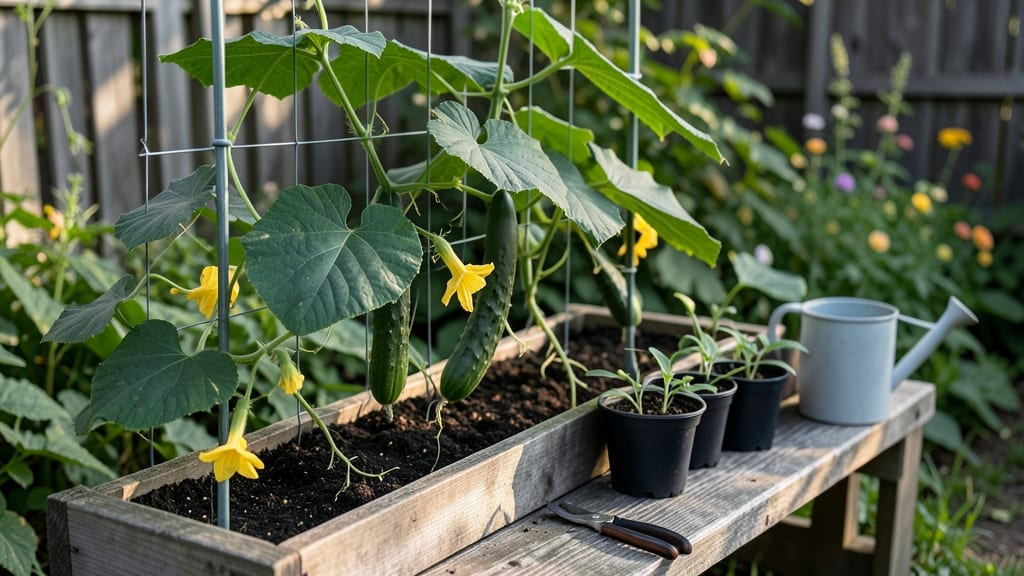
Planting Japanese cucumbers like 'Suyo Long' is a breeze—they yield crisp, sweet harvests in just 55 days without a trellis, and I’ve grown them for years. lets them climb naturally on nearby plants or fences.
These bushy vines thrive in warm soil and full sun, so wait until after your last frost when night temperatures stay above 60°F. Plant seeds ½ inch deep, 3-4 feet apart in rows, and mulch heavily to keep roots cool.
The first tendrils appear within days, and you'll see fruit forming by early summer. By mid-season, you'll be harvesting 12-18 inches of sweet cucumber daily—enough to share with neighbors. The key is consistent moisture (1-2 inches per week) and avoiding overhead watering to prevent mildew on the sprawling leaves.
Works in containers too (5-gallon pots for smaller varieties), and they pair beautifully with beans or radishes. Here's how to set them up right from the start!
📚 In This Guide
- What you need
- Instructions
- Tips and common mistakes
- Wrapping up and next steps
What you need
- ● Japanese cucumber seeds – 5–10 seeds per plant (or 1–2 plants per 12" pot if container-growing). Choose heirloom varieties for best flavor!
- ● Well-draining soil – 10–12" deep planting area (or 5-gallon containers). Mix in compost (1 part compost to 3 parts soil) for nutrients.
- ● Fertilizer – Balanced 5-5-5 or 10-10-10 (organic or synthetic) or compost tea for a natural boost.
- ● Watering can or hose – With a gentle spray nozzle to avoid disturbing seedlings.
- ● Garden trowel or transplanter – For digging holes (2–3" deep, 12" apart).
- ● Mulch (straw or shredded leaves) – 2–3" layer to retain moisture and suppress weeds.
- ○ Pruning shears – Optional, for trimming vines if they sprawl (though Japanese cucumbers are bushier!).
- ○ Support stakes (optional) – 3–4 ft tall bamboo stakes or tomato cages if you want light support (but not required!).
- ○ Row cover or shade cloth (30–50%) – Optional for young plants in hot climates.
- ● Sunlight – 6+ hours of direct sun daily (partial shade in scorching climates).
- ● Warm soil – Wait until soil temps reach 60°F+ (use a soil thermometer or plant after last frost).
- ○ Companion plants (optional but helpful!) – Try nasturtiums (pest deterrent) or beans (nitrogen fixers).
Step-by-step instructions for planting Japanese cucumbers
Here’s how to grow bushy, trellis-free Japanese cucumbers that produce prolifically in just 55 days.
🌱 Step 1: Choose the Right Location and Prepare the Soil
Japanese cucumbers thrive in full sun—pick a spot that gets at least 6-8 hours of direct sunlight daily. These varieties grow as compact bushes, so they don’t need trellises, but they do need rich, well-draining soil. Work in 2-3 inches of compost into the top 6 inches of soil to improve fertility and drainage. If your soil is heavy clay, mix in a handful of perlite or coarse sand per planting hole to prevent waterlogging.
Japanese cucumbers are sensitive to cold, so wait until after the last frost date in your area and when soil temperatures reach at least 60°F. Use a soil thermometer to check—cooler soil slows germination and weakens seedlings. If you’re planting in early spring, consider using black plastic mulch to warm the soil faster and suppress weeds.
🌱 Step 2: Plant Seeds or Transplants at the Right Depth
If starting from seeds, plant 1-2 seeds per hole about ½ inch deep and 12 inches apart. Japanese cucumbers grow in compact bushes, so spacing them too close leads to crowded vines and fewer fruits. If using transplants, dig holes just deep enough to cover the root ball but leave the top set of leaves above soil level—burying stems too deep encourages rot.
Press the soil gently around the seeds or seedlings to remove air pockets, then water deeply to settle the soil. After germination (usually 5-7 days in warm soil), thin to one strong seedling per hole. If you planted two seeds, snip the weaker one at the base with scissors—don’t pull, or you’ll disturb the roots of the remaining plant.
☀️ Step 3: Water and Mulch for Consistent Moisture
Japanese cucumbers need consistent moisture—never let the soil dry out completely, but avoid soggy conditions. Water deeply 1-2 times per week, aiming for 1 inch of water per week. Early morning is best to reduce disease risk. Use a soaker hose or drip irrigation to deliver water at the base and keep foliage dry, which prevents fungal diseases like powdery mildew.
Apply 2-3 inches of organic mulch (straw or shredded leaves) around each plant to retain moisture, suppress weeds, and keep fruits clean. Mulch also protects vines from soil-borne diseases by preventing splashing. Replenish mulch as it breaks down during the season.
✂️ Step 4: Prune and Support for Bushier Growth
Unlike vining cucumbers, Japanese varieties stay compact, but they still benefit from light pruning. Remove any yellow or diseased leaves immediately to improve airflow and reduce pest pressure. If a vine grows too long (over 18 inches), pinch back the tip to encourage bushier growth and more fruit production. This redirects energy from climbing to fruiting.
Since these cucumbers don’t need trellises, you can still stake individual plants if needed. Use 4-foot bamboo stakes or small cages to support heavy fruit loads. Tie vines loosely with soft plant ties or old fabric strips—avoid wire or anything that can cut into the stems. Harvest fruits every 2-3 days to encourage continuous production.
🌿 Step 5: Fertilize and Monitor for Pests
Feed plants with a balanced, water-soluble fertilizer (10-10-10) every 2-3 weeks starting when flowers appear. Japanese cucumbers are heavy feeders, but too much nitrogen leads to leafy growth at the expense of fruit. Switch to a low-nitrogen, high-phosphorus fertilizer (5-10-10) once flowers form to boost fruiting. Always water before fertilizing to prevent root burn.
Watch for cucumber beetles and spider mites, which are common pests. Handpick beetles early in the day when they’re sluggish, or use row covers to protect young plants. For mites, spray plants with neem oil weekly as a preventive measure. Rotate harvesting around the plant to check the undersides of leaves—this is where pests often hide.
Tips & tricks for planting Japanese cucumbers
These simple strategies will help you avoid common pitfalls and maximize your harvest with minimal effort.
Soil Temperature Matters: That 60°F soil temperature isn't just a suggestion—it's critical for strong germination. I've planted seeds in cooler soil and ended up with weak, leggy seedlings that struggled to produce. If your soil runs cooler, consider using a cold frame or planting in black plastic mulch a few days before planting to warm it up. This small step makes all the difference in getting your plants off to a vigorous start.
Spacing Secret: The 12-inch spacing between plants might seem generous, but trust me on this—crowding leads to poor airflow and more disease problems. I learned this the hard way when my first batch got powdery mildew because I planted too close together. For larger gardens, you can stretch to 18 inches between plants if you want fewer but bigger cucumbers, but stick to 12 inches for that prolific 55-day harvest we're all after.
Watering Wisdom: Those 1-2 deep waterings per week are non-negotiable, especially during hot spells. I've seen Japanese cucumbers wilt dramatically when they dry out, even though they're drought-tolerant compared to other varieties. The key is consistency—better to water deeply once a week than give them a quick drink daily. Early morning watering prevents fungal diseases by letting foliage dry quickly during the day.
Pruning Payoff: Don't be afraid to pinch back those vines when they exceed 18 inches. I used to think this would reduce my harvest, but actually, it forces the plant to put more energy into producing fruit rather than climbing. The same goes for removing yellow leaves—it might look harsh, but it keeps your plants healthy and productive. Think of it as giving your plants a haircut to keep them looking their best.
Pro Tips for Planting Japanese Cucumbers
- These simple strategies will help you avoid common pitfalls and maximize your harvest with minimal effort.
- Soil Temperature Matters: That 60°F soil temperature isn't just a suggestion—it's critical for strong germination.
- Spacing Secret: The 12-inch spacing between plants might seem generous, but trust me on this—crowding leads to poor airflow and more disease problems.
Frequently asked questions
When is the best time to plant Japanese cucumbers?
Japanese cucumbers thrive in warm soil (60°F+) and can be planted 2–3 weeks after your last frost date. For early harvests, start seeds indoors 3–4 weeks before transplanting outdoors. If your climate is hot year-round, plant in spring or early summer for best results.
How long do Japanese cucumbers take to grow?
Most varieties mature in 55–65 days—that’s why they’re perfect for quick rewards! With proper care (sun, water, and nutrients), you’ll see tiny, sweet cucumbers ready to pick in just over a month. Pro tip: Harvest frequently to encourage more production!
Can I grow Japanese cucumbers without a trellis?
While trellises help save space, Japanese cucumbers can thrive on the ground if given plenty of room (3–4 feet apart). Use straw mulch to protect fruit from soil-borne diseases. For compact varieties like ‘Suyo Long’ or ‘Shinto’, bush training works great!
What pests or diseases should I watch for?
Japanese cucumbers are less prone to pests than their vining cousins, but keep an eye out for:
- Cucumber beetles: Handpick or use row covers early.
- Powdery mildew: Improve airflow and avoid overhead watering.
- Squash bugs: Check leaves daily and remove eggs.
Are Japanese cucumbers different from regular cucumbers?
Yes! They’re smaller (4–8 inches long), sweeter, and thinner-skinned than standard slicing cucumbers. Varieties like ‘Kintoki’ or ‘Suyo White’ are crunchy, seedless, and perfect for snacking or stir-fries. Bonus: They’re less watery, so no peeling needed!
Wrapping up and next steps
Growing Japanese cucumbers is a rewarding journey—packed with fast results, minimal fuss, and bountiful harvests in just 55 days! With the right companion plants, soil prep, and a little patience, you’ll enjoy crisp, flavorful cucumbers without the hassle of trellises.
Whether you’re a beginner or a seasoned gardener, this method makes it easy to turn your space into a productive (and delicious) oasis.
🌱 Ready to dive in? Start by gathering your supplies, then pick a sunny spot in your garden or containers. Once your seedlings sprout, watch your harvest grow—literally! Share your progress with fellow gardeners or treat yourself to fresh, homegrown cucumbers. Happy planting! 🌿