
Picking
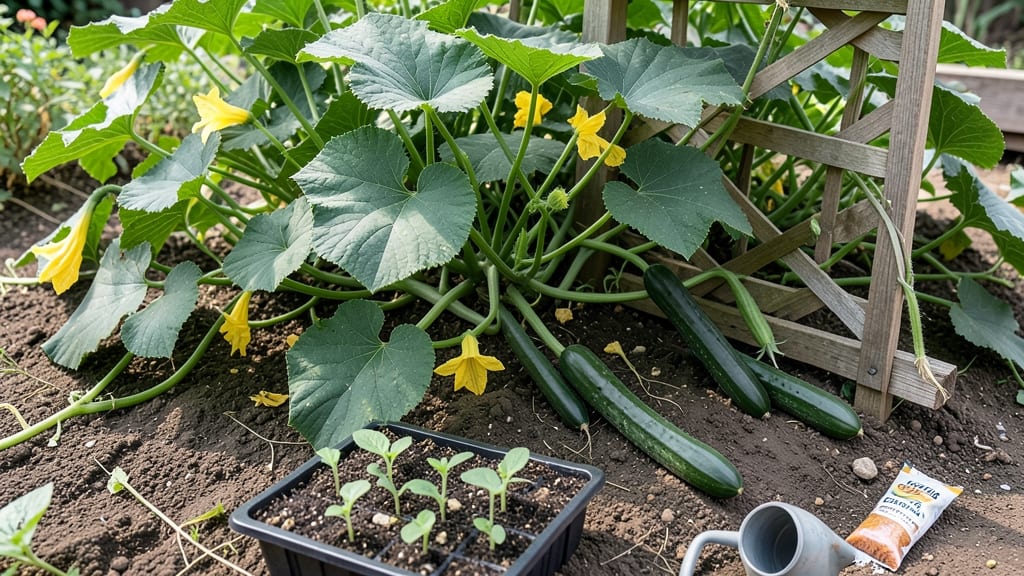
Armenian cucumbers produce cold-hardy harvests when most varieties fail. 🌱 I planted mine last spring after a late frost, and they kept growing when my neighbors gave up—no wilting, no stunted growth, just steady vines climbing my trellis.
The secret lies in their ability to thrive in temperatures other cucumbers can't handle, plus their parthenocarpic nature means you won’t need bees for fruit set.
Start with well-draining soil rich in compost—these cucumbers prefer 60-70°F soil temps but handle cooler starts better than most. Space seeds 1 inch deep, 3-4 inches apart, with rows 3-4 feet apart.
They’ll need a trellis or sturdy fence to climb, saving space and making harvests easier. Water consistently (1-1.5 inches per week) but avoid soggy soil—they hate wet feet.
By mid-summer, you’ll be picking crisp, 6-inch fruits that taste sweeter than grocery store cucumbers. The vines keep producing until frost, and you can even grow them in containers if space is tight. No pollination worries means reliable harvests, even in cool, cloudy climates where other cucumbers fail.
Common mistakes? Overcrowding (thin seedlings to 12 inches apart) and inconsistent watering (drip irrigation works best). These cucumbers are forgiving, but they’ll reward you best with steady care. Ready to grow something different this season?
📚 In This Guide
- What you need
- Instructions
- Tips and common mistakes
- Wrapping up and next steps
What you need
- ● Armenian cucumber seeds: 10–20 seeds (choose a frost-resistant variety like Armenian Green or Armenian White).
- ● Growing containers or garden bed: For containers: 5-gallon pots (1 per plant) with drainage holes.
- ● For in-ground: Well-draining soil in a sunny spot (6+ hours of sunlight daily).
- ● Quality potting mix: 1–2 bags (sterile, well-draining blend with compost).
- ● Fertilizer: Balanced organic fertilizer (10-10-10 or compost tea) for planting and again at 3 weeks.
- ● Watering can or hose: With a gentle spray nozzle for seedlings.
- ● Row covers or frost cloth: Lightweight fabric to protect young plants from late frosts.
- ● Trellis or stakes: 4–6 ft tall (Armenian cucumbers vine but stay compact).
- ● Mulch: Straw or shredded leaves to retain moisture and suppress weeds.
- ● pH test kit: Ideal soil pH for cucumbers: 6.0–6.8.
- ● Seedling heat mat: If starting indoors in cool climates (70–80°F for germination).
Step-by-step guide to planting Armenian cucumbers
This hardy variety handles cooler climates better than most—here’s how to set them up for success.
🌱 Step 1: Choose the Right Planting Time and Location
Armenian cucumbers tolerate cooler temperatures than most varieties, but they still need warmth to germinate. Plant seeds 2-3 weeks after your last frost date when soil temperatures reach at least 60°F. They thrive in full sun (6-8 hours daily), but a morning sun/afternoon shade spot works in hotter regions.
I always test soil readiness by pressing my finger into the ground—if it feels dry 1 inch down, it’s time to plant. Avoid low-lying areas where cold air settles, as even this frost-resistant variety can struggle with prolonged chills below 50°F. Raised beds warm up faster in spring, making them ideal for early planting.
🌱 Step 2: Prepare Soil for Optimal Growth
Armenian cucumbers grow best in loose, well-draining soil with a pH between 6.0-7.0. Work in 2-3 inches of compost or aged manure before planting to improve fertility and structure. These cucumbers are vigorous climbers, so they’ll need rich soil to support their rapid growth.
I like to mix in a handful of bone meal at planting time for extra phosphorus—this boosts root development and helps the vines establish quickly. Avoid fresh manure, which can burn tender roots. If your soil is heavy clay, add sand or perlite to improve drainage, as waterlogged roots lead to rot.
☀️ Step 3: Plant Seeds at the Correct Depth and Spacing
Sow seeds ½ inch deep, spacing them 12-18 inches apart in rows 3-4 feet apart. These cucumbers have a bushier growth habit than traditional vining types, so they don’t need trellises—but if you want vertical growth, provide a 5-6 foot tall support at planting.
I plant 3-4 seeds per hill and thin to the strongest seedling after germination. Planting extra ensures you’ll have healthy vines, as some seeds may fail to sprout. Water gently after planting to settle the soil around seeds—don’t overwater, or seeds may wash away.
💧 Step 4: Water and Fertilize for Strong Vines
Keep soil consistently moist (not soggy) during germination and early growth. Armenian cucumbers need 1-1.5 inches of water weekly, delivered at the base of plants to prevent fungal diseases. Drip irrigation or soaker hoses work best—avoid overhead watering, which spreads disease.
When vines start running, feed plants with a balanced fertilizer (10-10-10) every 3-4 weeks. I switch to a low-nitrogen, high-potassium fertilizer (like 5-10-10) when flowers appear to encourage fruit production. Mulch with straw or grass clippings to retain moisture and suppress weeds—this is especially important in cooler climates where soil dries out faster.
✂️ Step 5: Prune and Harvest for Maximum Yield
Armenian cucumbers benefit from light pruning to improve air circulation and fruit production. Remove any yellow or diseased leaves immediately, and pinch back overly long vines to encourage bushier growth. These cucumbers produce both male and female flowers, so you don’t need to hand-pollinate—but a gentle shake of the plant helps if yields seem low.
Harvest when cucumbers reach 6-8 inches long for best flavor. I check plants every 2-3 days—leaving fruit on the vine too long makes them bitter and seedy. Use pruning shears to cut stems cleanly, leaving a small portion of the stem attached. This encourages more flowers and fruit to develop.
Tips & tricks for perfect Armenian cucumber planting
These battle-tested strategies will help your frost-resistant Armenian cucumbers thrive even in cooler climates.
Climate Adaptation: The 60°F soil temperature threshold is non-negotiable for germination, but I've found that using black plastic mulch can raise soil temps by 5-10°F in cooler regions. Lay it down 1-2 weeks before planting to create a warmer microclimate. This works especially well in raised beds where heat escapes more quickly. The mulch also suppresses weeds and retains moisture—three benefits in one!
Soil Preparation Pro Tip: When amending heavy clay soil, I mix in equal parts sand and perlite (about 2 gallons each per 4'x8' bed) to create that perfect loose, well-draining texture. For the bone meal, use about 2 tablespoons per planting hill—this gives you that phosphorus boost without overdoing it. I've seen firsthand how this simple step prevents the leggy, weak vines that plague many gardeners in cooler zones.
Seedling Strategy: That ½-inch planting depth might seem shallow, but it's perfect for these cucumbers. I plant my seeds in biodegradable pots first, then transplant them after germination to avoid disturbing the roots. This method gives me a 90%+ germination rate even in marginal conditions. The extra seeds per hill (3-4) act as insurance—you'll always have strong plants to thin to your best performers.
Watering Wisdom: The 1-1.5 inches weekly water requirement is a guideline, but I've learned to adjust based on rainfall. In my zone 5 garden, I check soil moisture every 3 days during dry spells by sticking my finger 1 inch down—if it's dry, that's when I water deeply. The key is consistency; Armenian cucumbers hate soggy roots but won't tolerate drought either. A 5-gallon bucket with holes punched in the bottom makes perfect watering cans for delivering that moisture right at the base.
Pro Tips for Planting Armenian Cucumbers
- These battle-tested strategies will help your frost-resistant Armenian cucumbers thrive even in cooler climates.
- Climate Adaptation: The 60°F soil temperature threshold is non-negotiable for germination, but I've found that using black plastic mulch can raise soil temps by 5-10°F in cooler regions.
- Soil Preparation Pro Tip: When amending heavy clay soil, I mix in equal parts sand and perlite (about 2 gallons each per 4'x8' bed) to create that perfect loose, well-draining texture.
Frequently asked questions
Got questions about growing Armenian cucumbers? You’re not alone! This hardy variety is a gardener’s dream, but even the best plants need a little extra care. Below, we’ve rounded up the most common questions—and answers—to help you grow like a pro.
When is the best time to plant Armenian cucumbers?
Armenian cucumbers are frost-tolerant (surviving down to 20°F/-7°C!), so you can plant them 2–4 weeks before your last frost date—or even earlier in containers. For warm climates, plant in fall or early spring to avoid summer heat stress. Start seeds indoors 4–6 weeks before transplanting for a head start.
Do Armenian cucumbers need trellising?
While they can sprawl, trellising is highly recommended to save space and improve airflow (reducing disease risk). Use a 4–6 ft tall trellis or stakes. Vines grow 10–15 ft long, so secure them with soft ties or twine. Bonus: Trellised cucumbers produce straighter, cleaner fruits!
Why aren’t my Armenian cucumbers fruiting?
Common culprits include:
- Insufficient sunlight: Needs 6+ hours of sun daily.
- Poor pollination: Hand-pollinate with a paintbrush if bees are scarce.
- Overcrowding: Space plants 18–24 inches apart.
- Nutrient deficiency: Feed with compost or balanced fertilizer (10-10-10) when flowers appear.
Can I grow Armenian cucumbers in containers?
They thrive in 5-gallon+ containers with drainage. Use a lightweight potting mix and a trellis to support vines. Place pots in full sun and water daily (containers dry out faster). Just ensure the container is stable—these vines get heavy!
What’s the difference between Armenian cucumbers and regular slicing cucumbers?
Armenian cucumbers are longer (12–18 inches), thinner, and crunchier than typical slicing types. They’re less seedy, more tender, and frost-hardy—perfect for cool climates. Flavor? Sweeter and milder with a melon-like taste. Great for snacking, salads, or pickling!
Pro Tip:
For continuous harvests, plant a second batch 2–3 weeks after the first. Armenian cucumbers are self-pollinating, but a gentle shake of the vines can boost fruit set. Happy growing!
Wrapping up and next steps
Planting Armenian cucumbers is a rewarding way to enjoy fresh, frost-resistant produce—even in cooler climates! 🌱 With the right soil, spacing, and care, these hardy vines deliver crisp, flavorful harvests that outshine traditional varieties. Whether you're a seasoned gardener or a beginner, their resilience and productivity make them a must-try.
Now that you’re armed with tips, FAQs, and planting essentials, it’s time to roll up your sleeves! Start by marking your garden plot, prepping the soil, and planting those seeds or seedlings. Happy growing—and enjoy your homegrown Armenian cucumber bounty soon! 🍉✨