
Vegetables
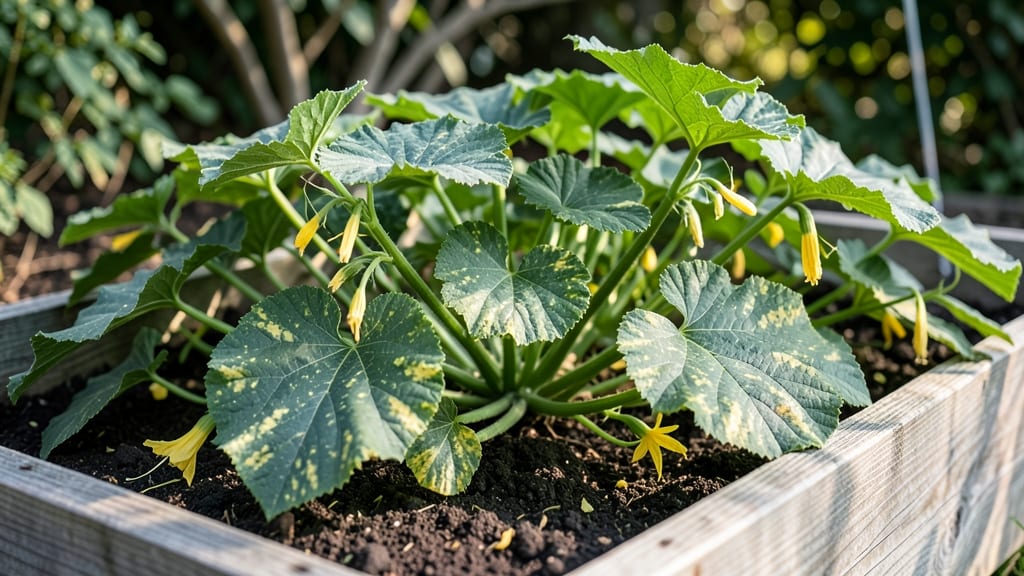
Pale cucumber leaves mean your plants are silently screaming for help. 🌱 The moment I noticed my vines turning ghostly white, I knew it wasn’t just a shade issue—it was a sign of stress, and cucumbers respond fast when you fix the problem.
Whether it’s nitrogen starvation, magnesium cravings, or hidden pests sucking the life out of your plants, these yellowing leaves are your first warning before harvests suffer.
The real detective work starts with the pattern: are the veins staying green while edges fade? That’s classic magnesium deficiency. Or are the leaves thin and papery with new growth stunted? That’s nitrogen calling for attention.
Spider mites leave tiny webs and speckled damage, while fungal spots appear as greasy patches. I’ve ruled out each one by checking the undersides of leaves and soil moisture—because overwatering drowns roots just as surely as underwatering starves them.
Reviving your plants is simpler than it seems: a balanced fertilizer boost for nitrogen, Epsom salt spray for magnesium, and neem oil for pests. Prune back any severely damaged foliage to redirect energy, and within 7-10 days, you’ll see deeper green returning.
The best part? These fixes also prevent future problems, so your next harvest stays lush and productive.
This method works for both greenhouse and outdoor cucumbers, no matter the variety. The key is acting fast—once leaves start curling or dropping, the plant’s energy shifts from growth to survival. Let’s turn those pale vines back into vibrant producers before it’s too late.
Root Causes Behind Weak Growth
Understanding why your cucumber leaves turn pale is the first step to fixing the problem. Pale foliage is often a cry for help from your plants—whether they’re struggling to access nutrients, light, or water, or battling unseen pests and diseases.
Let’s break down the most common culprits and why they leave your cucumbers looking less than vibrant.
Pale cucumber leaves are often a red flag that your plants aren’t getting the right nutrients. While cucumbers are relatively low-maintenance, they still need a balanced diet to thrive. Here’s what’s likely missing:
💡 Nitrogen Shortage: The Yellowing Culprit
Nitrogen is the building block of chlorophyll, the pigment that gives leaves their green hue. When cucumbers lack nitrogen, older leaves turn pale yellow (a condition called chlorosis), starting from the bottom and working upward.
- Why it happens: Nitrogen is highly mobile in plants, meaning they’ll pull it from older leaves first to support new growth.
If your soil is depleted or your fertilizer lacks nitrogen, your cucumbers will show it. - How to spot it: Look for uniform yellowing (not just pale green) on mature leaves, while younger leaves stay green. - Fix it fast: Feed your plants with a balanced fertilizer (look for one with a higher first number, like 10-10-10 or 20-10-10) or add compost, manure, or a nitrogen-rich amendment like blood meal.
💡 Magnesium & Chlorophyll: The Green Pigment Problem
Magnesium is a key player in chlorophyll production. Without enough of it, leaves develop interveinal chlorosis—pale areas between the veins while the veins themselves stay green.
- Why it happens: Overwatering, poor drainage, or overly alkaline soil can lock out magnesium.
Even if it’s in the soil, cucumbers might not absorb it efficiently. - How to spot it: Pale patches between veins, often on older leaves first, with crispy or curled edges. - Fix it fast: - Test your soil (pH should be 6.0–6.8 for cucumbers). - Apply Epsom salt (magnesium sulfate) as a foliar spray or soil drench (1 tablespoon per gallon of water). - Use well-composted organic matter to improve soil structure and magnesium availability.
💡 Iron Deficiency: The Pale New Growth
Young, pale leaves (especially on new growth) are a classic sign of iron deficiency, which restricts chlorophyll production.
- Why it happens: Iron is most available in acidic soil (pH < 7.0). If your soil is alkaline, iron becomes locked out, even if it’s present.
Cucumbers also need chelated iron (a form they can absorb easily). - How to spot it: New leaves are pale yellow or white, while older leaves stay green.
This is called "yellowing between veins" but affects younger foliage first. - Fix it fast: - Lower soil pH with sulfur, peat moss, or pine needles. - Use an iron supplement like iron chelate (apply as a foliar spray or soil drench). - Avoid over-fertilizing with lime or wood ash, which raises pH.
Cucumbers are sun-worshippers—they crave 6–8 hours of direct sunlight daily. Without enough light, leaves pale as the plant struggles to photosynthesize efficiently.
💡 Shade Stress: The Slow Fade
Pale, thin leaves on cucumbers often mean they’re not getting enough light, especially in container gardens, shaded patios, or under tall plants.
- Why it happens: In low light, plants stretch (etiolate) and produce large, pale leaves to maximize sunlight absorption.
This weakens the plant, making it prone to disease. - How to spot it: Leaves are light green, leggy, and sparse, with weak stems. - Fix it fast: - Move your cucumbers to a sunnier spot (even a few hours more sunlight helps). - Use reflective surfaces (like white walls or mirrors) to bounce light onto plants. - Prune nearby shade-casters (trees, fences, or other veggies). - Consider grow lights if you’re growing indoors or in deep shade.
Water stress—whether from overwatering or underwatering—can turn cucumber leaves pale as the plant struggles to transport nutrients.
💡 Overwatering: The Suffocation Effect
Too much water drowns roots, preventing them from absorbing oxygen and nutrients. This leads to pale, yellowing leaves and poor growth.
- Why it happens: Waterlogged soil depletes oxygen, causing root rot and nutrient uptake issues. Cucumbers hate "wet feet." - How to spot it: Leaves turn pale yellow or grayish, feel soggy, and may drop prematurely.
Roots smell rotten if checked. - Fix it fast: - Improve drainage by amending soil with perlite, sand, or compost. - Water deeply but less often—let the top 1–2 inches of soil dry out between waterings. - Raise containers or plant in mounds to prevent pooling.
💡 Underwatering: The Nutrient Blockade
When cucumbers don’t get enough water, their vascular system struggles to transport nutrients, leading to pale, crispy edges and wilting.
- Why it happens: Drought stress forces plants to conserve water, slowing down nutrient movement.
Leaves may also curl or develop brown tips. - How to spot it: Leaves feel dry and brittle, with pale or white edges. - Fix it fast: - Water deeply (1–1.5 inches per week, more in heat). - Mulch heavily to retain moisture (use straw or shredded leaves). - Water in the morning to reduce evaporation.
Pests and pathogens can sap nutrients from cucumber leaves, leaving them pale and stunted.
💡 Sap-Sucking Pests: The Silent Drainers
Insects like aphids, spider mites, and whiteflies pierce leaves to feed on sap, weakening the plant and causing pale, stippled, or yellowed patches.
- Why it happens: These pests block stomata (leaf pores), reducing photosynthesis and nutrient uptake.
- How to spot it:
- Sticky residue (honeydew) on leaves.
- Tiny webs (spider mites) or white cottony masses (aphids).
- Pale, speckled leaves with a "rusty" appearance.
- Fix it fast:
- Spray with soapy water (1 tsp mild soap per quart of water).
- Introduce beneficial insects (ladybugs, lacewings).
- Use neem oil (1 tsp per liter of water) as a natural pesticide.
💡 Fungal & Bacterial Infections: The Leaf Blighters
Diseases like powdery mildew, downy mildew, or bacterial leaf spot can cause pale, discolored patches and weaken the plant.
- Why it happens: Overhead watering, high humidity, or poor airflow create the perfect breeding ground for fungi and bacteria.
- How to spot it:
- White powdery coating (powdery mildew).
- Yellow, angular spots (downy mildew).
- Water-soaked, pale patches (bacterial infections).
- Fix it fast:
- Space plants properly for airflow.
- Water at the base (avoid wetting leaves).
- Apply copper fungicide or baking soda spray (1 tsp baking soda + 1 quart water + a drop of soap).
- Remove infected leaves immediately.
Cucumbers thrive in warm (70–90°F) but not scorching conditions. Extreme heat or cold can shock the plant, leading to pale, weak growth.
💡 Heat Stress: The Wilting Pale
When temperatures exceed 90°F (32°C), cucumbers transpire (lose water) too quickly, causing leaves to **wilt, turn pale, and develop sunburn spots
Quick Fixes for Revitalizing Cucumber Plants
Reviving pale cucumber leaves starts with identifying the root cause—whether it’s nutrient deficiency, pests, or environmental stress. Below are practical, step-by-step solutions tailored to each issue, plus prevention tips to keep your vines lush and productive.
Pale leaves often signal a lack of essential nutrients. Here’s how to correct it fast:
🔥 Fix Iron or Chlorosis (Yellowing Between Veins)
- Apply chelated iron (liquid or granular) directly to the soil or spray it on leaves.
Chelated iron is plant-available and works quickly. - Use Epsom salt (magnesium sulfate) for magnesium deficiency: Mix 1 tablespoon per gallon of water and spray on leaves weekly. - Add compost or worm castings to improve soil structure and microbial activity, which helps roots absorb nutrients better.
✨ Prevention Tip: Test your soil every 2–3 years and amend with balanced organic fertilizer (like 5-5-5) before planting.
🍳 Nitrogen Starvation (Overall Pale or Yellow Leaves)
- Top-dress with compost or aged manure around the base of plants (avoid touching stems).
- Use a quick-release nitrogen source like blood meal (1–2 tbsp per plant) or fish emulsion (diluted to 1 tbsp/gallon).
- Mulch with straw or grass clippings to retain moisture and slow nitrogen loss.
💡 Pro Tip: Over-fertilizing with nitrogen can burn roots—always water the soil first before applying fertilizers.
Pests like aphids, spider mites, and cucumber beetles sap plant vigor, leading to pale, stunted growth.
👨🍳 Manual Removal & Natural Sprays
- Blast off aphids with a strong stream of water (early morning works best).
- Spray neem oil (1 tsp per quart of water + a drop of dish soap) to smother soft-bodied pests like mites and aphids.
- Set up yellow sticky traps to catch cucumber beetles before they lay eggs.
🎯 Prevention Tip: Rotate crops yearly to disrupt pest life cycles and plant companion crops like nasturtiums (they repel aphids).
🔪 Severe Infestations? Act Decisively
- Introduce beneficial insects: Ladybugs, lacewings, and parasitic wasps devour pests naturally.
- Use insecticidal soap (mix 2 tbsp soap + 1 quart water) for stubborn infestations—reapply every 3–5 days.
- Remove heavily damaged leaves to prevent spread and improve airflow.
Pale leaves can also stem from heat stress, poor drainage, or root issues.
🥘 Fix Watering & Drainage Problems
- Check soil moisture: Stick your finger 1–2 inches deep—if dry, water deeply (1–1.5 inches per week).
Pale leaves often mean underwatering or overwatering (root rot). - Improve drainage: Amend heavy clay soil with perlite or sand to prevent waterlogging. - Provide shade cloth (30–50%) if temps exceed 90°F (32°C)—cucumbers wilt in extreme heat.
✨ Prevention Tip: Mulch heavily (3–4 inches of straw) to retain moisture and regulate soil temperature.
🌿 Root Bound or Transplant Shock? Revive Roots
- Gently loosen roots if plants are root-bound (container-grown cucumbers). Repot in fresh soil with mycorrhizal fungi to boost absorption.
- Avoid transplant shock: Harden off seedlings (acclimate to outdoor conditions) for 7–10 days before planting.
| Issue | Quick Fix | Prevention |
|---|---|---|
| Nutrient deficiency | Chelated iron, Epsom salt, compost | Soil test + balanced fertilizer |
| Pest damage | Neem oil, sticky traps, beneficial insects | Crop rotation, companion planting |
| Water stress | Deep watering, mulch, shade cloth | Drip irrigation, well-draining soil |
| Root issues | Loosen roots, mycorrhizal fungi | Proper pot size, avoid overcrowding |
Final Reminder: Pale leaves are your plant’s SOS signal—act fast, but avoid overcorrecting. Less is often more with fertilizers and water. Monitor progress and adjust as needed!
🌿 Bonus: For organic growers, try a compost tea (steep compost in water for 24 hours, strain, and spray) to give a gentle nutrient boost.
Frequently asked questions about pale cucumber leaves
Why do my cucumber leaves turn pale yellow instead of just light green?
Pale yellow leaves (especially starting from the bottom) usually mean nitrogen deficiency—the plant is pulling nitrogen from older leaves to support new growth. If only the veins stay green while areas between them fade, it’s likely magnesium deficiency. Check for uniform yellowing vs. interveinal patterns to diagnose correctly.
Can I use Epsom salt on cucumber plants with pale leaves?
Yes! Epsom salt (magnesium sulfate) is perfect for pale leaves caused by magnesium deficiency. Mix 1 tablespoon per gallon of water and spray it on leaves weekly. For soil application, work ½ cup per plant into the top 2 inches of soil. Just avoid overusing it—too much magnesium can block other nutrients.
What’s the fastest way to fix pale leaves caused by spider mites?
Start by blasting mites off leaves with water, then spray with neem oil solution (1 tsp per quart of water + dish soap). Repeat every 3-5 days until new growth appears. For severe infestations, introduce predatory mites or ladybugs. Check leaf undersides daily—mites hide there!
Will pale cucumber leaves affect my harvest?
Yes, if left untreated. Pale leaves mean reduced photosynthesis, so your plant will produce fewer, smaller cucumbers. However, fixing the issue (nutrients, pests, or water) within 7-10 days can often restore normal growth. Prune severely damaged leaves to redirect energy to fruiting.
How do I know if my cucumber plants need more light or nutrients?
Check leaf patterns: Pale but large leaves = light deficiency (move to sunnier spot). Uniform yellowing = nitrogen deficiency (add compost). Pale between veins = magnesium (Epsom salt). If leaves are thin and leggy, it’s definitely light starvation.