
Fertilization
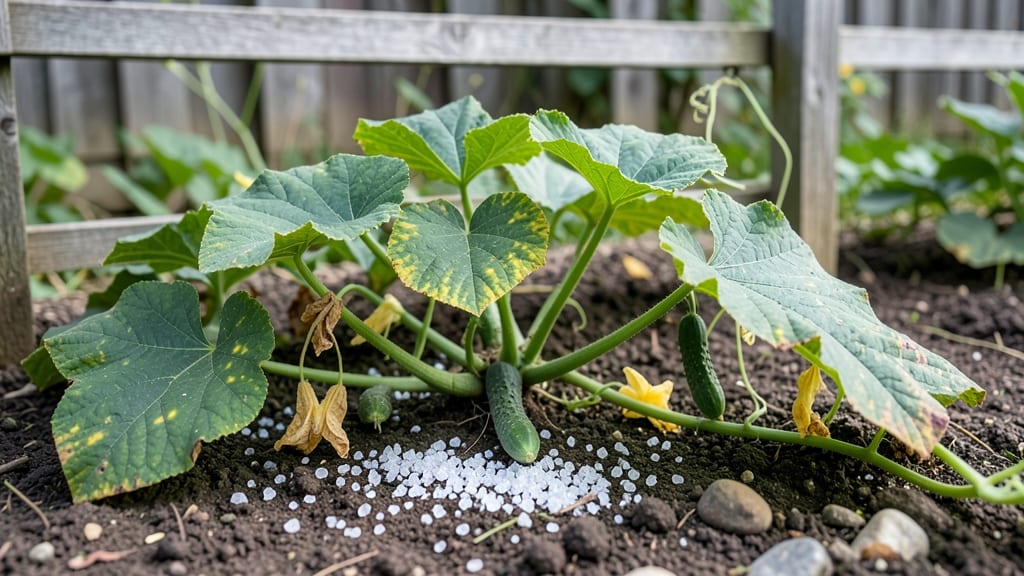
Your cucumbers are screaming for magnesium—those yellowing leaves between the veins aren’t just ugly, they’re a clear sign of deficiency. ✨ I’ve seen this too often in my garden, and the fix is simpler than you think: a quick Epsom salt spray that restores balance in days, not weeks.
The problem starts when soil pH or nutrient competition locks out magnesium, even if other nutrients are plentiful. Unlike potassium or calcium issues, magnesium deficiency shows up first on older leaves—yellow patches between veins while the veins stay green.
It’s your plant’s SOS signal, and ignoring it means smaller fruits and weaker vines.
With the right spray, you’ll see new growth turning a rich, deep green within 5-7 days. The leaves thicken, vines strengthen, and your cucumbers rebound faster than if you’d waited for soil amendments alone. No more guessing—just a targeted boost that works.
This method works for all cucumber varieties, whether you’re growing in soil, containers, or even hydroponics. The key is consistency: apply the spray every 7-10 days until the yellowing stops. Here’s exactly how to do it right.
Root Causes of Cucumber Magnesium Loss
Magnesium deficiency in cucumbers isn’t just a random fluke—it’s usually a sign that something deeper is disrupting your plants’ ability to absorb or retain this essential nutrient. Understanding the why behind the deficiency is the first step to fixing it for good.
Let’s break down the most common culprits, backed by science, so you can target the real issue in your garden.
A soil pH that’s too high (alkaline) or too low (acidic) locks magnesium out of cucumber roots like a bouncer at an exclusive club. Here’s how it works:
- Alkaline soils (pH > 7.5): Magnesium ions (Mg²⁺) bind tightly to calcium and other cations, making them unavailable for uptake. Think of it like a traffic jam—even if magnesium is present, your plants can’t access it.
- Acidic soils (pH < 5.5): Excess hydrogen ions outcompete magnesium, pushing it deeper into the soil where roots can’t reach. Over time, this leaches magnesium away entirely.
Actionable fix: Test your soil’s pH (aim for 6.0–6.8 for cucumbers). If it’s off, amend with elemental sulfur (to lower pH) or lime (to raise it) gradually. Avoid drastic changes—sudden shifts can shock roots and worsen deficiencies.
Cucumbers thrive in consistently moist (not soggy) soil, but too much water flushes magnesium right out of the root zone. Here’s the science:
- Excessive irrigation: Magnesium is highly soluble and leaches quickly, especially in sandy or container soils. One heavy watering session can wash away weeks’ worth of stored magnesium.
- Waterlogged roots: Poor drainage creates anaerobic conditions, where roots can’t absorb nutrients efficiently. Magnesium uptake plummets as oxygen levels drop.
- Frequent light watering: While better than drowning, this encourages shallow root growth, which can’t access magnesium deeper in the soil profile.
Actionable fix:
- Water deeply but infrequently—aim for 1–1.5 inches per week, letting soil dry slightly between sessions.
- Improve drainage with organic matter (compost, coconut coir) or raised beds if your soil is clay-heavy.
- Use drip irrigation or soaker hoses to deliver water slowly at the root zone, reducing runoff.
Magnesium isn’t the only nutrient vying for your cucumbers’ attention. When other elements hog the spotlight, magnesium gets crowded out. The biggest offenders:
- Excess nitrogen (N): While nitrogen fuels leafy growth, it outcompetes magnesium for uptake sites in roots. Too much synthetic fertilizer (like urea) can trigger deficiency even if magnesium is present.
- High potassium (K) or calcium (Ca): These cations displace magnesium in the soil solution, especially in sandy soils. A common issue in heavily fertilized greenhouses or vegetable gardens.
- Phosphorus (P) imbalances: While phosphorus is crucial, too much (from bone meal or superphosphate) can bind magnesium into unavailable forms.
Actionable fix:
- Balance your fertilizer ratio to N-P-K 3-1-2 or lower for cucumbers. Avoid high-nitrogen feeds during fruiting stages.
- Apply magnesium-rich amendments like Epsom salt (MgSO₄) or dolomitic lime to outcompete other cations.
- Use chelates (like magnesium chelate) if your soil is already nutrient-dense but deficient.
Cucumbers are hungry plants—especially when they’re producing vines, leaves, and fruit simultaneously. This rapid growth depletes magnesium reserves faster than roots can replenish them. Here’s the breakdown:
- Chlorophyll production: Magnesium is the center of the chlorophyll molecule. When cucumbers push out new leaves or fruit, they demand more magnesium to keep photosynthesis running.
- Translocation stress: Magnesium is mobile in plants, meaning it gets shuttled from older leaves to new growth. If demand outpaces supply, interveinal yellowing appears first on mature leaves.
- Heat stress: High temperatures (85°F+/30°C+) increase transpiration, pulling magnesium out of leaves faster than roots can absorb it.
Actionable fix:
- Feed cucumbers with a magnesium boost during flowering/fruiting (e.g., foliar spray with Epsom salt or seaweed extract).
- Mulch with straw or grass clippings to keep roots cool and retain moisture, reducing stress.
- Prune excessive foliage to balance growth—too many leaves = more magnesium demand.
Magnesium isn’t infinite. Over time, repeated harvests or monocropping cucumbers (year after year in the same spot) exhaust soil reserves. Even organic soils can become deficient if not replenished:
- Leaching: Magnesium washes out over years, especially in sandy or container soils.
- Crop removal: Each harvest takes magnesium away—cucumber vines can remove up to 50 lbs of magnesium per acre in heavy yields.
- Microbe competition: Beneficial soil microbes (like mycorrhizae) sometimes consume magnesium before plants can access it.
Actionable fix:
- Rotate crops with legumes (beans, peas) or cover crops (clover, buckwheat) to restore soil magnesium naturally.
- Add organic sources like kelp meal, greensand, or wood ash (sparingly) to replenish stocks.
- Test soil every 2–3 years—magnesium levels can drop 10–20% annually in high-yield gardens.
Quick Fixes for Reviving Your Cucumbers
Now that you know the signs and causes of magnesium deficiency in your cucumber plants, it’s time to take action! The good news? Most fixes are simple, budget-friendly, and effective—especially if you catch the problem early.
Below, we’ll break down targeted solutions based on the root causes, along with prevention tips to keep your plants thriving long-term.
If your soil is too acidic, compacted, or lacking organic matter, magnesium won’t be available to your cucumbers—even if it’s present. Here’s how to reset the balance:
- 🔥 Boost Organic Matter Add compost, well-rotted manure (cow or chicken), or worm castings to improve soil structure and microbial activity. Magnesium becomes more accessible when soil organisms break down nutrients. Work 2–3 inches into the topsoil around your plants, then water deeply.
- 🍳 Adjust pH Naturally Test your soil’s pH (ideal range for cucumbers: 6.0–7.0). If it’s too acidic (below 6.0), mix in dolomitic lime (contains magnesium and calcium) or wood ash (use sparingly). For alkaline soil (above 7.0), amend with sulfur or peat moss to lower pH gradually.
- 👨🍳 Loosen Compacted Soil Use a garden fork or broadfork to aerate the soil without disturbing roots. This helps magnesium and other nutrients penetrate deeper. Add perlite or coarse sand to sandy soils to improve drainage.
When roots can’t absorb magnesium efficiently, a quick foliar or soil drench can provide an immediate boost.
- 🥘 Epsom Salt Spray (Fast Relief) Mix 1 tablespoon of Epsom salt (magnesium sulfate) in 1 gallon of water. Spray the undersides of leaves in the early morning or late evening (avoid direct sun to prevent leaf burn).
Repeat every 7–10 days until symptoms improve. > 💡 Pro Tip: For severe deficiency, add 1 tablespoon of Epsom salt per foot of plant height directly to the soil and water thoroughly.
- 🌡️ Chelated Magnesium Drench For a stronger, long-lasting fix, use a chelated magnesium supplement (like Mag-A-Mag or magnesium nitrate). Follow package instructions for soil application—typically 1–2 tablespoons per gallon of water. This form is more easily absorbed by roots.
- 🎯 DIY Compost Tea Brew a magnesium-rich compost tea by steeping compost in water for 24–48 hours, then straining. Add 1 tablespoon of Epsom salt per 5 gallons of water for extra magnesium. Use as a foliar spray or soil drench weekly until recovery.
Sometimes, environmental stress prevents magnesium uptake. Adjust these factors to help your cucumbers recover:
- 📊 Water Wisely Inconsistent watering leaches nutrients from the soil. Aim for 1–1.5 inches of water per week, keeping soil evenly moist (not soggy). Drip irrigation or soaker hoses deliver water directly to roots, reducing evaporation and nutrient loss.
- ✨ Improve Drainage If your soil stays waterlogged, magnesium washes away. Raise beds or add gravel or rice hulls to improve drainage. Avoid planting cucumbers in low-lying areas where water pools.
- 🌡️ Balance Fertilizer Use Over-fertilizing with high-nitrogen or potassium-heavy feeds can block magnesium absorption. Switch to a balanced fertilizer (e.g., 5-5-5 or 10-10-10) or use fish emulsion for a gentle nutrient boost. Avoid synthetic fertilizers that disrupt soil biology.
Once your cucumbers bounce back, take these steps to keep magnesium levels stable:
- 🔥 Plant Companion Crops Interplant cucumbers with beans, peas, or clover to fix nitrogen and improve soil health naturally. Avoid planting near potatoes or tomatoes, which compete for magnesium.
- 🌱 Rotate Crops Avoid growing cucumbers (or other heavy feeders like squash or melons) in the same spot year after year. Rotate with light feeders like lettuce or herbs to prevent nutrient depletion.
- 💪 Mulch Strategically Apply straw, grass clippings, or shredded leaves to retain moisture and slowly release magnesium as they decompose. Avoid plastic mulch, which can raise soil temperature and stress plants.
- 🍎 Test Soil Annually Conduct a soil test every 1–2 years to monitor magnesium (and other nutrient) levels. Many extension services offer affordable testing kits. Adjust amendments based on results.
If your cucumbers show no improvement after 2–3 weeks of treatment, consider:
- Soil testing for hidden issues (e.g., high calcium blocking magnesium).
- Switching to hydroponics (if growing in containers) for better nutrient control.
- Consulting a local agricultural extension office for tailored advice.
Remember: Cucumbers are resilient! With the right care, your plants can recover—and even thrive—with a little magnesium love. Start with one or two fixes, monitor progress, and adjust as needed. Happy gardening! 🌱💚
Frequently asked questions
How can I tell if my cucumbers have magnesium deficiency vs. another nutrient problem?
Magnesium deficiency shows as yellowing between leaf veins while veins stay green, starting on older leaves first. Unlike potassium deficiency (which causes edge browning) or nitrogen deficiency (uniform pale yellowing), magnesium leaves have distinct green veins with yellow patches. Check new growth too—if it’s healthy, you’re dealing with magnesium translocation issues.
Can I overdo it with Epsom salt for my cucumbers?
Yes, excess magnesium can disrupt calcium uptake, causing blossom-end rot or weak stems. Stick to 1 tablespoon per gallon for foliar sprays and 1 tablespoon per foot of plant height for soil applications. Monitor soil pH—if it’s already alkaline (pH > 7.5), Epsom salt can make magnesium even less available. Always water thoroughly after application.
Will compost alone fix magnesium deficiency in my cucumbers?
Compost helps, but it may not contain enough magnesium for a deficiency. While it improves soil structure and microbial activity, you’ll still need a direct magnesium source like Epsom salt or dolomitic lime. For fast results, combine compost with a foliar Epsom salt spray (1 tbsp/gallon) every 7-10 days
Why does magnesium deficiency happen more in container-grown cucumbers?
Containers drain magnesium quickly because they lack the deep nutrient reserves of garden soil. Roots also heat up faster, increasing transpiration and nutrient loss. Use soil with higher organic matter (like coco coir + compost), water deeply but less frequently, and add slow-release magnesium (like greensand) at planting. Monitor moisture—containers dry out faster, accelerating deficiency.
How long until I see improvement after treating magnesium deficiency?
With foliar sprays, you’ll typically see new green growth within 5-7 days. Soil amendments take 2-4 weeks to show results. For severe cases, combine both methods: spray leaves immediately while amending soil. If no improvement after 3 weeks, test soil pH or check for hidden issues like calcium buildup blocking magnesium uptake. Patience is key—cucumbers recover faster than many other plants!