
How To
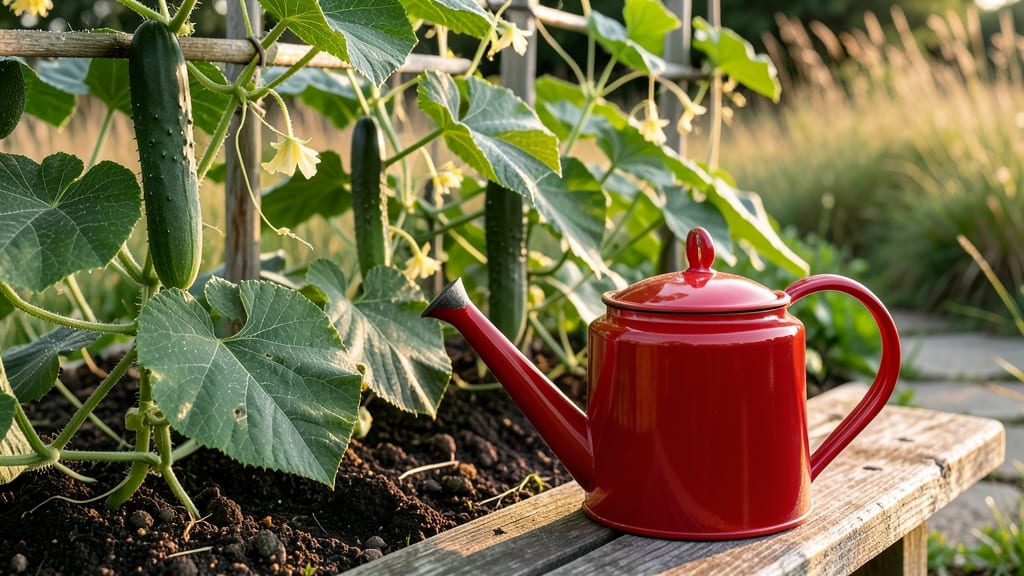
To water cucumber plants correctly, aim for 1–2 inches of moisture every 1–2 days—but timing changes with heat, soil, and plant age.
Struggling to keep your 🥒 vines thriving? Overwatering or underwatering can turn your garden into a sad, wilted mess—here’s the science-backed soil check method to water cucumbers perfectly every time.
Cucumbers are heavy drinkers, especially in summer, but soggy soil invites disease while dry spells stunt growth. The key is checking soil moisture before your watering can comes out.
Below, I’ll break down the exact schedule for your soil type, how to spot thirsty plants, and pro tips to keep your harvest bountiful all season long.
The ideal watering schedule for cucumber plants based on soil type
Cucumbers are thirsty plants that thrive on consistent moisture, but how often you water depends entirely on your soil type. Sandy soil drains too fast, clay holds too much water, and loamy soil strikes the perfect balance—each requires a different approach to keep your vines happy and productive.
Let’s break down the ideal watering schedule tailored to your garden’s foundation.
Your soil type dictates how quickly water evaporates and how deep roots can access moisture. For cucumbers, the goal is to maintain 1–2 inches of soil moisture at all times. Test this by sticking your finger 1–2 inches deep—if it feels dry, it’s time to water.
Ignoring this rule leads to blossom-end rot or stunted growth, both of which kill your harvest potential.
Sandy soil drains like a sieve, forcing you to water daily or every other day in hot weather. Meanwhile, clay soil acts like a sponge, requiring you to water every 3–4 days to avoid waterlogging. Loamy soil, the golden middle, needs watering every 2–3 days but holds moisture longer. Understanding these differences saves you from over- or under-watering disasters.
| Soil Type | Watering Frequency | Depth per Watering | Key Signs to Watch |
|---|---|---|---|
| Sandy | Daily (hot weather) / Every other day (cool) | 1.5–2 inches | Dry topsoil within hours; wilting leaves by noon |
| Loamy | Every 2–3 days (summer) / Every 3–4 days (spring/fall) | 1–1.5 inches | Moisture lasts 24–48 hours; slight wilting = time to water |
| Clay | Every 3–4 days (check before watering) | 1 inch (shallow to avoid compaction) | Puddling; yellowing leaves from overwatering |
| Potted | Daily (small pots) / Every other day (large containers) | Until water runs from drainage holes | Lightweight pots dry out fast; check weight |
Environmental factors like heatwaves and humidity also play a huge role. During 90°F+ days, cucumbers may need watering twice daily—once in the morning and once in the late afternoon—to prevent stress. In high humidity, however, you can space waterings out slightly since evaporation slows down.
Always water at the base of the plant, not the leaves, to avoid fungal diseases like powdery mildew.
Young cucumber seedlings are particularly delicate and need daily watering until they develop strong roots (about 2–3 weeks after transplanting). Once established, mature plants can handle slightly longer gaps between waterings, but never let the soil dry out completely.
A deep soak encourages roots to grow downward, making your plants more resilient during dry spells.
Mulching with straw or wood chips is a game-changer for cucumbers, as it locks in moisture and keeps roots cool. Apply a 2–3 inch layer around the base (but not touching the stems) to reduce evaporation by up to 30%.
This simple trick means fewer watering sessions and healthier vines overall. Pair it with drip irrigation for precision, especially in sandy or clay soils where manual watering falls short.
Overwatering is just as deadly as underwatering. Signs include yellowing leaves, mushy stems, or a foul smell from the soil. If your cucumbers look wilting despite wet soil, you’re likely suffocating the roots.
Adjust by letting the top inch dry out slightly between waterings. Conversely, crispy leaves or drooping vines signal thirst—react immediately with a thorough watering.
Adjust your watering schedule as the season changes. In spring and fall, cucumbers need less frequent watering (every 3–4 days), while summer demands daily attention.
Pay attention to your plants’ growth rate—fast-growing vines with lots of new leaves signal they’re thriving and may need more water, while slow growth suggests stress from inconsistent moisture.
Pro tip: Use a moisture meter or the finger test to avoid guesswork. Stick your index finger 1–2 inches deep—if it feels dry, water deeply. If it’s damp, wait another day.
This simple habit ensures your cucumbers get the perfect balance of moisture every time, leading to bigger, tastier fruits all season long. 🌱💧
Signs your cucumber plants need water (and when to hold off)
Cucumber plants are thirsty creatures—too little water and they wilt, too much and their roots suffocate. The key is learning their visual and tactile cues so you can adjust before damage sets in.
Start by checking the soil moisture 1–2 inches deep; it should feel damp like a wrung-out sponge. If it’s dry or crusty, it’s time to water.
Next, inspect the leaves and stems. Healthy cucumber leaves stay firm and glossy, while underwatered plants develop crispy edges or drooping foliage. Overwatered plants, however, show yellowing leaves (a sign of root rot) and may even smell sour near the base.
Touch the stems—if they feel soft or mushy, you’ve overdone it.
Pro Tip: Water cucumbers deeply but infrequently—aim for 1–2 inches of moisture per watering session. Shallow watering encourages weak roots and powdery mildew. Use a moisture meter or the finger test (insert your finger 2 inches deep) to monitor soil conditions daily during peak heat.
⚖️ Watering Cucumber Plants: Pros and Cons
✅ DO This
- Water deeply (1–2 inches) early morning to reduce evaporation.
- Check soil moisture daily during hot spells (every 1–2 days).
- Use drip irrigation or soaker hoses to deliver water directly to roots.
- Mulch heavily (2–3 inches) to retain moisture and prevent soil crusting.
- Adjust frequency by soil type: sandy soils dry faster than clay.
❌ DON'T Do This
- Water at night—promotes fungal diseases like powdery mildew.
- Let soil dry out completely between waterings—wilting is irreversible.
- Use overhead sprinklers—leaves stay wet, inviting pests.
- Ignore yellowing leaves or mushy stems (signs of overwatering).
- Water lightly and frequently—encourages shallow roots and poor yield.
If your cucumber plants show morning wilting that recovers by afternoon, they’re likely underwatered. This is normal during heatwaves, but if the wilting persists all day, act fast—water deeply and add mulch immediately to lock in moisture.
For overwatered plants, stop watering until the top 3 inches of soil dry out, then resume with shorter intervals.
Pay attention to the growth rate too. Healthy cucumber vines grow 1–2 feet per week in warm weather. If growth slows dramatically or leaves curl inward, it’s a cry for water.
Conversely, if new leaves yellow and drop while the soil stays soggy, you’re drowning the roots—reduce watering by half and improve drainage with compost.
Protect your cucumbers from water stress by combining these checks with consistent routines. For example, in 75°F+ weather, I water my vines every morning at 7 AM and again at 4 PM if the soil feels dry by midday.
Adjust based on your local climate, but always prioritize deep, infrequent watering over quick surface drinks.