
Diseases
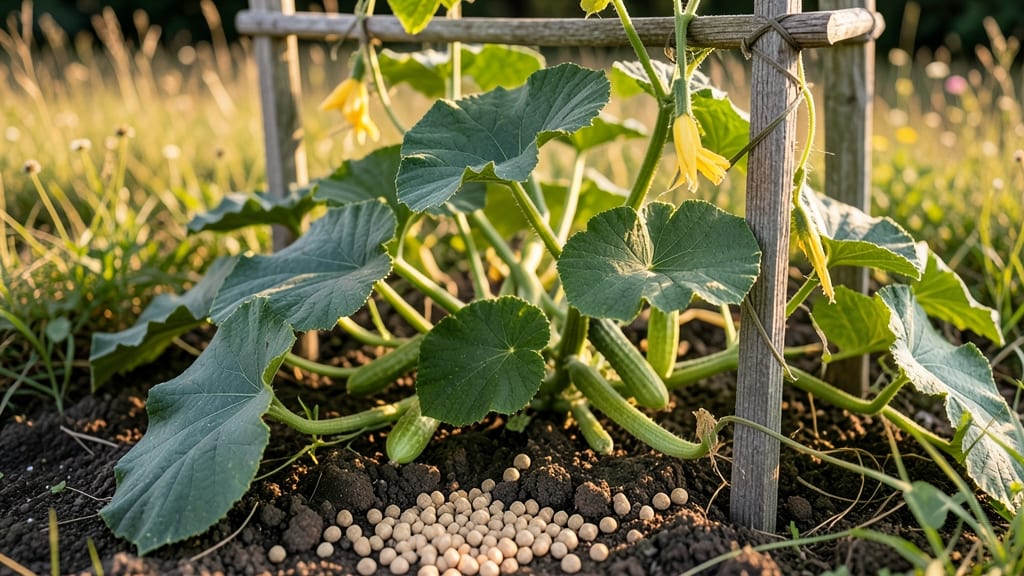
Cucumbers are heavy feeders, especially during their early vegetative growth stage, when they need more nitrogen to build strong vines and leaves.
A 10-10-10 blend provides equal parts of nitrogen, phosphorus, and potassium, but this balance isn't ideal for cucumbers, which prefer a higher nitrogen kick (like 5-10-10) when seedlings first emerge.
Once they start flowering and fruiting, a 3-4-6 ratio helps shift energy toward fruit production instead of leafy growth. 🌱 The key is adjusting application rates and timing—think of it like feeding your plants a balanced meal but tweaking the portions based on their growth phase.
If you're set on using 10-10-10, dilute it to half-strength during the early stages and switch to a lower-nitrogen blend (or even compost tea) once flowers appear. I’ve found that side-dressing with a light layer of compost every few weeks works wonders—it adds organic matter without overwhelming the plant.
The biggest mistake? Overdoing nitrogen, which leads to lush foliage but few cucumbers. Always check the soil before fertilizing—if it smells fresh and rich, your plants might not need extra nutrients at all!
💡 In This Article
- Understanding Cucumber Nutrient Needs vs 10-10-10 Fertilizer
- Adjusting 10-10-10 Fertilizer for Cucumber Success
Understanding cucumber nutrient needs vs 10-10-10 fertilizer
Cucumbers follow a distinct growth cycle where their nutrient needs shift dramatically. During the vegetative stage (first 4-6 weeks), they prioritize nitrogen (N) to build a strong framework of vines and leaves.
This is where a 5-10-10 ratio would be ideal—providing twice as much nitrogen as phosphorus and potassium.
In contrast, a 10-10-10 blend offers equal parts of all three nutrients, which can lead to excessive leaf growth at the expense of fruit production. 🌱 The imbalance happens because nitrogen encourages foliage while phosphorus and potassium are critical for root development and flowering.
Once cucumbers enter the fruiting stage, their needs change dramatically. At this point, they require more phosphorus (P) and potassium (K) to support flower formation and fruit development.
A 3-4-6 ratio becomes optimal—providing just enough nitrogen to maintain growth while shifting focus to phosphorus and potassium. The 10-10-10 blend's equal distribution means you'll need to reduce nitrogen applications by about 50% during this phase to avoid leafy overgrowth.
This shift is critical because cucumbers with too much nitrogen will produce fewer, smaller fruits while devoting energy to unnecessary foliage.
The science behind this involves how plants allocate resources. Nitrogen-rich fertilizers like 10-10-10 trigger rapid cell division in leaves, which is great for early growth but can lead to what gardeners call "luxuriant growth"—thick, lush vines with minimal fruit.
Phosphorus, on the other hand, helps transfer energy within the plant, which is essential for converting flowers into cucumbers.
Potassium acts as a quality control, ensuring the plant can handle stress (like heat or pests) while the fruits develop. 💫 The key is timing: apply nitrogen-heavy feeds early, then taper off as flowers appear.
Here's what happens when you over-fertilize with 10-10-10:
- Excess nitrogen: Leaves turn dark green and grow rapidly, but fruit production slows
- Imbalanced ratios: Plants may develop weak stems that struggle to support heavy vines
- Root stress: Too much salt from concentrated fertilizers can burn roots, reducing nutrient uptake
For visual learners, imagine a cucumber plant as a factory: nitrogen is the raw material for building the factory (leaves and vines), while phosphorus and potassium are the machinery that produces the final product (the cucumbers).
A 10-10-10 blend is like giving the factory equal parts of everything—plenty of raw materials but not enough specialized equipment to turn out the goods. The result? A busy factory with lots of workers (leaves) but few finished products (cucumbers). ✨
One practical example: in my raised bed garden, I used 10-10-10 at half-strength for the first 3 weeks after transplanting cucumber seedlings. When the first flowers appeared, I switched to a fish emulsion (5-1-1) mixed with compost tea.
The result? Strong vines with plenty of fruit—no leafy monsters! The lesson: adjust your fertilizer strategy as your cucumbers grow, not just when you plant them.