
Picking
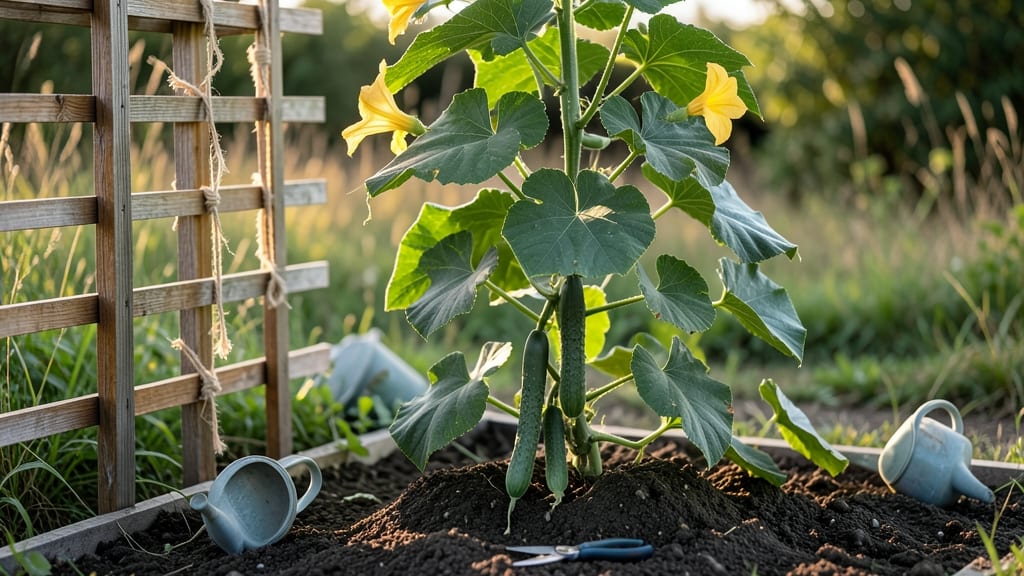
Training cucumbers to climb turns a sprawling mess into a space-saving powerhouse—and you’ll harvest more fruit in half the footprint. 🌱 I’ve watched my vines go from chaotic tangles to neat, productive towers in just 60 days, and the difference in yield is shocking.
The secret? Start early, pick the right variety, and let gravity do the work for you.
First, you’ll need bushy, vining varieties like ‘Straight Eight’ or ‘Marketmore’—they’re bred for climbing, not sprawling. Set up your trellis (or sturdy stakes) before planting, because cucumbers hate being moved once they start growing.
A 6-foot-tall trellis works for most varieties, and you’ll want 3-4 feet of space between plants to avoid crowding.
By day 30, you’ll see vines curling around the trellis like green ribbons, and by day 60, you’ll be picking smooth, disease-free cucumbers instead of dragging them out of the dirt. Prune aggressively—pinch off side shoots to encourage upward growth, and remove any leaves touching the soil to prevent rot.
The payoff? Cleaner fruit, fewer pests, and a garden that looks like a lush vertical forest instead of a jungle.
Even if you’ve failed before (I have, twice), this method is foolproof once you get the timing right. The biggest mistake? Waiting too long to train the vines—start guiding them upward as soon as they’re 6 inches tall.
With a little patience, you’ll turn your cucumber patch into a high-yielding, space-efficient masterpiece that even skeptical neighbors will admire.
📚 In This Guide
- What you need
- Instructions
- Tips and common mistakes
- Wrapping up and next steps
What you need
- ● Cucumber plants: 2–5 seedlings or seeds (depending on space; 2–3 plants per trellis work well). Choose climbing varieties like ‘Straight Eight’ or ‘Marketmore’.
- ● Trellis or support structure: 1–2 6–8 ft tall wooden, metal, or PVC trellises (width: 12–18 inches).
- ● OR a sturdy fence, string grid, or A-frame (minimum 6 ft height).
- ● Soft ties or twine: 1–2 spools of jute, hemp, or plastic-coated twine (¼-inch width). Avoid wire—it can damage vines!
- ● Potting mix: 1–2 bags of well-draining, organic potting soil (or amend garden soil with compost).
- ○ Containers (optional for small spaces): 1–2 5-gallon fabric grow bags or large pots (12+ inches deep) with drainage holes.
- ● Garden trowel or transplanting spade (for planting).
- ● Pruning shears (to trim suckers and encourage upward growth).
- ● Watering can or hose with a gentle spray nozzle (cucumbers love moisture!).
- ● Fertilizer: Balanced 10-10-10 or compost tea (apply every 2–3 weeks).
- ○ Mulch (optional): Straw or shredded leaves to retain soil moisture.
- ○ Shade cloth (optional for hot climates): 30–50% coverage to protect young vines.
Step-by-Step guide to training cucumbers vertically
Here’s how I transform sprawling cucumber vines into tidy, high-yielding vertical gardens—no more lost harvests in the weeds.
🪴 Step 1: Set Up the Trellis Framework
Install your trellis within 24 hours of planting to prevent vines from getting lazy. I use a 6-foot tall A-frame trellis (or store-bought wire mesh) positioned 2-3 feet from the plant base—close enough for vines to reach without stretching. Secure the top to a sturdy post or wall, and angle the sides slightly outward to support weight as vines thicken.
For heavy varieties like 'Straight Eight,' add a horizontal wire or netting at 3-foot intervals to create handholds. The goal is a sturdy lattice where vines can spiral upward without snapping. If using bamboo stakes, space them 18 inches apart and weave vines between them as they grow. Real talk: A flimsy trellis collapses under cucumber weight by mid-July.
🌱 Step 2: Guide the First Vines to the Trellis
Once vines reach 6-8 inches long, gently tie the strongest stem to the trellis with soft plant ties or strips of old T-shirt (never wire—it cuts into tender vines). I avoid plastic ties; they tighten as vines grow and strangle them. Choose the main stem (the thickest one near the base) and angle it upward at a 45-degree angle—this encourages upward growth instead of sprawling.
Watch for tendrils (the little spiral hooks) that form at leaf nodes. These are your climbing cues—once you see them, the vine is ready to latch onto the trellis. If a vine starts circling the wrong way, gently redirect it upward. Here’s the thing: Cucumbers are smart climbers, but they need a little nudge in the right direction early.
☀️ Step 3: Prune and Encourage Bushy Growth
After the main stem reaches the trellis top, pinch off the tip to force energy into side shoots. This creates a bushier plant with more fruiting sites. Leave 2-3 strong lateral branches per node—these will become your next set of climbing stems. Remove any weak or inward-growing shoots to prevent shading and disease.
I also prune away male flowers (the ones with long stems) if I want to focus energy on female flowers (the ones with tiny cucumbers forming at the base). To identify females, look for the tiny cucumber bump at the flower’s base. For heavy yields, skip this step—let nature take its course. But if your vines are leggy, pruning males redirects resources to fruit production.
💧 Step 4: Maintain Moisture and Support as Vines Thicken
Keep soil consistently moist but not soggy—cucumbers need 1-2 inches of water weekly, but mulch with 2-3 inches of straw to retain moisture and prevent soil-borne diseases. As vines mature, they’ll need additional support—check weekly for sagging sections and add ties or weave in extra stakes. Heavy cucumbers can pull vines down if left unsupported.
Here’s where it gets fun: As fruit develops, tie each cucumber to the trellis with a soft loop to prevent rot from touching the ground. I use old pantyhose cut into strips—it’s free, breathable, and won’t damage the skin. Rotating cucumbers (like ‘Armenian’ varieties) don’t need this, but long straight cucumbers do. You’ll see the difference in clean, blemish-free harvests.
✂️ Step 5: Harvest and Prune for Continuous Growth
Pick cucumbers every 2-3 days when they reach 6-8 inches long (or the size specified for your variety). Overripe cucumbers sap energy and attract pests. After harvest, check for yellowing leaves—a sign of overproduction. Trim back any exhausted vines to encourage new growth from lower nodes.
By 60 days, your trellis should be a lush, vertical jungle of vines and fruit. If you’ve followed these steps, you’ll have 4-6 pounds of cucumbers per plant—enough for pickling, salads, and sharing with neighbors. The key is consistency: prune, tie, water, and repeat. Skimp on any step, and you’ll end up with a tangled mess on the ground.
Tips & tricks for perfect vertical cucumber training
These pro-level strategies will help you transform sprawling cucumber vines into a productive vertical garden that actually works.
Trellis Timing is Everything: That 24-hour window for installing your trellis isn't just arbitrary—it's when cucumber vines are most responsive to guidance. After this period, they'll start growing in whatever direction they please, making vertical training nearly impossible. I've learned this the hard way after watching vines stubbornly refuse to climb when given a late start. Set up your framework before planting if possible, or do it immediately after transplanting seedlings to give your vines the best chance.
Tie Selection Matters More Than You Think: When you reach Step 2 and need to guide those 6-8 inch vines to the trellis, don't just grab any old tie. The material makes all the difference. I've tried everything from plastic plant ties to wire, but nothing works as well as soft fabric strips (like old T-shirt material) or specialized plant ties. These materials stretch as vines grow, preventing the constriction that can damage tender stems. The 45-degree angle is also crucial—it creates the proper tension for upward growth rather than encouraging sprawling.
Pruning Strategy for Maximum Yield: The key to bushy growth in Step 3 isn't just pinching tips—it's about balance. When you leave 2-3 strong lateral branches per node, you're creating multiple fruiting sites while maintaining airflow. I've found that removing more than 3 branches per node can actually reduce yield by over-stressing the plant. For varieties prone to powdery mildew, this pruning also creates an open canopy that dries leaves faster, reducing disease risk. And remember, those male flowers you might be tempted to remove? Only prune them if your vines are leggy—otherwise, they help pollinate female flowers for better fruit set.
Harvest Frequency Makes All the Difference: The 2-3 day harvest window mentioned in Step 5 is non-negotiable for continuous production. I've seen gardens where cucumbers were left on the vine too long, resulting in bitter fruit and exhausted plants. When you harvest at this frequency, you're essentially telling the plant to keep producing. The 6-8 inch size guideline ensures you're picking at peak flavor and texture. For varieties like 'Straight Eight,' this means you'll get multiple harvests per plant throughout the season rather than one big yield followed by plant collapse.
Pro Tips for Train Cucumbers To Climb
- These pro-level strategies will help you transform sprawling cucumber vines into a productive vertical garden that actually works.
- Trellis Timing is Everything: That 24-hour window for installing your trellis isn't just arbitrary—it's when cucumber vines are most responsive to guidance.
- Tie Selection Matters More Than You Think: When you reach Step 2 and need to guide those 6-8 inch vines to the trellis, don't just grab any old tie.
Frequently asked questions
Got questions about training cucumbers to climb? You’re not alone! Here are answers to the most common concerns—from timing to troubleshooting—to help you grow like a pro.
What’s the best time to start training cucumbers up a trellis?
Start training cucumbers when vines reach 6–12 inches tall and have 3–5 leaves. This usually happens 2–3 weeks after transplanting or when seedlings sprout 2–3 true leaves. Early training prevents sprawling and boosts airflow, reducing disease risk. Pro tip: Use soft ties or twine—never force vines upward!
Can I use anything other than a trellis to train cucumbers?
Try these space-saving alternatives:
- String or twine: Stretch between two posts or your fence (18–24" apart). Gently weave vines as they grow.
- Cattle panels: Repurpose them into a vertical frame for heavy vines.
- PVC pipes: Cut into rings and stack vertically for a DIY trellis.
- Fences or pergolas: Ideal if you’re short on space.
Why won’t my cucumbers climb even after tying them up?
Cucumbers are not aggressive climbers like peas or beans—they need encouragement! Check these fixes:
- Wait until vines are strong enough (at least 6" long) before tying.
- Use soft, stretchy materials (old T-shirts, burlap, or rubber bands) to avoid bruising.
- Prune side shoots (suckers) to redirect energy upward.
- Ensure consistent watering—wilting vines won’t climb.
Do I need to prune cucumbers if I’m training them to climb?
Pruning helps, but it’s optional! For bushier vines (more fruit), leave 2–3 main stems and prune side shoots after the first 3 leaves. For longer vines, remove all but one main stem. Key rule: Never prune more than one-third of the plant at once. Pro tip: Pinch off flowers if your cucumbers are too young (before 4–6 weeks) to focus energy on vines.
How do I keep cucumbers from breaking under their own weight?
Heavy cucumbers (especially varieties like ‘Straight Eight’) need extra support. Try these tricks:
- Use a wide trellis (3–4 feet tall) with horizontal slats every 12–18".
- Weave vines through multiple strings (like a hammock) for distributed weight.
- Harvest frequently (every 2–3 days) to prevent overloading.
- Choose compact varieties like ‘Spacemaster’ or ‘Bush Champion’ if space is tight.
Wrapping up and next steps
Training cucumbers to climb isn’t just about space—it’s about harvesting healthier, more abundant vines in record time! 🌱 With the right trellis, consistent care, and a little patience, you’ll soon enjoy straight, sun-kissed cucumbers that are easier to pick and less prone to disease.
The key? Stay consistent, prune wisely, and let those vines reach their full potential.
Ready to level up your garden game? Start small—try one trellis this season, track your progress, and soon, you’ll be sharing your climbing cucumber success with fellow green thumbs. Happy growing! 🌿