
Planting
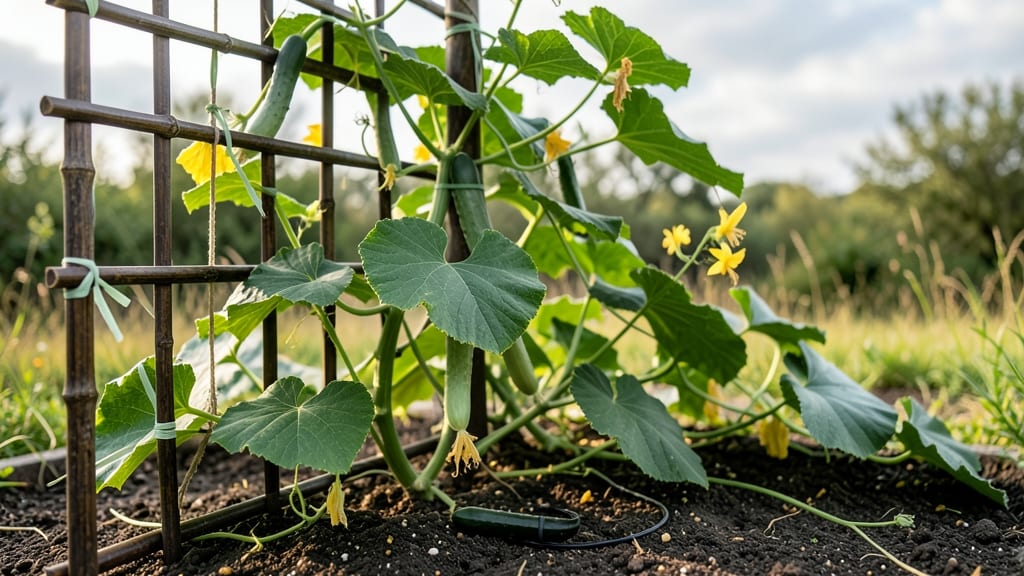
Staking cucumber plants transforms floppy vines into bushier, more productive powerhouses. 🌿 I used to watch my cucumbers sprawl across the garden, competing with weeds and attracting pests—until I tried vertical growing.
The difference isn’t just cleaner rows; it’s 30-50% more yield by keeping fruits off the ground and improving air circulation.
You’ll need 6-foot stakes or a sturdy trellis, soft plant ties (or old T-shirts cut into strips), and a sunny spot with at least 6 hours of sunlight. The key is timing: start staking when vines reach 12-18 inches tall, or when the first flowers appear.
This prevents root disturbance and gives plants time to establish before supporting their own weight.
Once staked, cucumbers climb like jungle gyms, producing straighter stems and fewer rotten fruits. You’ll harvest earlier and more consistently, and the vertical growth makes weeding and pest control a breeze. Plus, the plants look neater and more intentional—no more cucumbers hiding under leaves or getting trampled.
Works for both bush and vining varieties, and the same method applies to zucchini and squash. Here’s how to do it right without common mistakes like over-tightening ties or using flimsy materials that snap under weight. Let’s get those vines climbing!
📚 In This Guide
- What you need
- Instructions
- Tips and common mistakes
- Wrapping up and next steps
What you need
- ● Cucumber plants: 3–5 healthy seedlings or seeds (depending on your space), ideally disease-resistant varieties like 'Straight Eight' or 'Marketmore'.
- ● Staking system: Trellis: A 6–8 foot tall wooden, metal, or PVC trellis (or a sturdy wire mesh). For a DIY option, use 3/4-inch thick wooden stakes (5–6 feet long) spaced 18–24 inches apart.
- ● Alternative: A cucumber cage (5–6 feet tall) or a tomato cage (repurposed for cucumbers).
- ● Support ties: Soft plant ties, jute twine, or Velcro plant straps (avoid wire or tight materials that can damage vines).
- ● Potting mix or garden soil: Well-draining, nutrient-rich soil with a pH of 6.0–6.8. Add compost for extra fertility.
- ● Watering can or hose: With a gentle spray nozzle to avoid disturbing seedlings.
- ○ Pruning shears: Sharp, clean shears for trimming (optional but helpful for maintenance).
- ● Mulch: Straw or shredded leaves to retain moisture and suppress weeds.
- ● Fertilizer: Balanced organic fertilizer (e.g., 10-10-10) or compost tea for a nutrient boost.
- ● Shade cloth: Lightweight fabric to protect young plants from harsh sun (if in a hot climate).
- ● Plant markers: Labels to track varieties and planting dates.
Step-by-Step instructions for staking cucumber plants
Here's the method I rely on for healthy, productive cucumber vines that produce more fruit with fewer pests.
🪴 Step 1: Choose and Install the Right Support Structure
Cucumbers need sturdy support to prevent sprawling and disease. I recommend either a 4-foot tall trellis or individual bamboo stakes (at least 5 feet long) for each plant. For bushier vines, use a horizontal trellis—this encourages lateral growth and better air circulation. Drive stakes 6 inches deep into the soil at planting time, or hammer them in after vines reach 12 inches tall.
If using a trellis, position it 2 feet away from the plant base to allow easy access for tying. For individual stakes, place them 4-6 inches away from the main stem so vines can wrap naturally. The key is stability—wobbly supports snap during wind or when vines get heavy with fruit. I like to bury stakes in a slurry of water and soil for extra anchorage.
🌱 Step 2: Train Vines as They Grow
Start guiding vines when they reach 12-18 inches tall. Gently weave the main stem around the trellis or tie it loosely to the stake with soft plant ties (avoid wire or plastic that can cut into stems). I use fabric strips because they stretch as vines thicken. Never tie too tightly—you should be able to fit one finger between the tie and the vine.
Encourage lateral growth by pinching off the tip of the main vine when it reaches the top of the support. This forces energy into side shoots, which produce more fruit. Watch for tendrils (the curly growths)—these are your natural hooks for climbing. If a vine struggles to reach, gently tuck it onto the trellis with a small clothespin (remove before fruit sets to avoid damage).
💧 Step 3: Maintain and Adjust Supports Weekly
Check supports every 7-10 days to prevent vines from slipping or breaking. Cucumber vines grow 6-12 inches per week, so ties may loosen as they thicken. Re-tie any that feel slack, and adjust clothespins to avoid crushing stems. If a vine grows too aggressively in one direction, gently weave it back onto the trellis to distribute growth evenly.
Prune excessively long side shoots to 12-18 inches to improve airflow and reduce disease risk. Remove any leaves touching the soil—this prevents rot and makes harvesting easier. I also trim male flowers (the ones without tiny cucumbers at the base) if the plant is overloaded with fruit. This redirect energy to the developing cucumbers.
✂️ Step 4: Harvest and Support Through Fruit Production
Once cucumbers form, harvest every 2-3 days to encourage continuous production. The weight of fruit can stress vines, so check supports after heavy rain or wind. If a vine sags, tie it to the trellis at 2-3 points along its length for extra support. Avoid letting cucumbers touch the ground—they’ll rot or develop bitter flavors.
At season’s end, cut vines down to 6 inches tall, leaving the stakes in place. The next year, you can reuse them for new plants. For container-grown cucumbers, use smaller trellises (2-3 feet tall) and secure them to the pot with zip ties wrapped around the container’s sides. This prevents tipping as vines grow heavy.
Tips & tricks for perfect cucumber trellising
These practical insights will help you maximize your cucumber harvest with minimal effort—and avoid the common mistakes that lead to flopping vines and wasted fruit.
Support Stability is Non-Negotiable: The 6-inch depth for stakes and 2-foot distance from the plant base in Step 1 aren't arbitrary—they're about preventing the entire structure from toppling when vines reach their 5-foot potential. I've seen stakes lean dangerously after just one heavy rain. For extra insurance, especially in windy areas, add a second stake at a 45-degree angle from the first and tie them together at the top with zip ties. This creates a tripod effect that handles even the heaviest cucumber loads.
Tie Technique Matters More Than You Think: That one-finger rule between the tie and vine in Step 2 isn't just about comfort—it's about vascular health. Too-tight ties strangle the plant's circulation, which shows up as yellowing leaves weeks later. I keep a roll of fabric strips in my gardening bag specifically for this, and I always carry a pair of small scissors to trim excess length. Pro tip: If you're using clothespins, place them on the vine's underside where the tendrils naturally curl—this mimics the plant's own climbing mechanism.
Pruning Strategy for Maximum Yield: The 12-18 inch side shoot length mentioned in Step 3 isn't just about airflow—it's about creating the perfect balance between fruit production and vine strength. Here's what I do: When I see a side shoot with 3-4 leaves, I pinch it back to encourage branching. This creates a bushier structure that supports more fruit without overloading any single vine section. For container plants, I'm even more aggressive with pruning since space is limited—those smaller 2-3 foot trellises need every bit of airflow they can get.
Harvest Frequency Makes All the Difference: Those 2-3 day harvest intervals in Step 4 aren't just about convenience—they're about flavor and plant health. Cucumbers left on the vine too long develop bitter compounds as they mature. I set a reminder on my phone for every 3 days during peak production. When I harvest, I always check the vine's support system for any sagging—this is when I add those extra ties at 2-3 points along the length. The difference between a vine that produces continuously and one that burns out is often just this regular attention.
Pro Tips for Stake A Cucumber Plant
- These practical insights will help you maximize your cucumber harvest with minimal effort—and avoid the common mistakes that lead to flopping vines and wasted fruit.
- I've seen stakes lean dangerously after just one heavy rain.
- Tie Technique Matters More Than You Think: That one-finger rule between the tie and vine in Step 2 isn't just about comfort—it's about vascular health.
Frequently asked questions
Got questions about staking cucumbers?
You’re not alone! Here are answers to the most common staking dilemmas—so you can grow like a pro.
When is the best time to stake a cucumber plant?
Stake cucumbers as soon as they sprout (2–3 inches tall) or when they start vining. Young plants handle staking better than mature ones. If you’re retrofitting, wait until vines are at least 6 inches long and gently weave them into the trellis to avoid snapping stems.
Can I use anything other than a trellis for staking?
Try cattle panels, bamboo stakes, string between posts, or even old ladders. Just ensure the support is sturdy—cucumbers can get heavy (up to 20 lbs per vine!). Avoid flimsy twine or single stakes; distribute weight evenly.
Why are my cucumbers not climbing the trellis?
Cucumbers may skip the trellis if:
- Vines are too young—wait until they’re 6+ inches long.
- Trellis is too far away—position it within 12 inches of the plant.
- Lack of training—gently tie or weave vines every 2–3 feet.
- Overcrowding—thin plants to 12–24 inches apart.
How often should I prune vines on a trellis?
Prune only if needed—cucumbers thrive with minimal trimming. Remove:
- Dead or diseased leaves (snip at the base with clean scissors).
- Suckers (small shoots in leaf axils) to redirect energy to fruit.
- Overly long vines that can’t reach the trellis (trim to 12–18 inches).
Will staking cucumbers change how they taste or grow?
Nope! Staking improves flavor and yield by:
- Reducing soil-borne diseases (better airflow).
- Increasing sunlight exposure (sweeter cukes!).
- Preventing rot from wet vines.
Wrapping up and next steps
Staking your cucumber plants is a game-changer—it boosts yields, improves air circulation, and keeps your harvest clean and abundant! 🌱 With the right trellis, pruning know-how, and a little patience, you’ll enjoy healthier vines and easier maintenance.
Whether you’re a beginner or a seasoned gardener, these tips will help you master the art of staking like a pro.
Now that you’re ready to stake, take action! Start with a small batch of cucumbers, experiment with different trellis styles, and watch your garden transform. Happy planting—and may your vines climb high and your harvests be bountiful! 🌿🍉