
Flowers
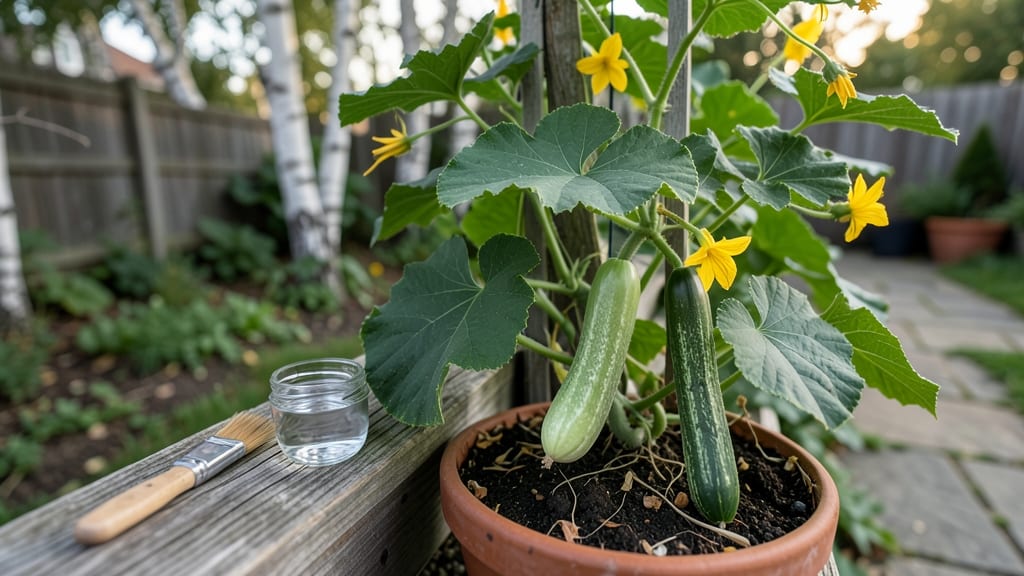
To pollinate cucumbers without male flowers, you’ll need a paintbrush, patience, and the right timing—because even female flowers alone won’t produce fruit without a little help.
Picture this: your 🥒 plants are bursting with lush green vines and tiny blossoms, but the fruit just won’t set. The culprit? Missing male flowers or poor pollination.
The good news? You can take control with hand-pollination, a simple trick that works like magic for home gardeners in Zone 6a or controlled environments.
Here’s the science: female cucumber flowers need pollen to trigger fruit development, and while male flowers usually handle this job, you can mimic nature’s process with a few tools and 3 easy steps.
Whether you’re growing in a greenhouse or battling bee shortages, this method ensures your cucumbers go from blossom to harvest—no male flowers required.
Below, I’ll walk you through how to spot receptive female flowers, the best times to pollinate, and pro tips to maximize your harvest—so you can enjoy plump, productive cucumbers all season long.
How cucumber flowers work: why female flowers need pollination
Cucumbers produce two distinct flower types: male and female, each with a unique role in fruit development. While male flowers primarily serve as pollen producers, female flowers are the ones that develop into cucumbers—but only after successful pollination.
Without pollen transfer, female flowers wilt and drop, leaving you with lush vines but no harvest. This biological process is why understanding flower anatomy is key to troubleshooting fruitless cucumber plants.
The female cucumber flower is easy to spot: it has a tiny cucumber-shaped ovary at its base, while male flowers have long stems and no ovary. Pollen from male flowers must land on the female flower’s stigma to trigger fruit formation.
When bees or wind fail to do this job, your cucumbers stay undeveloped. The good news? You can manually mimic this process to ensure pollination, even without male flowers present.
Here’s the science behind why female flowers need pollination: once pollen lands on the stigma, it fertilizes the ovules inside the ovary. This fertilization kickstarts the growth of the cucumber fruit and seeds.
Without this step, the ovary remains undeveloped, and the flower withers within 24–48 hours. This is why gardeners often see female flowers appear but never turn into cucumbers—pollination simply didn’t occur.
| Flower Type | Key Features | Role in Pollination | Hand-Pollination Tip |
|---|---|---|---|
| Male Flower | Long stem, no ovary, produces pollen | Pollen donor for fertilization | Collect pollen with soft brush |
| Female Flower | Small cucumber-shaped ovary at base | Needs pollen to develop fruit | Apply pollen to stigma gently |
| Unpollinated Female | Wilted within 2 days, no ovary growth | Fails to set fruit without pollen | Pollinate within 12 hours of opening |
The stigma of a female cucumber flower is the pollen-receptive part, typically located at the center of the flower. When pollen lands here, it travels down the style to fertilize the ovules. Without this contact, the flower’s energy is wasted—it simply drops off the vine.
This is why even healthy cucumber plants can produce flowers but fail to bear fruit: the pollination step is missing.
One common misconception is that you need both male and female flowers to grow cucumbers. While male flowers provide pollen, female flowers can still be pollinated using store-bought pollen or even pollen from other plants in the cucurbit family (like squash).
The key is ensuring the stigma receives pollen, regardless of the source. This is how gardeners in greenhouses or indoor setups successfully grow cucumbers without relying on bees or natural wind pollination.
Timing is critical in cucumber pollination. Female flowers are most receptive to pollen in the morning hours, typically between 7 AM and 10 AM. This is when the stigma is sticky and ready to capture pollen.
If you miss this window, the flower may close or dry out, making successful pollination difficult. Even if you have male flowers on your plant, their pollen must be transferred to the female stigma during this optimal time frame for the best results.
Environmental factors also play a role in why female flowers might fail to set fruit. High humidity can make pollen less effective, while dry conditions may cause flowers to close prematurely. Additionally, extreme temperatures—either too hot or too cold—can stress flowers and reduce their ability to accept pollen.
These factors highlight why hand-pollination is a reliable method, as it gives you control over the process regardless of external conditions.
For gardeners dealing with cucumber varieties that produce few male flowers, such as parthenocarpic types (which set fruit without pollination), understanding this process is still valuable. Even these varieties benefit from gentle handling of flowers to encourage fruit development.
The bottom line? Female cucumber flowers are the future of your harvest, and pollination is the bridge that turns them from blooms into bounty.
Step-by-step guide to hand-pollinating cucumber flowers without male flowers
If your cucumber plants are blooming but not fruiting, you’re not alone. Many gardeners face this challenge when male flowers are scarce or absent. The good news? You can hand-pollinate cucumbers using simple tools and techniques, ensuring your female flowers develop into cucumbers without relying on bees or male blooms.
This method works especially well in greenhouses, indoor gardens, or during poor pollination seasons.
Hand-pollination mimics nature by transferring pollen from male to female flowers manually. The key is timing—pollinate when flowers are fresh and open—and using the right tools, like a paintbrush, cotton swab, or even your finger.
Below, I’ll walk you through the exact steps to maximize your cucumber yield without male flowers.
How to Hand-Pollinate Cucumbers Without Male Flowers
-
Step 1: Identify Female Flowers
Female flowers have a tiny cucumber (ovary) at their base. Wait until they’re fully open but still morning-fresh for best results. -
Step 2: Collect Pollen
Gently tap a male flower (long stem, no ovary) over a paper bag or use a paintbrush to gather pollen. If no male flowers exist, buy cucumber pollen online or use pollen from another cucurbit plant (like squash). -
Step 3: Transfer Pollen
Dip your tool of choice (brush, swab, or finger) into the pollen, then gently rub it over the female flower’s stigma (the fuzzy center). Apply light pressure to ensure adhesion. -
Step 4: Repeat Daily
Pollinate every morning for 3–5 days to increase fruit set. Female flowers are receptive for 24–48 hours after opening—don’t wait too long! -
Step 5: Monitor for Success
Within 5–7 days, the female flower’s ovary should swell into a mini cucumber. If it drops, repollinate or check for pollen quality or environmental stress.
Pro Tip: Use a handheld magnifying glass to spot pollen on the stigma—it should look dusty or slightly sticky. 🌱
Timing is critical—pollinate between 7 AM and 10 AM when dew is off the flowers and humidity is moderate. Avoid pollinating in hot afternoons, as pollen can dry out too quickly. If you’re using a paintbrush, clean it with rubbing alcohol between plants to prevent cross-contamination.
For greenhouse growers, consider investing in a small electric toothbrush (set to low vibration) to gently shake pollen from male flowers onto female blooms. This mimics bee activity and can pollinate dozens of flowers in minutes.
If you’re indoor gardening, place a humidifier nearby to help pollen adhere better.
Remember, female flowers need pollen to develop into fruit, but you don’t need male flowers to provide it. With patience and consistency, your cucumber vines will reward you with a bountiful harvest—even without them. Happy pollinating! 🥒