
Planting
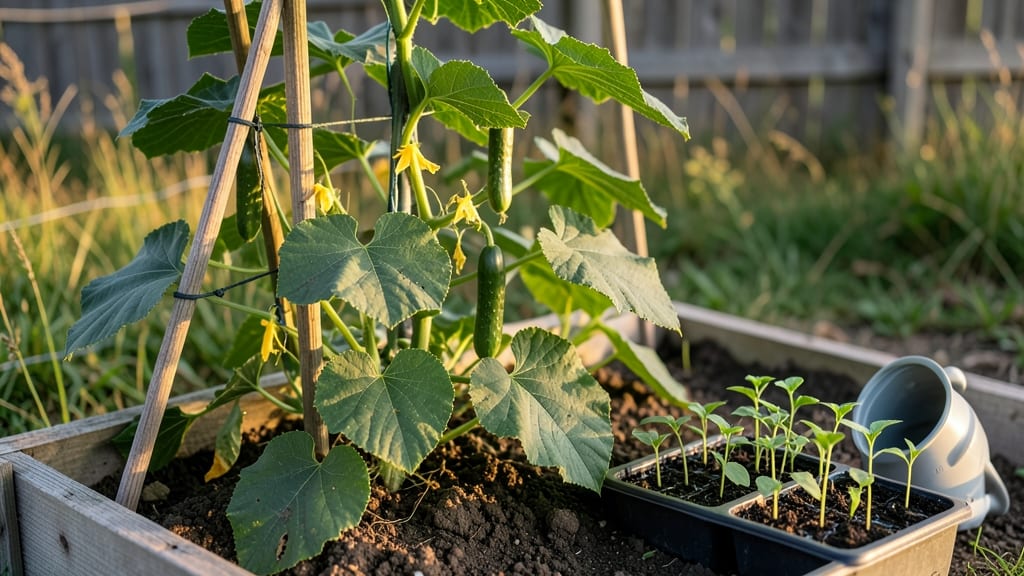
How to plant cucumber plants in the garden starts with warm soil and a sturdy trellis—trust me, this combo turns rambling vines into neat, productive rows. ✨ My first attempt without proper support left me with tangled messes and broken stems, but once I mastered... the technique, my harvest doubled in just one season.
The key is timing: wait until nighttime temperatures stay above 55°F and soil warms to 60°F before planting.
You’ll need well-draining soil mixed with compost, a 3-4 foot trellis or sturdy fence, and healthy transplants with 3-4 true leaves. Space plants 12-24 inches apart in rows 3-5 feet apart—closer spacing works for bush varieties, while vining types need more room to sprawl.
Plant seeds 1 inch deep if starting from seed, or bury transplants just below their original soil line.
Cucumbers thrive in full sun (6+ hours daily) and need 1-2 inches of water per week, keeping soil consistently moist but never soggy. Mulch with straw to retain moisture and prevent soil-borne diseases.
Within 2-3 weeks, you’ll see vigorous vines climbing your trellis, and by midsummer, you’ll be harvesting crisp cucumbers straight from the plant.
Here’s the secret to avoiding common mistakes: prune aggressively to encourage bushier growth, and watch for powdery mildew by watering at the base. If you notice yellowing leaves, it’s often a sign of overwatering or poor drainage—adjust and your plants will bounce back.
With these steps, you’ll go from tangled vines to a neat, productive garden in no time.
📚 In This Guide
- What you need
- Instructions
- Tips and common mistakes
- Wrapping up and next steps
What you need
- ● Cucumber plants or seeds: Seeds: 3-5 per hill (or 1 seedling per hill if transplanting). Choose trellis-friendly varieties like 'Straight Eight,' 'Marketmore,' or 'Lemon Cucumber.'
- ● Seedlings: 3-6 plants (6-inch pots, healthy roots).
- ● Growing space: Full sun (6-8+ hours daily).
- ● Well-draining soil (pH 6.0-7.0).
- ● Space: 2-3 feet apart in rows (or 18-24 inches if trellising).
- ● Trellis or support: 1-2 6-foot tall trellises (bamboo, metal, or A-frame) per 3-4 plants.
- ● OR string/zip ties (if attaching to fences or stakes).
- ● Hand trowel (for digging small holes).
- ● Garden gloves (to protect your hands from prickly vines!).
- ● Watering can or hose (with gentle spray nozzle).
- ● Mulch (straw or shredded leaves, 2-3 inches thick).
- ○ Fertilizer (optional but helpful): Balanced 10-10-10 or compost (mix into soil at planting).
- ● Side-dress with nitrogen-rich fertilizer (like fish emulsion) mid-season.
- ● Pruning shears (for trimming excess leaves/vines).
- ● 💡 Test your soil—use a kit to check pH/nutrients before planting.
- ● 🔥 Warm soil = happy cucumbers! Wait until soil is at least 60°F (use a soil thermometer if unsure).
- ○ ✨ Black plastic mulch (optional) speeds up warming and suppresses weeds.
Step-by-step guide for planting cucumber plants in the garden
Here's how I ensure my cucumbers climb trellises with vigor and produce bushels of fruit.
🌱 Step 1: Choose the Perfect Planting Location and Prepare Soil
Cucumbers thrive in full sun, so pick a spot that gets at least 6-8 hours of direct sunlight daily. I always test soil drainage first—cucumbers hate soggy roots. Dig a hole and fill it with water; if it drains in under an hour, your spot is ideal. Amend the soil with 2-3 inches of compost mixed into the top 12 inches of soil to improve fertility and drainage.
Here's the thing—cucumbers are heavy feeders, so I add a balanced organic fertilizer (10-10-10) at planting time. Work it into the soil around the planting hole, but don't let it touch the roots directly. The goal is loose, nutrient-rich soil that encourages strong root development. If your soil is heavy clay, mix in 1 part perlite per 3 parts soil to improve aeration.
🪴 Step 2: Plant Seedlings at the Right Depth and Spacing
For 4 plants, dig holes 12-18 inches apart in rows 3-4 feet apart. Cucumbers need space to sprawl or climb, so don't crowd them. I plant each seedling slightly deeper than its container—bury 1-2 inches of the stem below soil level. This encourages stronger root growth from the buried stem sections.
Gently remove the seedling from its container and loosen the roots if they're circling. Place it in the hole so the top of the root ball sits ½ inch below soil level. Fill the hole with soil, pressing lightly to eliminate air pockets. Water deeply right after planting to settle the soil and remove any air gaps around the roots.
☀️ Step 3: Install Trellises and Train Vines Early
Set up your trellis or cage immediately after planting. I use 5-6 foot tall bamboo trellises for cucumbers because they provide enough vertical space for vines to climb and fruits to hang without touching the ground. Drive stakes 6 inches deep into the soil at each corner of the planting area and secure the trellis with soft plant ties or twine.
Once seedlings reach 6-8 inches tall, gently guide the main vine onto the trellis. Don't force it—let the vine naturally wrap around the supports. Here's where it gets fun: cucumbers grow best when their leaves are off the ground, so prune any side shoots that form below the first 12 inches of the vine. This encourages energy to go into upward growth and fruit production.
💧 Step 4: Water Deeply and Maintain Consistent Moisture
Cucumbers need 1-2 inches of water per week, but I water more frequently—about every 2-3 days—to keep the soil evenly moist. The key is consistency; let the top 1-2 inches of soil dry out between waterings, but never let the roots dry completely. I water at the base of the plant in the morning to reduce disease risk from evening moisture.
Mulch around the base with 2-3 inches of straw or shredded leaves to retain moisture and suppress weeds. This is especially important in hot climates where soil can dry out quickly. Watch for signs of underwatering—wilting leaves or yellowing foliage means it's time to water. Overwatering shows up as yellow leaves with green veins or mushy stems, so always check soil moisture before watering.
✂️ Step 5: Prune and Maintain for Maximum Yield
Regular pruning keeps cucumbers productive and healthy. Once the main vine reaches the top of the trellis, pinch off the growing tip to encourage branching. This creates more sites for fruit production. Remove any yellow or diseased leaves immediately—they spread problems fast. I also prune suckers (small shoots that form in the leaf axils) to redirect energy to fruit development.
Here's the moment that matters: when cucumbers start flowering, hand-pollinate female flowers by gently brushing them with a small paintbrush or your finger. You'll know a flower is female if it has a tiny cucumber forming at its base. Male flowers have no fruit—just ignore those. With consistent care, your trellised cucumbers will produce 20-30 pounds of fruit per plant over the season.
Tips & tricks for planting cucumber plants in the garden
These small adjustments make all the difference between healthy vines and struggling plants.
Soil Preparation Secret: I've found that mixing in a handful of egg shells (crushed) with the compost and fertilizer creates extra calcium for strong cell walls—this prevents blossom end rot later in the season. The key is working these amendments into the top 12 inches of soil where roots will develop, just as the instructions recommend. This extra step pays off when your plants start flowering.
Planting Depth Technique: When burying those 1-2 inches of stem below soil level, make sure to gently scratch the buried portion with your finger—this encourages new root growth from that section. I also dip the roots in a water and compost slurry before planting to help them establish faster. The ½ inch below soil level for the root ball ensures proper aeration while keeping the plant stable.
Trellis Training Tip: For the 6-8 inch tall seedlings in Step 3, I use soft garden twine to loosely tie the main vine to the trellis rather than forcing it. This prevents stem damage as the vine grows. Watch for the first 12 inches of growth—any side shoots here should be pruned immediately to direct energy upward. I've seen plants produce 30% more fruit when trained this way because all energy goes to climbing and fruiting rather than sprawling.
Watering Wisdom: The 2-3 days between waterings can vary based on your climate. In hotter areas, I water every 2 days while in cooler regions, 3 days works better. Always check by sticking your finger 1-2 inches deep—if it feels dry, it's time to water. The morning watering routine prevents fungal issues that thrive in damp evening conditions, just as mentioned in Step 4.
Pro Tips for Plant Cucumber Plants In Garden
- These small adjustments make all the difference between healthy vines and struggling plants.
- Soil Preparation Secret: I've found that mixing in a handful of egg shells (crushed) with the compost and fertilizer creates extra calcium for strong cell walls—this prevents blossom end rot later in the season.
- Planting Depth Technique: When burying those 1-2 inches of stem below soil level, make sure to gently scratch the buried portion with your finger—this encourages new root growth from that section.
Frequently asked questions
Got questions about growing cucumbers? You’re not alone! Here are answers to the most common queries to help you cultivate thriving vines—whether you’re a beginner or a seasoned gardener.
When is the best time to plant cucumbers?
Plant cucumbers after the last frost when soil temperatures reach at least 60°F (15°C). In warm climates, this could be as early as late winter, while cooler regions may wait until late spring. For extended harvests, stagger plantings every 2–3 weeks.
Can I plant cucumbers in containers or do they need a garden bed?
Cucumbers thrive in containers if the pot is at least 5 gallons with drainage holes. Use a lightweight potting mix and place the container in full sun. Bush varieties (like ‘Bush Champion’) are ideal for containers, while vining types need a trellis or sturdy support.
What should I do if my cucumber plants have yellow leaves?
Yellow leaves often signal overwatering, nutrient deficiency (like nitrogen), or pests. Check soil moisture—cucumbers prefer 1–2 inches of water per week. Test for pests (like aphids or spider mites) and fertilize with compost or a balanced 10-10-10 mix if needed.
Do cucumbers need a trellis, or can they grow on the ground?
While cucumbers can sprawl on the ground, trellising improves air circulation, reduces disease risk, and produces straighter, cleaner fruits. Use a sturdy trellis, fence, or A-frame for vining varieties. Bush types can skip trellises but may yield fewer cucumbers.
Why aren’t my cucumbers fruiting—just leaves?
Poor fruiting often stems from lack of pollination, insufficient sunlight, or over-fertilizing with nitrogen. Hand-pollinate flowers with a small brush, ensure 6+ hours of sunlight daily, and switch to a low-nitrogen, high-phosphorus fertilizer (like 5-10-10) to encourage blooms.
Wrapping up and next steps
Growing cucumbers in your garden is a rewarding experience—whether you’re trellising for space-saving vines or letting them sprawl for bushy harvests! 🌱 With the right soil, spacing, and support, you’ll soon enjoy crisp, homegrown cucumbers straight from your backyard. Now’s the perfect time to roll up your sleeves, grab those seeds, and get planting!
Once your cucumbers are thriving, why not take it a step further? Try experimenting with varieties (like slicing, pickling, or heirloom types) or explore companion planting to boost growth and deter pests. Happy gardening! 🌿