
Pests and Diseases
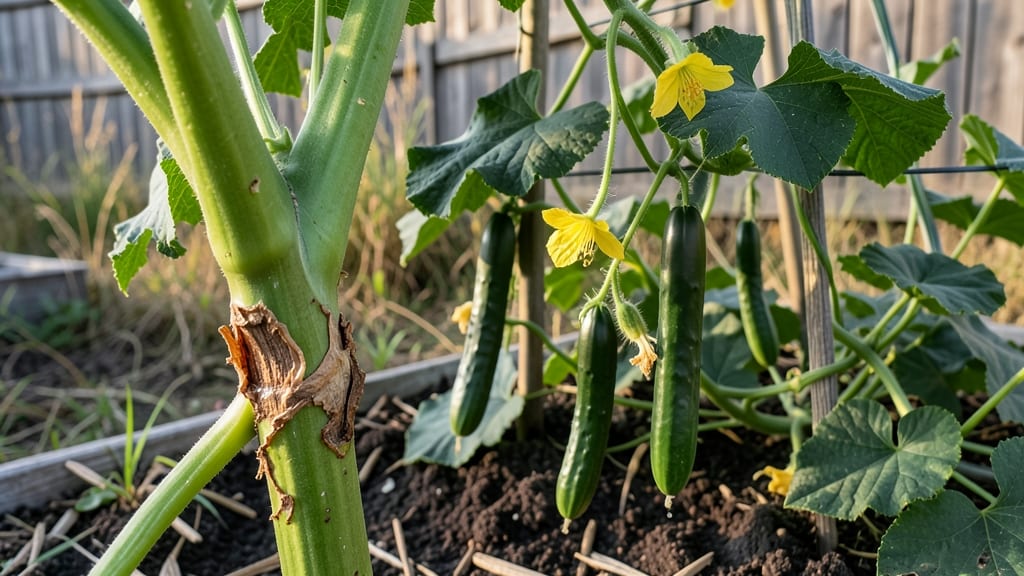
Cucumber stem damage can turn your thriving vines into sad, wilted shadows in days. 🌱 I’ve watched my prized cucumbers go from lush and productive to crispy skeletons—until I learned the quick fixes that actually work.
The good news? Most damage is fixable, and healthy regrowth is possible if you act fast.
Common causes include cucumber beetles chewing stems, bacterial wilt spreading through the plant, or even accidental damage from pruning too close to the base. The key is identifying the problem early—look for jagged edges (pests), oozing sap (disease), or sudden wilting (trauma).
Once you spot the issue, you can tackle it with targeted solutions.
You’ll restore your plants in just a few days with the right approach: prune damaged areas cleanly, apply neem oil for pests, or use copper spray for bacterial wilt.
The goal is to stop the spread and encourage new growth from healthy stems. With these quick fixes, your cucumbers can bounce back stronger than ever.
Prevention is just as important—rotate crops yearly, remove infected plants immediately, and keep your garden free of debris. These steps save you from future heartbreak and keep your vines thriving all season long.
Root Causes of Stem Weakness
When your cucumber plants start showing signs of stem damage—wilting, discoloration, or sudden collapse—it’s often a sign of underlying stress or attack. Understanding the why behind these issues is the first step to preventing them.
Below, we break down the most common culprits, from environmental factors to pests and diseases, with clear explanations of how they weaken cucumber stems.
Cucumbers thrive in specific conditions, and when those conditions shift, their stems suffer. Here’s how environmental factors contribute to damage:
- Extreme Temperature Fluctuations: Cucumbers prefer warm, stable temperatures (70–90°F). Sudden drops below 50°F or spikes above 95°F can cause cold stress or heat shock, weakening cell walls and leading to wilting or cracking. Why it happens: Temperature stress disrupts enzyme activity in the plant, impairing nutrient transport and structural integrity.
- Poor Watering Practices:
- Overwatering: Soggy soil cuts off oxygen to roots, leading to anaerobic conditions that rot stems from the inside out. Look for blackened, mushy stems at the base.
- Underwatering: Drought stress causes stems to shrink and harden, making them brittle and prone to snapping. Wilting is a late-stage symptom.
- Wind or Physical Trauma: Strong winds or rough handling (like staking too aggressively) can abrade the stem’s epidermis, exposing it to pathogens. Why it happens: The outer layer of the stem acts as a barrier; once damaged, moisture loss and infections accelerate.
💡 Pro Tip: Use mulch to regulate soil temperature and retain moisture, and stake cucumbers gently with soft ties to avoid abrasions.
Pests don’t just nibble leaves—they target stems, creating entry points for disease or outright severing the plant’s lifeline. Here’s how they strike:
| Pest | Damage Type | How It Weakens Stems |
|---|---|---|
| Cucumber Beetles (striped or spotted) | Chewing on young stems, creating notches or holes. | Beetles introduce bacterial wilt (Erwinia tracheiphila) through their mouthparts, clogging the plant’s vascular system. Infected stems turn brown and wilt within days. |
| Squash Vine Borers (larvae) | Bore into stems, creating sawdust-like frass and tunnels. | Larvae disrupt the phloem and xylem, starving the plant of water and nutrients. Infested stems yellow, wilt, and collapse. |
| Cutworms (larvae) | Chew stems at soil level, severing young plants. | Physical severing cuts off water/nutrient flow, causing instant wilting. Older plants may survive but develop stunted growth. |
🔥 Watch For: Tiny holes, sawdust-like debris at the stem base, or wilting that starts at the bottom of the plant.
Pathogens thrive in damaged or stressed stems, turning minor injuries into full-blown infections. These are the most destructive culprits:
- Bacterial Wilt (Ralstonia solanacearum):
- Symptoms: Sudden wilting (even in cool weather), yellowing leaves, and oozing bacterial slime when stems are cut.
- Why it happens: Bacteria block the xylem vessels, preventing water uptake. Spread by cucumber beetles or contaminated tools.
- Fusarium or Verticillium Wilt (Fungi):
- Symptoms: Vascular discoloration (brown streaks inside stems), wilting that worsens in heat, and stunted growth.
- Why it happens: Fungal spores in soil infect roots, then invade the xylem, creating gum-like obstructions. Thrives in poor drainage.
- Powdery Mildew (Podosphaera xanthii):
- Symptoms: White, powdery coatings on stems/leaves, followed by necrotic lesions.
- Why it happens: The fungus clogs stomata, reducing photosynthesis and weakening stems over time. Spreads in humid, low-light conditions.
🌡️ Key Triggers: Overhead watering, dense plantings, and high humidity (above 75%) create the perfect storm for fungal/bacterial spread.
⚠️ Warning: Some diseases (like bacterial wilt) are soil-borne and persistent. If infected, remove plants immediately and avoid planting cucurbits in the same spot for 3+ years.
Fixing Weakened Cucumber Stems Fast
Now that you know the culprits behind those sad, droopy cucumber stems, let’s roll up your sleeves and get your plants back on track! 🌱💪 Whether it’s pests, disease, or environmental stress, these actionable fixes will help you revive wilting stems and prevent future damage—without losing your gardening sanity.
If your cucumber plants are already showing signs of stem weakness, act fast to minimize further harm.
🛡️ Remove and Isolate Infested/Diseased Plants
- 🔪 Snip it out: Use sterilized scissors or pruning shears to cut off severely damaged stems or leaves.
Dispose of them in a sealed trash bag (not your compost!). - 🚫 Quarantine: If pests (like aphids or spider mites) are the issue, isolate the affected plant until you’ve treated the whole area to avoid reinfestation.
💦 Hydrate and Support Stressed Plants
- 💧 Water deeply (but wisely): Wilting often means thirsty roots. Water at the base of the plant in the early morning or late evening to prevent fungal growth.
Aim for 1–1.5 inches of water per week, adjusting for heat or rain. - 🌿 Prop up weak stems: If stems are flopping due to overgrowth or wind, gently tie them to a stake or trellis with soft plant ties. Avoid cutting into the stem—just provide support!
🧼 Clean Up the Battlefield
- 🧽 Remove debris: Clear away fallen leaves, mulch, or plant residue near your cucumbers.
Pests and fungi love hiding in clutter! - 🧴 Spray with neem oil (organic option): Mix 1 tsp neem oil + 1 tsp mild soap + 1 quart water in a spray bottle. Apply to both sides of leaves and stems to smother soft-bodied pests and deter fungal spores.
Now, let’s tackle the root causes with targeted fixes to keep your cucumbers thriving.
🐛 Pest Problems? Crush Them Now
| Pest | Fix It Fast | Prevent Future Attacks |
|---|---|---|
| Aphids | Spray with soapy water or neem oil. Introduce ladybugs or lacewings. | Plant marigolds or basil nearby to repel them. |
| Spider Mites | Blast off with a strong hose spray (early morning). Use horticultural oil if severe. | Keep plants well-watered and prune for airflow. |
| Cucumber Beetles | Handpick and drop in soapy water. Use row covers to block adults. | Rotate crops yearly and remove weeds (they love them too!). |
| Fungal Issues | Apply copper fungicide or baking soda spray (1 tbsp baking soda + 1 quart water + a drop of soap). | Space plants 12–24 inches apart for airflow. Avoid overhead watering. |
🌡️ Too Much Heat or Cold? Adjust the Environment
- 🔥 Heat Stress: If stems are wilting in scorching weather, shade cloth (30–50%) can save the day.
Water more frequently but in smaller amounts to prevent root rot. - ❄️ Cold Damage: If frost or cold snaps hit, cover plants with frost blankets at night. Cucumbers are tender perennials—they’ll bolt or rot if temps drop below 50°F (10°C).
🌱 Nutrient Deficiencies? Feed Your Plants
- 💡 Yellowing stems? They might be zinc or magnesium deficient.
Apply Epsom salt (1 tbsp per gallon of water) or a balanced fertilizer (10-10-10) every 2–3 weeks. - 🌿 Slow growth? Boost nitrogen with compost tea or fish emulsion to encourage strong stem development.
- 🌿 Prune like a pro: Remove yellow or diseased leaves regularly to redirect energy to healthy growth. - 🌡️ Monitor soil temp: Use a soil thermometer—ideal temps for cucumbers are 60–90°F (15–32°C). Too cold?
Wait to plant! - 💧 Mulch matters: Apply 2–3 inches of straw or grass clippings to retain moisture and regulate soil temperature. - 🌱 Rotate crops: If your soil is depleted or disease-prone, avoid planting cucumbers in the same spot for 2–3 years.
Remember: Consistency is key! Check your plants daily for early signs of stress, and act within 24–48 hours of noticing damage. With these fixes, your cucumbers will be back to vigorous growth in no time—and you’ll be the hero of your garden! 🌱🎉
Frequently asked questions
Why do my cucumber stems suddenly wilt even when the soil feels moist?
Sudden wilting with damp soil often signals bacterial wilt or vascular diseases like fusarium. These block the plant’s water transport system, causing stems to collapse. Check for yellowing leaves or oozing sap when cut—if present, remove the plant immediately to prevent spread.
Can I save a cucumber plant if the stem is chewed almost in half?
It depends! If the damage is low on the stem and you can prune above the injury (leaving at least 2 healthy leaves), the plant may regrow. Sterilize your pruners with rubbing alcohol first. For severe damage, focus on saving nearby healthy vines instead.
How do I tell if my cucumber stem damage is from pests vs. disease?
Pest damage shows chewed edges or holes (like cucumber beetles) or sawdust-like frass (vine borers). Disease damage appears as discoloration inside stems (brown streaks = fungal wilt) or oozing sap (bacterial wilt). Test by cutting a stem—pests leave physical marks, while diseases show internal rot.
Will neem oil work on fungal stem infections like powdery mildew?
Neem oil helps prevent fungal spread but won’t cure established infections. For powdery mildew, mix 1 tbsp baking soda + 1 quart water + a drop of soap and spray stems/leaves. Remove infected plant debris immediately to stop spores from spreading. Repeat every 5–7 days for prevention.
Can I still harvest cucumbers from a plant with stem damage?
Yes! If the leaves and vines remain healthy, you can still harvest cucumbers. Focus on fully grown fruits near undamaged stems. Avoid overhandling damaged plants—stress weakens them further. For severe cases, prioritize saving energy for new growth over harvesting.