
Vegetables
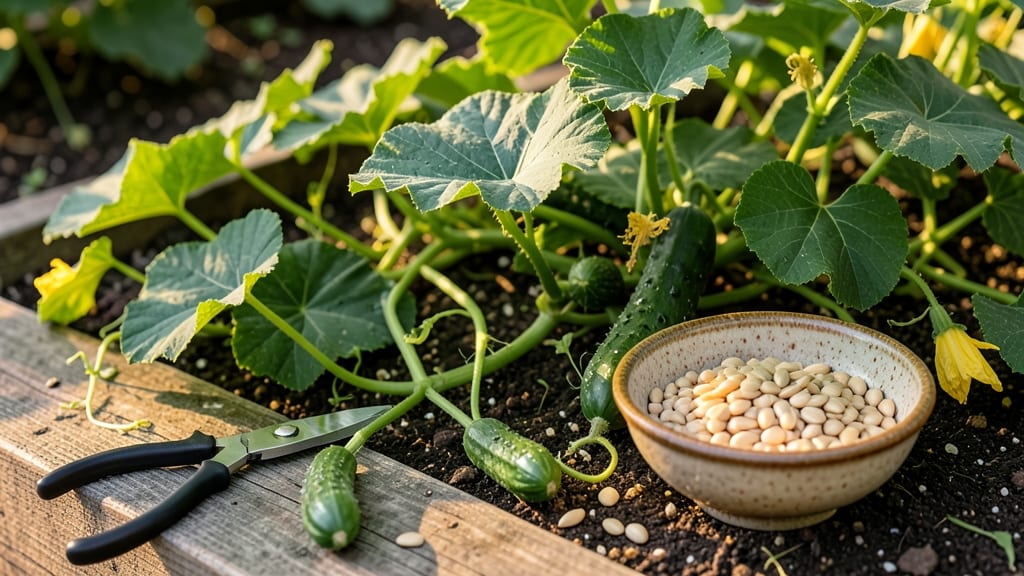
To collect cucumber seeds, allow a ripe cucumber to fully mature on the vine, scoop out the gel-filled seeds, rinse them in water, and dry them thoroughly before storage in a cool, dark place for future planting.
Collecting cucumber seeds isn't just about saving money—it's about preserving the unique traits of your favorite varieties. 🌱 Many gardeners discover that heirloom seeds produce cucumbers with better flavor, texture, and disease resistance than hybrid seeds.
The key is letting the cucumber stay on the vine until it turns yellow and softens, signaling full maturity. Once you scoop out the seeds, fermenting them in water for 2-3 days helps break down the gel and remove any remaining fruit flesh, which prevents mold during storage.
After fermentation, rinse the seeds thoroughly and spread them on a paper towel in a warm, dry place for 3-5 days. A dehydrator works great too, but avoid direct sunlight to prevent overheating.
Store the dried seeds in a sealed container with a silica packet to absorb moisture—this keeps them viable for up to 5 years. For gardeners who love experimenting, this process lets you create your own custom seed blends tailored to your local climate and taste preferences.
💡 In This Article
- Why Proper Seed Collection Matters for Cucumber Varieties
- Step-by-Step Cucumber Seed Preservation Techniques
Why proper seed collection matters for cucumber varieties
Cucumber seeds develop their full genetic potential only when collected from fully mature fruit. When you harvest seeds from cucumbers that haven't reached their natural end-of-season ripeness (yellow and soft), you're essentially capturing immature genetic material.
This is why heirloom varieties—those that have been passed down through generations—produce seeds that reliably grow true to type, while hybrid seeds often revert to one of the parent plants' traits after just one generation.
The biology behind this lies in the cucumber's reproductive cycle. As the fruit matures, the seeds inside develop a tough outer coating that protects them from environmental stressors. This coating also contains natural antimicrobial compounds that prevent fungal growth during storage.
When you collect seeds from green cucumbers, they lack this protective coating and are more prone to mold during fermentation—a critical step that removes the seed's surrounding gel. 🌱 For example, a Lemon cucumber saved at full maturity will produce seeds that grow plants with the same disease resistance and flavor profile, while seeds from an early-harvested fruit may yield inconsistent results.
Cross-pollination adds another layer of complexity. Cucumbers are monoecious, meaning they produce separate male and female flowers on the same plant. If you're growing multiple varieties, bees can easily transfer pollen between them, creating hybrid seeds that won't grow true to either parent.
To maintain seed purity, either grow just one variety or use physical barriers like mesh bags over female flowers during pollination. This precision is why seed savers often grow isolated patches of their favorite varieties—sometimes even miles apart—to preserve genetic integrity.
Hybrid seeds, which are the result of deliberate cross-breeding for specific traits like disease resistance or uniform size, present a different challenge. While you can collect seeds from hybrids, they won't produce plants identical to the parent generation.
This is because the first-generation hybrids (F1) are genetically uniform, but their offspring (F2) will exhibit a wide range of traits due to genetic recombination.
For gardeners focused on consistency, this means hybrid seeds are best bought fresh each year, while heirloom seeds offer the reward of predictable, flavorful results year after year.
Temperature and humidity also play crucial roles in seed development. Cucumbers grown in cooler climates often produce seeds that require stratification (a period of cold treatment) to break dormancy, while tropical varieties may need warm conditions to germinate.
This is why seed collectors often note the growing conditions of their parent plants—information that becomes invaluable when storing seeds for future seasons. For instance, seeds from a Persian cucumber variety grown in Arizona might need different storage conditions than those from a Siberian cucumber grown in Minnesota.
Understanding these biological factors helps explain why some gardeners achieve stunning success with saved seeds while others struggle. The difference often comes down to patience—allowing cucumbers to fully mature on the vine—and attention to detail during the collection process.
When done correctly, you're not just saving seeds; you're preserving a piece of your garden's genetic legacy, ready to thrive in future seasons. 🌿