
Plants
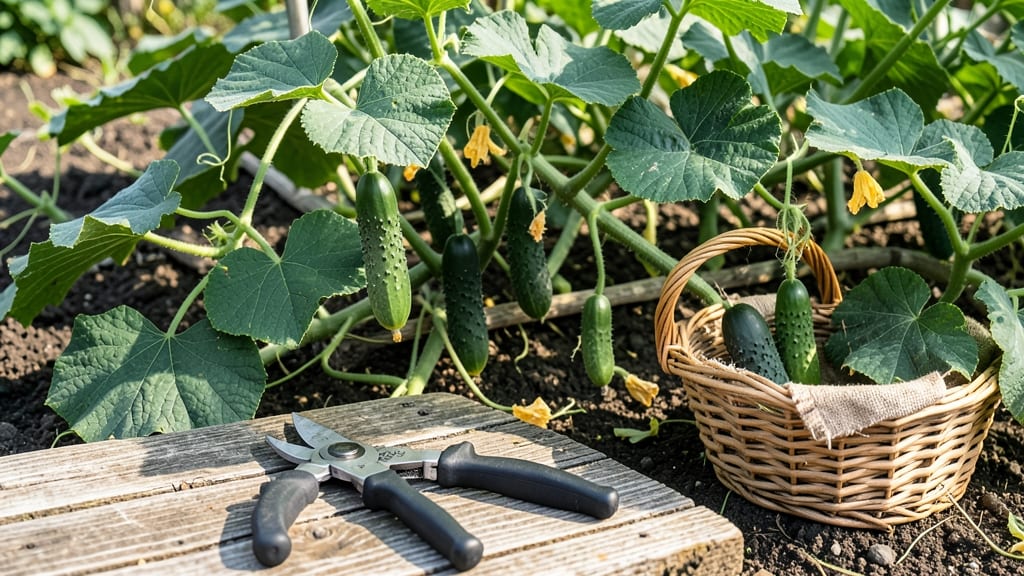
Pickling cucumbers look like compact, slender vegetables that stay consistently small—typically 2 to 4 inches long with a diameter under 2 inches. Their skin is smooth and thin, often dark green or greenish-black, and lacks the bumps or ridges that indicate maturity in slicing varieties.
These cucumbers stay small because they're bred specifically for pickling, where size matters more than length. 🌱 The dark green or greenish-black hue comes from their thicker skin, which protects them during fermentation.
Unlike slicing cucumbers that grow longer and develop ridges, pickling types maintain their uniform shape—perfect for whole-pack pickling or spears.
When shopping, look for cucumbers that feel firm and heavy for their size, with no soft spots or yellowing. Hybrid varieties like 'Boston Pickling' or 'National Pickling' are common choices for home preservation, while heirloom types might offer unique flavors but require more attention to growing conditions.
💡 In This Article
- Distinguishing Pickling Cucumbers from Slicing Varieties
- Growing and Selecting Pickling Cucumbers for Home Preservation
Distinguishing pickling cucumbers from slicing varieties
The most obvious difference between pickling and slicing cucumbers lies in their genetic programming. Pickling varieties are bred to stay compact, typically reaching only 2-4 inches in length, while slicing types can grow up to 12 inches or longer.
This size control comes from selective breeding that suppresses the plant's natural tendency to elongate, ensuring consistent small fruits perfect for whole-pack pickling or spears.
Skin texture and color provide another key identifier. Pickling cucumbers have thicker, darker skin—often dark green or greenish-black—that protects them during fermentation. Their skin measures about 0.04-0.06 inches thick, compared to slicing cucumbers' thinner 0.02-0.04 inches.
This thicker skin also contributes to their firmer texture, which holds up better during the pickling process without becoming mushy. The absence of ridges or bumps is another telltale sign—pickling types maintain their smooth, cylindrical shape throughout growth.
Flavor differences stem from these physical traits. Pickling cucumbers develop a slightly more bitter, tangy profile due to their higher concentration of phenolic compounds in the thicker skin. This bitterness actually enhances their flavor during fermentation, creating that classic tangy crunch.
Slicing cucumbers, with their thinner skin and milder taste, are bred for fresh eating where sweetness dominates. The genetic focus on size in pickling varieties also means they develop faster, often ready for harvest in just 45-55 days compared to slicing types' 60-70 days.
Here's how to spot them at the market or in your garden:
- Size: Pickling cucumbers stay under 4 inches long, while slicing types exceed 6 inches
- Skin: Pickling types have darker, thicker skin (greenish-black) vs. lighter green slicing cucumbers
- Shape: Pickling cucumbers remain uniform and smooth without ridges
- Weight: Pickling cucumbers feel heavier for their size due to denser flesh
The genetic difference extends to their growth habits too. Pickling cucumbers produce more flowers that develop into fruit, while slicing varieties focus energy on fewer, larger cucumbers. This is why you'll often see pickling plants with 20-30 cucumbers per vine compared to slicing plants' 5-10 larger fruits.
The trade-off? Pickling types require more frequent harvesting to maintain their small size—wait too long, and they'll start elongating just like slicing varieties.
What most gardeners don't realize is that even within pickling varieties, there are subtle differences. 'National Pickling' produces the classic small, dark green cucumbers, while 'Boston Pickling' offers slightly lighter green fruits with a more delicate texture.
These distinctions matter when choosing for specific pickling recipes—darker varieties handle spicier brines better, while lighter types shine in milder dill pickles. 🌱