
Plants
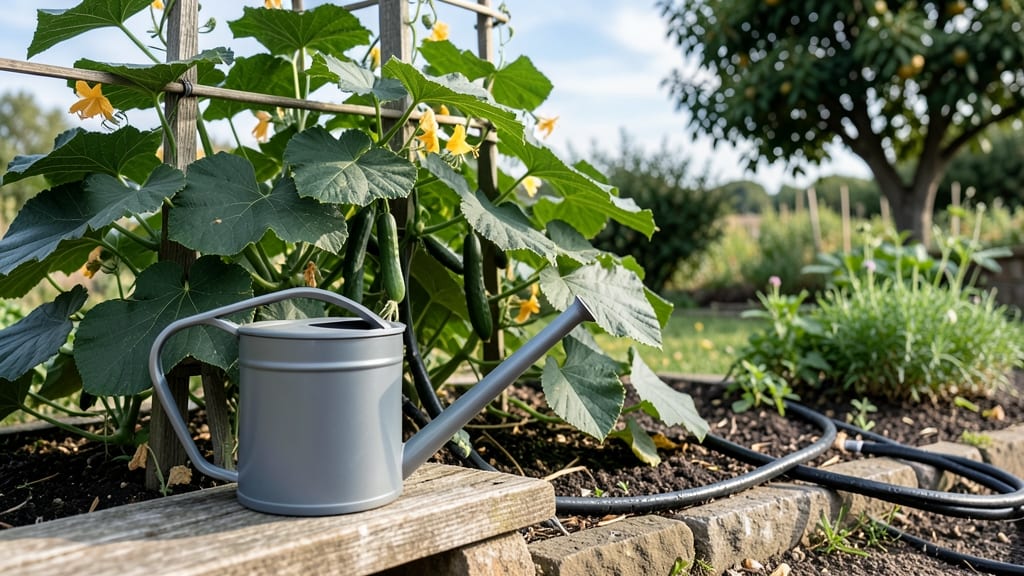
A cucumber plant needs about 1-2 inches of water per week to thrive, but the exact amount depends on its growth stage and your climate.
Struggling to keep your 🥒 plants thriving? Overwatering or underwatering can spell disaster for your harvest—discover the exact watering schedule cucumbers need at every growth stage to maximize yield and plant health.
Too little water and your vines wilt, flowers drop, or fruit turns bitter. Too much, and you risk root rot or fungal diseases that can wipe out your entire crop. The key is consistency: deep, even moisture without soggy soil.
In this guide, I’ll break down how often to water seedlings vs. mature plants, the best times to water, and how to adjust for containers, heatwaves, and humidity. By the end, you’ll know exactly how to keep your cucumbers happy from seedling to harvest.
Cucumber plant watering requirements by growth stage: seedling to harvest
Cucumbers are 90% water, which means consistent moisture is critical for healthy growth and sweet, crisp fruits. Too much or too little water at the wrong stage can lead to problems like blossom-end rot or powdery mildew.
Understanding your cucumber's watering needs by growth phase ensures a thriving vine and bountiful harvest. Let's break down the exact water requirements for each stage—from tiny seedlings to heavy-fruiting plants.
Newly sprouted cucumber seedlings are delicate and need gentle care. Overwatering can drown their tender roots, while underwatering stunts growth. During this phase, focus on keeping the soil lightly moist—never soggy.
Aim for about 1/2 inch of water per week, delivered through a watering can or fine mist to avoid disturbing the soil surface. Avoid wetting the leaves to prevent fungal diseases from taking hold.
Once your seedlings have developed 2-3 true leaves and are ready for transplanting, their water needs increase slightly. At this vegetative growth stage, cucumbers need 1 inch of water per week, split into 2-3 watering sessions.
Water deeply at the base of the plant to encourage strong root development. This stage is all about building a sturdy framework for the vines to climb and produce fruit later in the season.
| Growth Stage | Water Frequency | Soil Moisture Target | Key Tips |
|---|---|---|---|
| Seedlings (0-2 weeks) | Every 2-3 days | Lightly moist (1/2 inch) | Water at base; avoid wetting leaves |
| Vegetative (2-4 weeks) | Every 2-3 days (1 inch/week) | Consistently moist | Deep watering at soil base |
| Flowering (4-6 weeks) | Daily (1.5 inches/week) | Deeply moist (2-3 inches) | Morning watering; mulch heavily |
| Fruiting (6+ weeks) | Daily (2 inches/week) | Evenly moist (3+ inches) | Drip irrigation ideal; monitor soil |
The flowering stage marks a turning point where your cucumbers need more frequent watering to support both bloom development and future fruit.
During this phase, increase watering to 1.5 inches per week, delivered daily if possible. Morning watering is crucial—it allows foliage to dry quickly, reducing the risk of powdery mildew, a common fungal issue.
Use a soaker hose or drip irrigation to deliver water directly to the roots while keeping leaves dry.
When your cucumbers enter the fruiting stage, their water demands peak. Heavy fruit production requires 2 inches of water per week, often delivered daily in hot climates. Consistent moisture is non-negotiable—fluctuations can cause blossom-end rot, where the blossom end of the cucumber turns brown and mushy.
To maintain even moisture, consider mulching with straw or grass clippings to retain soil moisture and suppress weeds that compete for water.
Container-grown cucumbers have different watering needs than in-ground plants. Since pots dry out faster, you may need to water daily during hot weather.
Check soil moisture by sticking your finger 1-2 inches deep—if it feels dry, water thoroughly until it runs out the drainage holes. Avoid letting containers sit in standing water, as this can lead to root rot.
For containers, self-watering systems or wicking beds can help maintain consistent moisture levels.
Seasonal adjustments are key to cucumber watering success. In spring and fall, when temperatures are moderate, you can water every 2-3 days. But during summer heatwaves, increase frequency to daily watering and consider shade cloth to reduce water loss through evaporation.
Always water early in the morning to give plants time to absorb moisture before the heat of the day.
Signs of overwatering vs underwatering in cucumber plants: what to watch for
Cucumber plants are thirsty but delicate—too much or too little water throws off their growth. I’ve seen wilting vines and mushy roots from both extremes, and the key is spotting the signs early. Yellowing leaves or stunted fruit often mean your watering routine needs a tweak.
Let’s break down what to watch for at each stage.
First, check the soil moisture by sticking your finger 1-2 inches deep. If it’s damp but not soggy, you’re likely in the sweet spot. Overwatered soil smells musty, while underwatered soil feels dry and pulls away from the pot edges.
Both extremes stress cucumbers, but the visual clues differ dramatically.
✅ Overwatering
- Yellow leaves (especially lower ones)
- Mushy stems or blackened roots
- Fungal spots (white/powdery mildew)
- Slow growth despite moist soil
❌ Underwatering
- Drooping leaves (wilting by midday)
- Crispy leaf edges or brown patches
- Small, bitter fruit or no cucumbers
- Dry, cracking soil around roots
For seedlings, underwatering shows as wrinkled leaves and stunted growth, while overwatering causes root rot (black, slimy roots). At the flowering stage, too little water leads to dropped blossoms, and too much invites powdery mildew on leaves.
Always adjust based on the plant’s current lifecycle—vining cucumbers need more water than young sprouts.
If your cucumbers show yellowing between veins, it’s likely overwatering or poor drainage. Fix this by letting the top inch of soil dry slightly between waterings and adding perlite to improve aeration.
For underwatered plants, give them a deep soak in the morning and mulch to retain moisture. Consistency is key—cucumbers hate moisture swings!
Pro tip: Morning watering prevents fungal diseases, while evening water keeps leaves damp overnight, inviting mildew. If your leaves curl upward (like a taco), it’s often underwatering. But if they yellow and fall off, you’re likely overdoing it. Adjust based on these clues, and your cucumbers will thrive!
Remember, container-grown cucumbers dry out faster than in-ground plants. Monitor them daily, especially in hot weather. A quick soil check with your finger beats guessing—your plants will thank you with crisp, abundant harvests. 🥒💧