
Light Requirements
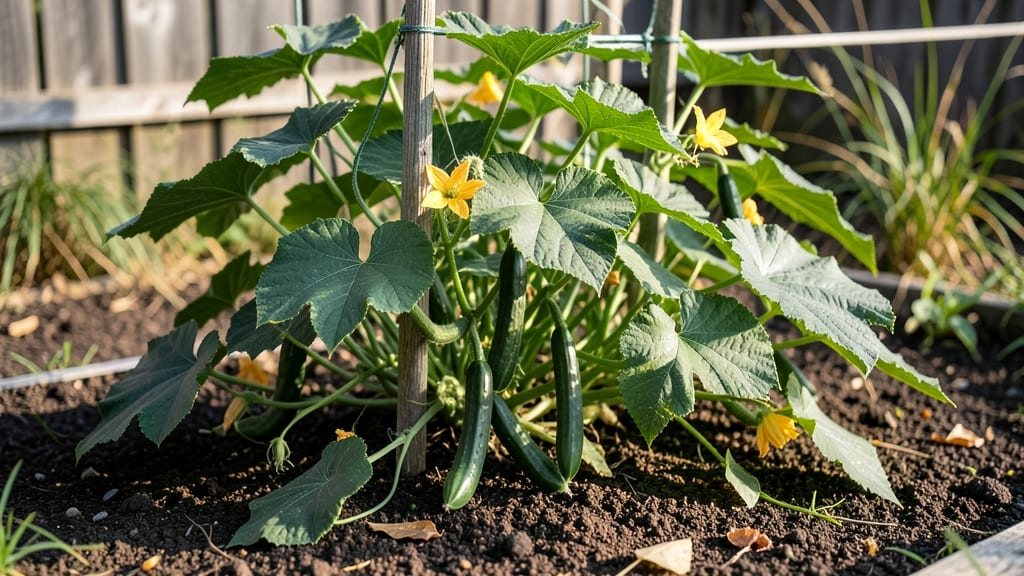
Cucumbers need 6 to 10 hours of bright, direct sunlight daily to grow and produce fruit—more light means bigger yields and fewer bitter cucumbers.
Struggling with cucumber plants that refuse to thrive? Light exposure is the single most critical factor in determining whether your 🥒 will flourish or fizzle—yet most gardeners get it wrong.
Too little light leads to leggy vines, pale leaves, and tiny cucumbers, while too much can stress plants in hot climates. The key is finding that sweet spot of sunlight, whether you're growing in a garden, on a balcony, or indoors.
In this guide, I’ll break down exactly how much light cucumbers need at each growth stage, how to spot light deficiencies, and practical tips to maximize sunlight—even in shady spots.

Optimal sunlight requirements for cucumber plants: hours and intensity explained
If you've ever planted cucumbers only to watch them grow weak vines and tiny fruits, you're likely dealing with a light deficiency. Cucumbers are sun-hungry plants that demand consistent, bright light to thrive.
Without enough sunlight, their growth slows dramatically, and fruit production can nearly halt entirely. Understanding the exact sunlight needs of cucumbers is the first step to a bountiful harvest.
Cucumbers are classified as full-sun plants, meaning they require at least 6-8 hours of direct sunlight daily. However, for maximum yield and flavor, most varieties perform best with 8-10 hours of sunlight.
This isn't just about hours—it's also about the intensity of light. Weak, filtered sunlight won't cut it; cucumbers need bright, unobstructed light to fuel their rapid growth and fruiting.
Here's the science behind it: Cucumbers rely on photosynthesis efficiency to convert sunlight into energy. During the seedling stage, they need gentle but consistent light to prevent leggy growth.
Once flowering begins, they demand peak sunlight intensity to support heavy fruit production. Even a few hours of shade can reduce yields by up to 50%.
The ideal light intensity for cucumbers falls between 10,000-15,000 lux (a measure of light brightness). This is roughly equivalent to the light you'd get on a bright, sunny summer day. In partial shade (3-6 hours of sun), cucumbers will survive but produce smaller, fewer fruits with lower quality.
For container growers, this means placing pots in the sunniest spot available, even if it's only a balcony.
Now, let's break down how sunlight affects each growth stage of cucumbers. During the seedling phase (first 2-3 weeks), they need 4-6 hours of light daily to prevent stretching. Once they develop true leaves, increase exposure to 6+ hours.
The flowering stage is when light demands peak—8+ hours ensures proper pollination and fruit set. Finally, during fruiting, consistent sunlight maintains energy for rapid growth.
| Growth Stage | Daily Sunlight Needs | Light Intensity | Key Effects of Proper Light |
|---|---|---|---|
| Seedling (0-3 weeks) | 4-6 hours | 5,000-8,000 lux | Prevents leggy growth, strong root development |
| Vegetative (3-5 weeks) | 6-8 hours | 8,000-12,000 lux | Rapid vine growth, leaf expansion |
| Flowering (5-7 weeks) | 8-10 hours | 12,000-15,000 lux | Optimal pollination, fruit set |
| Fruiting (7+ weeks) | 8-10+ hours | 10,000-15,000 lux | Maximizes yield, improves flavor |
| Partial Shade (<6 hrs) | 3-6 hours | 3,000-7,000 lux | Reduced growth,
Signs your cucumbers aren’t getting enough light (and how to fix it)If your cucumber plants look weak or produce tiny, bitter fruits, light deprivation is likely the culprit. Cucumbers are sun-hungry plants that demand 6–8+ hours of direct sunlight daily. Without enough light, they struggle to photosynthesize, leading to stunted growth and poor yields. I’ve seen gardeners overlook this, thinking partial shade is fine—until their harvests disappoint. Watch for these red flags: Pale, yellowing leaves (especially on lower stems), thin, leggy vines, and small, misshapen fruits. Even the healthiest cucumber varieties like 'Straight Eight' or 'Marketmore' will underperform in low light. The good news? Fixing light issues is often as simple as relocating your plants or supplementing with grow lights. ✅ DO This for Cucumbers❌ DON'T Do This
Plant in full sun
6–8+ hours of direct sunlight daily
Use reflective surfaces
White walls or mirrors to bounce light
Supplement with grow lights
12–16 hours/day for indoor plants
Avoid shade from trees
Even dappled shade reduces yield
Don’t overcrowd plants
Competing vines block light
Skip low-light varieties
Cucumbers need full sun—no exceptions For outdoor gardens, move your cucumbers to the sunniest spot in your yard—ideally a south-facing location. If your yard is shaded, consider vertical trellises to lift vines above obstacles. In cloudy climates, extend the growing season with a seasonal greenhouse or cold frame to capture extra light. Indoor growers face bigger challenges, but LED grow lights can save the day. Place lights 6–12 inches above plants and run them for 12–16 hours daily. I recommend full-spectrum LEDs (like the Mars Hydro TS 1000W) for best results. Rotate plants weekly to prevent uneven growth from light sources. If you’re in a rental home or small space, try a sunny windowsill with a south-facing exposure. Pair this with a reflective surface (like aluminum foil on the wall) to maximize light. Just remember: west-facing windows work too, but provide shorter daylight hours. Finally, prune lower leaves to improve airflow and light penetration to the fruit-bearing vines. This trick helps even in partial shade, though yields will still lag compared to full sun. With these fixes, your cucumbers should bounce back within 2–4 weeks of better light exposure. |