
Picking
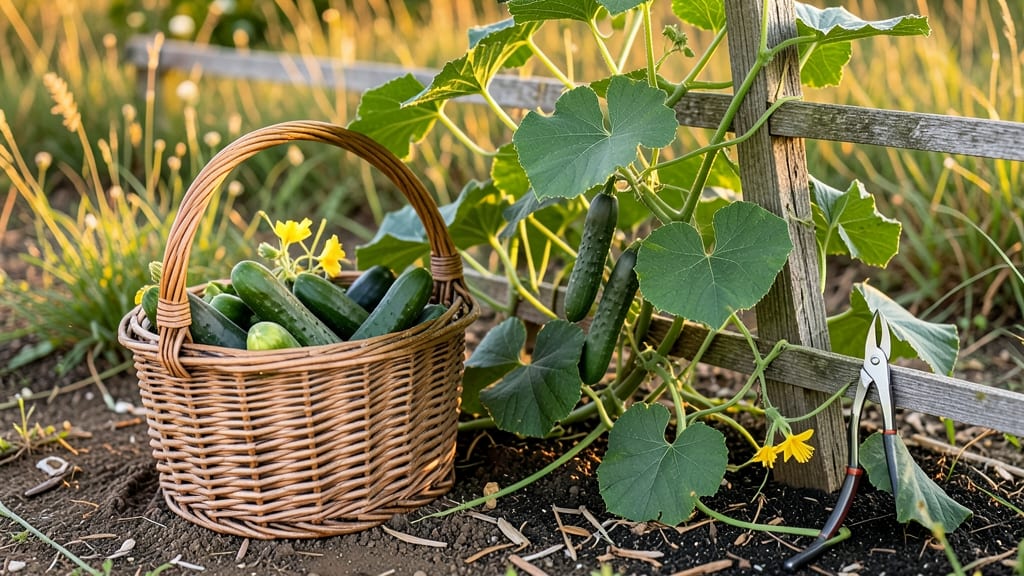
Knowing when your cucumbers 🥒 are ready to pick makes all the difference between a crisp, sweet harvest and a bitter, seedy disappointment.
Picking cucumbers at the wrong time can turn your homegrown harvest from crisp and sweet to bitter and seedy—so how do you know when they're perfectly ready?
Most gardeners rely on size alone, but texture, color, and even seed development play a bigger role in flavor and quality. I’ll show you three foolproof tests—no guesswork, just taste—and how to adjust for slicing vs. pickling varieties.
By the end, you’ll spot the perfect cucumber every time, avoid common mistakes, and keep your plants producing all season long.


3 Reliable tests to determine cucumber ripeness (beyond just size)
Cucumbers are deceptive little fruits—they can look perfect on the outside while tasting bland or even bitter inside. I’ve learned the hard way that relying solely on size or days since planting misses the mark.
The real secrets lie in color shifts, skin texture, and even the seed development inside. These three science-backed tests will help you harvest cucumbers at their crispest, sweetest peak every time.
Most gardeners focus on length—aiming for 6-8 inches for slicing varieties—but that’s just the starting point. The magic happens when you combine visual cues, touch tests, and a quick taste sample.
I’ll walk you through each method, including why seed size matters more than you think (hint: it’s about avoiding that mealy texture!).
⚠️ Pro Tip: Overripe cucumbers contain higher levels of cucurbitacin (a bitter compound), which is why those giant store-bought cucumbers taste so off. Harvesting at the right stage prevents this entirely.
| Test Method | What to Look For | Perfect Stage | Avoid This |
|---|---|---|---|
| Color Test | Deep, even green (or variety-specific hue) | Firm, glossy skin | Yellowing or dull patches |
| Texture Test | Skin yields slightly when pressed (like a ripe avocado) | Firm but not hard | Mushy or leathery feel |
| Seed Test | Seeds are visible but small and soft | No larger than a pinhead | Hard, enlarged seeds |
| Taste Test | Crisp, sweet, with no bitterness | Juicy with thin skin | Bitter aftertaste |
The color test is your first clue—look for a deep, uniform green (or the specific color of your variety, like yellow for lemon cucumbers). A dull or mottled appearance means it’s overripe.
I once picked a batch of Persian cucumbers that looked perfect but had yellowing ends—they tasted like rubber. Always check the stem end first, as it ripens slightly later.
Next, perform the texture test by gently pressing your thumb into the cucumber’s skin. It should yield slightly (like pressing a ripe peach) but not feel mushy. Overripe cucumbers develop a leathery texture and may even split open.
I keep a small notebook by my garden to track when my Kirby cucumbers reach this ideal firmness—usually around 55 days for my climate.
The seed test is often overlooked but critical. Cut open a cucumber to check the seeds—if they’re small and soft, it’s ready. Large, hard seeds mean the cucumber has passed its prime.
I learned this the hard way with a pickling variety that turned bitter because I waited too long. For pickling cucumbers, harvest when seeds are tiny white dots—they’ll be crunchy and flavorful.
Finally, the taste test is the ultimate judge. A perfectly ripe cucumber should be crisp, sweet, and juicy with no bitterness. If you taste even a hint of bitterness, it’s overripe.
I always sample a few cucumbers from each vine to ensure consistency. Pro tip: Harvest in the morning when flavors are at their peak due to cooler temperatures.
Remember, harvesting frequency affects ripeness. I pick my cucumbers every 2-3 days during peak season to encourage more production. If you wait too long, the vine diverts energy to seed development, reducing overall yield.
And if you’re growing bush varieties, they’ll produce more consistently than vining types—just check them more often!
One common mistake is assuming all cucumbers ripen at the same rate. Slicing varieties (like Straight Eight) take longer to ripen than pickling types (like Boston Pickling).
Always check your seed packet for specific harvest times. My lemon cucumbers mature faster—usually in 45-50 days—so I monitor them more closely.
When to pick cucumber varieties: a guide by type (slicing vs. pickling)
Not all cucumbers ripen on the same schedule—slicing cucumbers like Persian or Straight Eight need different timing than pickling varieties such as Kirby or Boston Pickling.
Even lemon cucumbers have their own sweet spot. Understanding these differences ensures you harvest at peak flavor and texture, avoiding the bitter, seedy disappointment of waiting too long.
Climate plays a surprising role too. In hot, dry regions, cucumbers mature faster, while cooler, cloudy seasons slow ripening. Even your soil moisture and fertilization schedule can shift the window by a week or more. The key is learning each variety’s unique signals—and adjusting for your local growing conditions.
🌱 Pro Tip: Always harvest in the morning when cucumbers are coolest and crispest. Use a sharp knife or pruners to avoid damaging the vine, and leave a small stem attached to prevent rot.
| Variety Type | Ideal Size | Skin Color | Seed Stage | Best For | Climate Notes |
|---|---|---|---|---|---|
| Slicing (e.g., Persian, Straight Eight) | 6–8 inches | Deep green (or variety-specific) | Small, soft seeds | Salads, sandwiches | Harvest 2–3 days earlier in heat |
| Pickling (e.g., Kirby, Boston Pickling) | 2–3 inches | Bright green/yellow | Tiny, barely visible | Pickles, fermenting | Harvest 1–2 days earlier in humidity |
| Lemon (Lemon Cucumber) | 3–4 inches | Yellow when ripe | Soft, white seeds | Garnishes, salads | Wait 1 extra day in cool weather |
| Mini (Bush Champion) | 1–2 inches | Dark green | Almost seedless | Snacking, containers | Harvest daily in heatwaves |
For slicing cucumbers, focus on size consistency—most varieties peak at 6–8 inches. If you wait until they’re larger, they’ll become seedy and bitter. Persian cucumbers, for example, should be harvested when they’re 4–6 inches long and still glossy, not wrinkled.
Meanwhile, pickling cucumbers like Kirby are ready when they’re 2–3 inches long and firm. Their bright green color fades if left too long, and the skin toughens. Lemon cucumbers are trickier—they must turn fully yellow (not just green with yellow stripes) before picking, especially in cooler climates.
Adjust your timing based on your local heat. In hot summers, cucumbers ripen faster—check daily for slicing types. In cooler regions, extend the window by 3–5 days to let them fully develop.
And if you’re growing bush varieties in containers, harvest every 2–3 days to prevent overcrowding.
Remember: The earlier you pick, the more your plant produces. A well-maintained vine can yield 10–20 cucumbers per season if harvested regularly. Don’t let them linger—your next harvest depends on it! 🌿