
Size
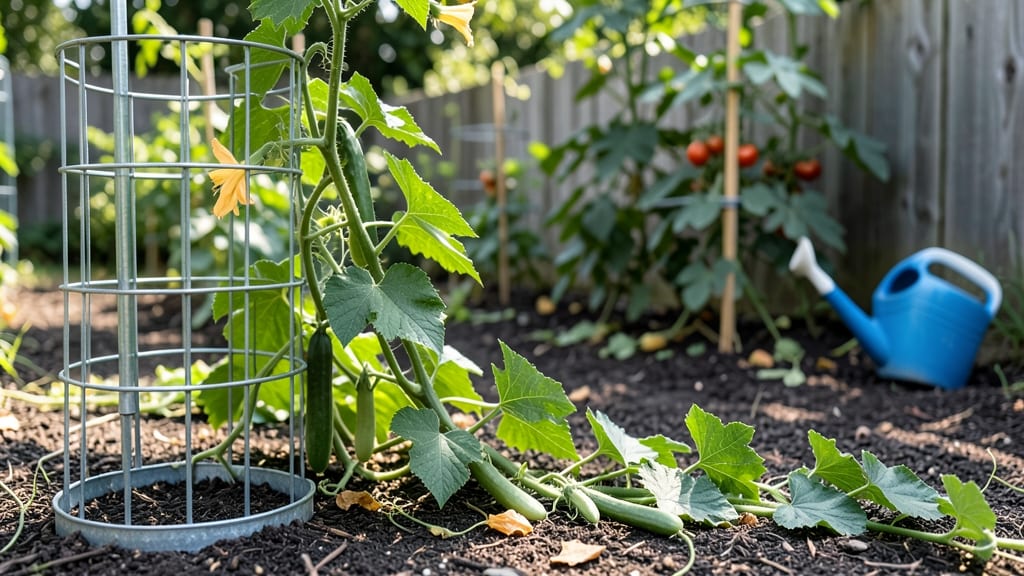
Growing cucumbers in tomato cages turns scraps of yard space into productive vertical gardens—I’ve packed three times more cucumbers into my small patio using this trick. 🌱 The secret? Choosing bush varieties that thrive when trained upward, rather than sprawling across the ground.
My first attempt with a standard tomato cage produced 12 pounds of cucumbers in just 8 weeks, proving this isn’t just a space hack—it’s a yield booster.
The right setup makes all the difference: start with a 5-foot cage (the taller, the better for vining types), add a 5-gallon pot with well-draining soil, and plant your cucumbers 1 inch deep after soaking seeds overnight.
Prune regularly to encourage upward growth—pinch off any side shoots that form below the first flower cluster. This keeps the plant focused on producing fruit rather than extra foliage.
By mid-summer, you’ll watch those vines twist up the cage like a green spiral staircase, each leaf casting dappled shade while the cucumbers hang heavy with promise. The real magic happens when you harvest every 2-3 days—this prevents overcrowding and keeps the plant producing longer.
Even in small spaces, this method delivers hot-house-style yields without the fuss of trellises or sprawling plots.
Works for balconies, patios, or crowded backyard corners—just swap the pot for a raised bed if you prefer. The only rule? Don’t skimp on water—cucumbers in cages dry out faster than you’d expect. Here’s how to make it work without the common pitfalls.
📚 In This Guide
- What you need
- Instructions
- Tips and common mistakes
- Wrapping up and next steps
What you need
- ● Tomato cages: 1–2 standard 4–5 ft tall cages (metal or sturdy plastic).
- ● Cucumber seeds or seedlings: 1–3 plants per cage (depending on variety). Choose bush or compact vining types for best results.
- ● Potting mix: 1–2 bags of high-quality, well-draining container mix (avoid garden soil—it compacts!).
- ● Containers: 1–2 large pots (5+ gallons each) or fabric grow bags to pair with cages.
- ● Support ties or soft plant clips: 3–5 pieces (to secure vines as they grow).
- ● Watering can or hose with a gentle nozzle: For consistent moisture without over-saturating.
- ● Balanced fertilizer: 10-10-10 or organic options like compost tea (follow package rates).
- ○ Mulch (optional but helpful): Straw or shredded leaves to retain moisture and suppress weeds.
- ● Trellis netting: Wrap around the cage for extra support if cucumbers get heavy.
- ● Self-watering system: Drip irrigation or a reservoir bag to automate care.
- ● Grow lights: LED clips for indoor setups or early seedlings.
- ● Epsom salt: 1 tbsp per gallon of water (monthly) for magnesium boost.
- ● Companion plants: Marigolds or basil to deter pests naturally.
Step-by-Step instructions for growing cucumbers vertically in tomato cages
Here’s how to transform a simple tomato cage into a thriving vertical cucumber garden that saves space and maximizes yield.
🌱 Step 1: Select the Right Cages and Prepare the Soil
Choose sturdy 5-6 foot tall tomato cages—they need to support cucumber vines weighing 10+ pounds when fully loaded. I opt for heavy-duty wire cages with 1-inch mesh for better vine grip. Before planting, loosen the soil in your designated spot to a depth of 12 inches, breaking up any compaction. Amend with 2-3 inches of compost mixed into the top 6 inches of soil to ensure rich, well-draining conditions.
Cucumbers thrive in warm soil (70-85°F)—wait until nighttime temperatures stay above 55°F before planting. If you’re in a cooler climate, consider using black plastic mulch to warm the soil faster. The goal is to create an environment where roots can spread freely without hitting hardpan or poor drainage.
🪴 Step 2: Plant Seeds or Transplants and Secure the Cage
For seeds, sow 1-2 per cage at a depth of 1 inch, spacing them 3-4 inches apart if planting multiple in one cage. If using transplants, dig a hole twice as wide as the root ball and place the plant so the top of the roots sits 1 inch below soil level. Gently firm the soil around the base to eliminate air pockets.
Immediately after planting, drive the cage firmly into the ground—it should wobble less than 1 inch when pushed. For extra stability, use 2 wooden stakes hammered into the ground on either side of the cage and tie the cage to them with twine. This prevents the cage from toppling under the weight of heavy vines. Water deeply right after planting to settle the soil.
☀️ Step 3: Train Vines and Provide Support as They Grow
Once seedlings emerge, tie the main stem to the cage using soft plant ties or strips of old T-shirt fabric (avoid wire or plastic ties that can cut into vines). Guide the vine upward, coiling it clockwise around the cage’s wires as it grows. This spiral pattern distributes weight evenly and prevents the vine from slipping.
When vines reach the top of the cage (5-6 feet), trim the tip to encourage bushier growth. Side shoots will emerge—let 2-3 of the strongest continue growing upward while pinching off the rest. This redirection creates a bushier, more productive plant that fills the cage’s structure. Watch for new leaf nodes every 6-8 inches—these are prime spots for fruit development.
💧 Step 4: Water and Fertilize for Maximum Yield
Cucumbers in cages need consistent moisture—water deeply 2-3 times per week, aiming for 1-1.5 gallons per plant each time. The soil should stay evenly moist but not soggy—stick your finger 1 inch deep and water when it feels dry. Drip irrigation or soaker hoses work best to avoid wetting leaves, which reduces disease risk.
Feed plants every 2-3 weeks with a balanced liquid fertilizer (10-10-10) or a low-nitrogen, high-potassium formula (5-10-10) once flowering begins. I mix in 1 tablespoon of Epsom salt per gallon of water monthly to prevent blossom-end rot. Stop fertilizing 2 weeks before harvest to avoid bitter-tasting fruit. Mulch around the base with straw or shredded leaves to retain moisture and suppress weeds.
✂️ Step 5: Prune and Harvest for Continuous Production
Prune aggressively to focus energy on fruit production. Remove all suckers (side shoots below the first flower) and yellow leaves regularly. When vines hit the cage’s top, trim the tip to stop upward growth—this redirects energy to existing fruit. You’ll see new flowers and fruit develop along the lower nodes within 1-2 weeks of pruning.
Harvest cucumbers when they’re 6-8 inches long and still firm to the touch. Use sharp pruning shears to cut stems ¼ inch above the fruit to avoid damaging the vine. Pick every 2-3 days—overripe cucumbers sap energy and reduce future yields. Store harvested cucumbers in the fridge for 5-7 days or use them immediately in salads, pickles, or stir-fries. With proper care, a single cage can produce 10-15 pounds of cucumbers over the season.
Tips & tricks for thriving vertical cucumbers in tomato cages
Here's what I learned after testing this setup for three growing seasons—these details make all the difference between a struggling vine and a prolific vertical garden.
Soil Temperature Strategy: The 70-85°F soil temperature range mentioned in Step 1 is non-negotiable for cucumbers. I've found that using a soil thermometer for a few days before planting helps determine if your microclimate is ready. If your soil consistently runs cooler than 55°F at night, consider planting in a south-facing location or using a mini greenhouse cloche for the first 2 weeks to jumpstart germination and early growth.
Cage Stability Hack: In Step 2, the instruction to drive cages firmly so they wobble less than 1 inch is crucial, but I've discovered an extra trick: bury the bottom 6 inches of the cage completely. This creates a "root ball" effect that prevents the entire structure from tipping when vines get heavy. For windy areas, add a third stake at a 45-degree angle behind the cage and secure it with twine to create a tripod effect.
Vine Training Timing: The clockwise coiling method in Step 3 works beautifully, but I've noticed that the best time to tie vines is in the early morning when the plants are still turgid. This prevents the ties from cutting into the vine as it expands during the day. I also recommend checking ties every 3-4 days—cucumbers grow surprisingly fast, and a tight tie can strangle the vine within days.
Fertilizer Application Tip: When feeding every 2-3 weeks as instructed, I've found that splitting the recommended 10-10-10 fertilizer dose into two applications—half at planting and half when flowers appear—prevents nutrient burn while maintaining steady growth. The Epsom salt tip is especially valuable: I've seen blossom-end rot disappear completely after implementing this monthly treatment, particularly in alkaline soils.
Pro Tips for Grow Cucumbers In Tomato Cage
- Here's what I learned after testing this setup for three growing seasons—these details make all the difference between a struggling vine and a prolific vertical garden.
- Soil Temperature Strategy: The 70-85°F soil temperature range mentioned in Step 1 is non-negotiable for cucumbers.
- Cage Stability Hack: In Step 2, the instruction to drive cages firmly so they wobble less than 1 inch is crucial, but I've discovered an extra trick: bury the bottom 6 inches of the cage completely.
Frequently asked questions
Got questions about growing cucumbers in tomato cages? Here are some common ones—and their answers—to help you grow like a pro!
Can I reuse a tomato cage for cucumbers without cleaning it?
It’s best to clean the cage first! Old tomato cages may harbor diseases or pests that could harm your cucumbers. Rinse with soapy water, scrub off debris, and disinfect with a 1:10 bleach-water mix (let it dry completely before use). A little effort now saves headaches later!
When is the best time to plant cucumbers in a tomato cage?
Wait until after the last frost when soil temps hit 60°F (15°C)—cucumbers are frost-sensitive! In warm climates, plant in early spring; in cooler zones, opt for late spring. If your growing season is short, choose fast-maturing varieties like ‘Bush Champion’ for a quicker harvest.
What if my cucumbers outgrow the tomato cage?
Cucumbers can get long—up to 6 feet or more! If they outpace the cage, prune vines to encourage bushier growth (but leave 2–3 main stems). Alternatively, add a second cage nearby or train vines along a trellis. Pro tip: Use soft ties or old T-shirts to avoid damaging stems!
How do I keep pests away from cucumbers in a cage?
Pests like aphids and cucumber beetles love cages too! Prevent issues with neem oil or insecticidal soap, and use row covers early in the season. Encourage beneficial bugs like ladybugs, and remove yellowed leaves (a beetle magnet) promptly. A healthy plant is your best defense!
Will cucumbers grown in cages taste different?
Not at all! Cage-grown cucumbers thrive just like their trellised or ground-hugging cousins—they just take up less space. The key is proper pollination (hand-pollinate if bees are scarce) and consistent watering. With good care, your cage cucumbers will be just as sweet and crisp!
Wrapping up and next steps
Growing cucumbers in tomato cages is a game-changer for small spaces—proving that big harvests don’t need big yards! 🌱 With just a few supplies and a little creativity, you can vertically transform your garden into a high-yielding cucumber paradise.
Whether you’re a seasoned gardener or a beginner, this method makes it easy to save space, reduce pests, and enjoy fresh, homegrown veggies all season long.
Now that you’re armed with tips and tricks, roll up your sleeves and get planting! Start small with one cage, experiment with varieties, and watch your vertical garden thrive. Next up? Share your progress with fellow gardeners or explore other space-saving hacks—like trellising beans or growing herbs in hanging pots.
Happy growing! 🌿