
Plants
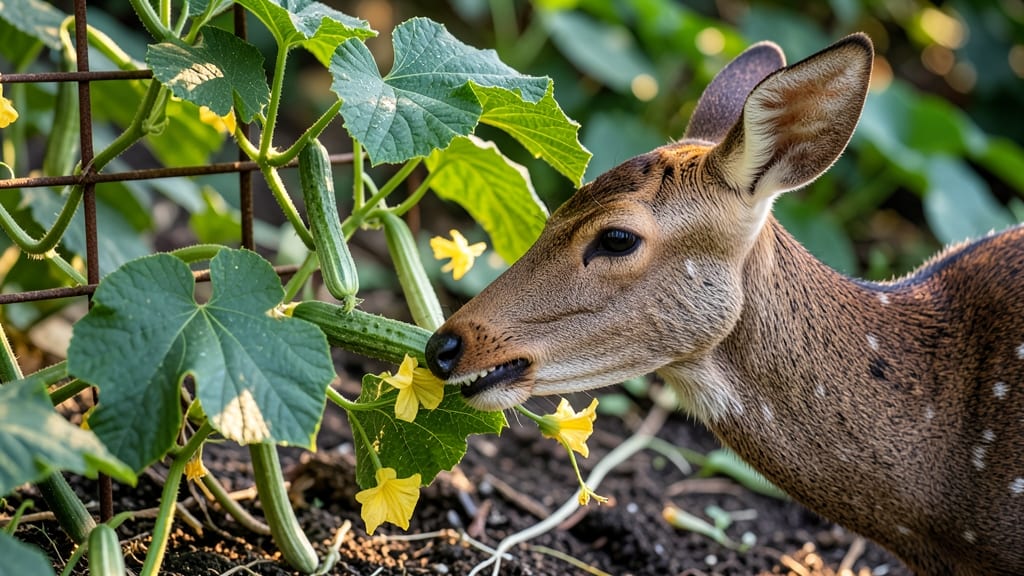
Deer eat cucumber plants voraciously, targeting leaves, stems, and even young fruits, which can devastate gardens overnight. Their preference for tender cucumber foliage makes them a common threat to backyard harvests.
Deer are drawn to cucumbers because they're packed with water and nitrogen—like a snack bar for these hungry browsers. 🌱 They can detect cucumber plants from up to 30 feet away using their keen sense of smell, often striking at dawn or dusk when other predators are less active.
Young plants with soft leaves are especially vulnerable, while mature ones with tougher stems might deter them. This explains why gardeners often find their cucumber patches completely stripped overnight, leaving only chewed stems behind.
What's particularly frustrating is how quickly deer can wipe out an entire harvest. Unlike rabbits that nibble selectively, deer tend to devour entire plants, leaving gardeners with nothing but frustration.
The key to protecting your cucumbers lies in understanding their feeding patterns—knowing when they're most active helps you implement the right prevention strategies at the right time.
💡 In This Article
- Why Deer Love Cucumber Plants and Their Feeding Habits
- Effective Deer-Proofing Strategies for Cucumber Gardens
Why deer love cucumber plants and their feeding habits
Deer target cucumber plants because they're essentially nature's hydrating snack pack. These plants contain 90-95% water by weight, making them incredibly appealing to deer during dry seasons when natural water sources may be scarce.
The high nitrogen content in young cucumber leaves (around 4-5% dry weight) provides essential proteins that deer crave, especially during spring and early summer when fawns are nursing.
This combination of moisture and nutrients makes cucumbers a high-value food source for deer, often ranking them among their top garden targets alongside beans and lettuce.
Their detection system is surprisingly sophisticated. Deer have a Jacobson's organ in their upper palate that allows them to "taste" scents in the air, giving them an almost supernatural ability to locate cucumber plants from 30-50 feet away.
They're particularly drawn to the volatile organic compounds released by crushed cucumber leaves, which act like a dinner bell. What's fascinating is how they use their prehensile lips to pluck leaves without damaging the entire plant—until they get desperate, that is.
This selective feeding behavior explains why you might see some leaves missing while others remain untouched in the same plant.
Timing plays a crucial role in their feeding patterns. Deer are primarily crepuscular, meaning they're most active during dawn and dusk (around 5 AM and 8 PM), when temperatures are cooler and predators are less active.
This is why gardeners often find fresh damage in the morning—they've been at work while you were sleeping. Interestingly, mature cucumber plants with woody stems and rougher leaves (typically after 4-6 weeks of growth) become less appealing.
The tannins and fiber that develop in older plants act as natural deterrents, making them much harder for deer to digest efficiently.
Here's what actually happens when deer attack: they use their upper incisors to create a clean tear in the foliage, often leaving behind 2-4 inch ragged edges on leaves. The stems show distinctive V-shaped notches where they've been partially severed.
What most gardeners don't realize is that deer actually prefer young cucumber fruits (before they harden) to the leaves themselves—these contain even higher moisture content and softer textures. This explains why you might find perfectly good leaves but missing baby cucumbers in your garden.
Seasonal variations also affect their appetite. During late summer when natural food sources become more abundant, deer may show less interest in cucumbers. However, in early spring when new growth emerges, they can become particularly aggressive.
The key insight here is that deer aren't just randomly browsing—they're making calculated decisions based on nutritional value, water content, and ease of consumption. Understanding this helps explain why some cucumber plants in your garden thrive while others get completely stripped down to nothing.
What's particularly frustrating is how quickly they can decimate a garden. A single deer can consume up to 7-10 pounds of vegetation per day during peak feeding seasons, meaning your entire cucumber harvest could disappear in just 2-3 nights if left unprotected.
The good news is that this predictable behavior gives gardeners a fighting chance to implement targeted protection strategies during these vulnerable growth periods.