
Watering
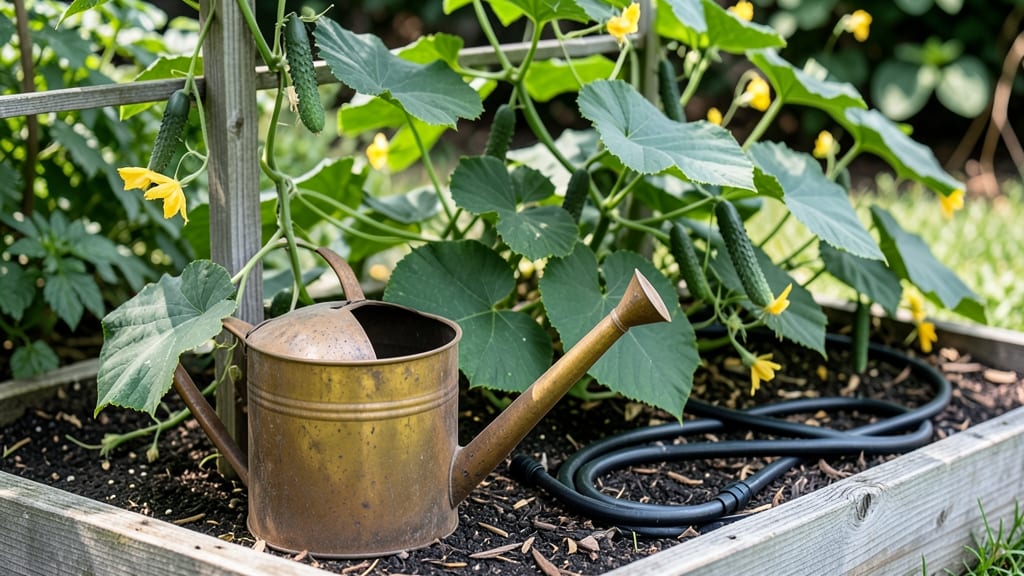
Cucumbers need a lot of water to thrive, but getting the balance right can mean the difference between a bountiful harvest and a sad, wilted vine.
Picture this: your 🥒 cucumbers are sprawling across the garden, their leaves crisp and vibrant, but then a heatwave hits, and suddenly, they’re drooping by noon. Or worse, you’ve been watering like a firehose every day, only to find yellowing leaves and mushy stems.
That’s the tightrope act of cucumber care—too little, and they suffer; too much, and their roots drown.
Here’s the thing: cucumbers aren’t just thirsty—they’re fussy drinkers. They crave deep, consistent moisture, but their roots hate soggy soil. The key is understanding when to water, how much, and how to tell if you’re overdoing it.
Whether you’re dealing with sandy soil that drains too fast or clay that holds onto water like a sponge, I’ve got the practical tips to keep your plants happy without wasting a drop.
In this guide, you’ll learn the exact watering schedule for your cucumbers, how to spot the sneaky signs of overwatering before it’s too late, and the best tricks—like mulching and morning watering—to keep your plants thriving from seedling to harvest. Let’s make sure your cucumbers stay hydrated the right way.
How much water cucumbers actually need (and when to adjust)
Cucumbers are famously thirsty plants, and their water needs change dramatically as they grow. While they do require consistent moisture, blindly watering them "a lot" can backfire. The key is understanding their three distinct hydration phases—seedlings, flowering, and fruiting—each demanding slightly different care.
I’ve learned through trial and error that overwatering in one stage can cause problems in the next, so let’s break it down.
For young seedlings, shallow but frequent watering keeps the top inch of soil moist. Once they’ve sprouted 2-3 true leaves, you’ll notice their roots growing deeper. This is when you should shift to deep watering sessions every 2-3 days, encouraging roots to spread downward.
Skipping this transition often leads to weak vines that struggle later. I remember my first year growing cucumbers—my seedlings thrived, but the plants collapsed mid-summer because I didn’t adjust my watering routine.
When cucumbers enter the flowering stage, their water needs spike. This is when they’re producing energy for fruit development, and even a single missed watering can cause buds to drop. Aim for 1-2 inches of water per week, delivered in the morning to prevent fungal issues.
Container-grown cucumbers, like my bush variety in 5-gallon pots, need watering every 1-2 days because their roots have less soil to access moisture. Ground-planted vines, on the other hand, can stretch their roots deeper and often need watering every 3-4 days.
During the fruiting stage, cucumbers demand the most water—especially in hot, dry climates. This is when you’ll see the biggest cucumbers forming, and their thirst mirrors their size. I’ve found that mulching with straw helps retain moisture while keeping roots cool.
Without enough water, your cucumbers will taste bitter and develop thick, leathery skins. Overwatering here, though, can lead to blossom-end rot or cracked fruits, so balance is everything.
Environmental factors play a huge role in adjusting your watering schedule. In sandy soil, water drains quickly, so you’ll need to water more frequently—sometimes daily in peak summer. Clay soil, on the other hand, holds moisture longer, so you can space waterings out to every 4-5 days.
My raised beds with loamy soil strike a happy medium, needing water every 2-3 days. Heat also changes the game: when temperatures hit 90°F+, I increase watering to every other day to prevent wilting.
| Growth Stage | Water Needs | Frequency | Signs of Stress |
|---|---|---|---|
| Seedlings (0-2 weeks) | Keep top 1 inch moist | Daily (light misting) | Wilting, yellowing leaves |
| Flowering (3-6 weeks) | 1-2 inches per week | Every 2-3 days | Bud drop, stunted growth |
| Fruiting (6+ weeks) | 2+ inches per week | Every 1-2 days (hot weather) | Bitter taste, cracked fruits |
| Container Plants | 1-2 inches per week | Every 1-2 days | Drooping vines, dry soil |
| Ground-Planted | 1.5-2.5 inches per week | Every 3-5 days | Yellowing lower leaves |
Spotting the signs of underwatering vs overwatering saves cucumbers from disaster. Underwatered plants show crispy, yellowing leaves that curl at the edges, while overwatered ones develop mushy stems and yellow leaves that stay limp even after watering.
I once thought my cucumbers were thriving until I noticed white mold on the leaves—a classic sign of overwatering. The fix? Adjusting to water only in the morning and improving drainage by adding perlite to my potting mix.
One of my biggest mistakes was assuming more water always equals better growth. In reality, cucumbers need consistent moisture, not soggy soil. I now check soil moisture by sticking my finger 2 inches deep—if it’s dry, it’s time to water.
For container gardens, I use a moisture meter to avoid guesswork. Ground-planted vines benefit from a 5-inch deep watering every few days, while containers need shallower but more frequent watering due to their limited soil volume.
Adjusting your watering routine based on weather forecasts can prevent wasted water or stressed plants. Before a 3-day heatwave, I increase watering to every other day and add mulch to lock in moisture.
After a heavy rain, I hold off watering for 2-3 days to avoid waterlogged roots. My trellised cucumbers also need extra attention during windy days, as their large leaves lose moisture quickly. A
Overwatering cucumbers: 5 silent risks you’re probably ignoring
While cucumbers love moisture, drowning their roots in water can trigger hidden problems that sabotage your harvest. I’ve seen powdery mildew turn vibrant vines into sad, white ghosts and root rot turn healthy soil into a smelly swamp.
These silent risks often go unnoticed until your plants are already struggling.
Most gardeners focus on underwatering—yellowing leaves, wilted vines—but overwatering causes its own set of sneaky symptoms. The real danger? By the time you see visible damage, it’s often too late to save the plant. Let’s uncover the 5 biggest risks and how to detect them early.
🚨 Warning: Cucumbers Need Consistent (Not Excessive) Water
While cucumbers require regular watering, soggy soil suffocates roots. The ideal moisture is like a wrung-out sponge—evenly damp but never waterlogged. Overwatering risks include:
- 🌱 Root Rot: Roots suffocate, turning brown and mushy
- 🍄 Fungal Diseases: Powdery mildew, downy mildew spread rapidly
- 🍅 Blossom-End Rot: Calcium leaches out, causing fruit to decay
- 🌡️ Nutrient Leaching: Essential minerals wash away, stunting growth
- 🌡️ Temperature Stress: Overly wet soil stays cooler, shocking roots
💡 Pro Tip: Stick your finger 1-2 inches into soil—if it’s damp, wait. If it’s bone-dry, water deeply.
First on the silent risks list is root rot, caused by Phytophthora or Pythium fungi thriving in waterlogged soil. You might notice yellowing leaves first, but by then, the roots are already rotting.
The plant may look fine above ground while its roots turn brown and mushy below. Prevention tip: Improve drainage with compost or raised beds.
Next up is powdery mildew, that telltale white powder on leaves. Overwatering creates the perfect humid environment for this fungal disease.
While it starts as small white spots, it quickly spreads, blocking sunlight and stunting growth. Early warning sign: Look for yellow patches on the undersides of leaves before the white powder appears.
Blossom-end rot is another sneaky issue tied to overwatering. While it’s often blamed on calcium deficiency, excess moisture actually leaches calcium from the soil, leaving your cucumbers vulnerable. You’ll spot it as dark, sunken patches on the blossom end of fruits. Fix it fast: Apply crushed eggshells or calcium nitrate to the soil.
Don’t overlook nutrient leaching, where overwatering washes away essential minerals like nitrogen and potassium.
Your cucumbers might look lush but weak, with pale leaves and stunted growth. Soil test regularly—if your pH is off or nutrients are depleted, your plants won’t thrive no matter how much you water them.
Finally, temperature stress from overly wet soil can shock your cucumbers. Waterlogged soil stays cooler, disrupting root function and slowing growth. In extreme cases, it can even prevent flowering. Solution: Water in the morning so soil dries slightly by evening, and use mulch to regulate temperature.