
Companion Plants
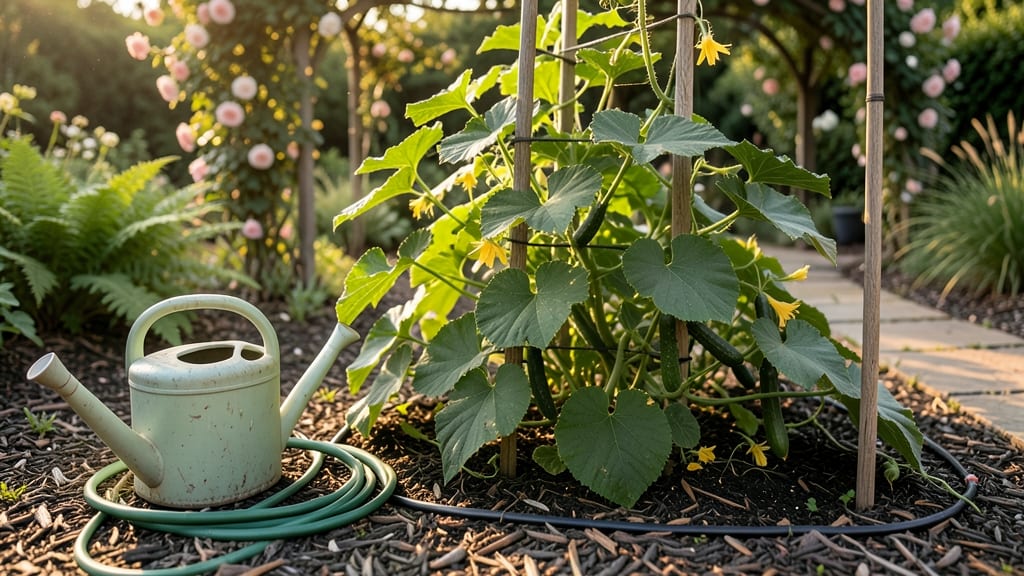
Cucumber plants need a lot of water to thrive, but getting the balance right means the difference between lush vines and wilted disappointment.
Picture this: your 🥒 cucumbers are sprawling across the garden, but by afternoon, they’re drooping like a sad houseplant. That’s not just thirst—it’s a sign your watering routine might be off. Too little, and you’ll watch your plants struggle; too much, and you risk root rot or wasted water.
Here’s the good news: with the right schedule and techniques, keeping cucumbers hydrated isn’t guesswork. I’ll break down exactly how much water they need at each stage—from seedlings to heavy fruiting—plus how to spot the subtle signs of over- or under-watering before it’s too late.
By the end, you’ll know the golden rule of cucumber watering: consistency beats volume, and timing matters just as much as the amount. Let’s dive in.
How much water cucumber plants actually need (and when)
Cucumber plants are thirsty vines that demand consistent moisture to thrive—but overwatering can drown them just as fast as underwatering can stunt growth. The key? Understanding their water needs by growth stage and adjusting for your local climate.
In my garden, I’ve learned that cucumbers need 1-2 inches of water per week, but that changes when they’re flowering or fruiting. Let’s break it down so you can keep your vines happy without wasting water.
Most gardeners assume cucumbers need a lot of water because they wilt quickly in dry soil, but the truth is more nuanced. Young seedlings need gentle moisture to avoid rot, while mature plants can handle deeper watering less frequently.
Container-grown cucumbers dry out faster than those in the ground, so their schedule is different. By mastering these stages, you’ll avoid common pitfalls like blossom-end rot (from uneven watering) or powdery mildew (from wet leaves).
Pro Tip: Always water at the base of the plant in the morning to let foliage dry before evening. Wet leaves at night create the perfect conditions for fungal diseases, and cucumbers are particularly susceptible. I’ve seen my vines go from lush to limp in 24 hours when I skipped this step—don’t let that happen to yours!
During the seedling stage, cucumbers need gentle but frequent watering—think of it like giving a baby plant a sip every few days rather than a full glass. Overwatering now can cause root rot, while underwatering stresses young roots.
I start with 1 inch of water every 2 days and adjust based on how quickly the soil dries. Stick your finger 1 inch deep—if it’s dry, water again.
When cucumbers hit the flowering stage, their water needs double. This is when they’re working hard to produce fruit, and uneven moisture leads to blossom-end rot (those ugly black spots on the fruit).
I switch to daily watering with 1-2 inches of water, focusing on the soil around the roots. Morning watering is non-negotiable here—wet leaves overnight invite powdery mildew, a common cucumber nemesis.
In hot, dry climates, cucumbers can drink up to 3 gallons per day per plant, especially if they’re in full sun. If you’re in a region with high humidity (like the Southeast), you might get away with watering every other day.
But if you’re in a desert-like zone, mulch heavily with straw or wood chips to retain moisture. I’ve seen my cucumbers wilt by noon in 100°F heat—shade cloth can be a lifesaver in extreme cases.
Container-grown cucumbers are a whole different beast. Pots dry out 3x faster than garden soil, so I water mine daily in summer, often twice a day if the pot is small. Use self-watering containers or add a wicking system to keep roots consistently moist.
Pro tip: Group containers together to create a microclimate that retains humidity. I’ve had better luck with bush varieties in pots—they’re less prone to flopping over than vining types.
One of the biggest mistakes I see is watering cucumbers at night. While it might seem logical to cool them down, it actually traps moisture on leaves, creating the perfect conditions for fungal diseases. Always water before 10 AM so foliage has time to dry.
If you must water in the evening (say, during a heatwave), aim for the soil only and avoid wetting leaves. A soaker hose or drip irrigation is your best friend here.
To check if your cucumbers are getting the right amount of water, perform the finger test: Stick your index finger 2 inches deep into the soil. If it feels dry, it’s time to water. If it’s soggy, hold off. Another trick? Watch the
Signs your cucumber plants are overwatered or underwatered (with fixes)
Cucumber plants 🥒 are like Goldilocks—they need just the right amount of water, not too much, not too little. When your vines show stress, it’s often a cry for help from their roots. Yellowing leaves or wilted stems can mean you’re either drowning them or leaving them parched.
First, check the soil moisture by sticking your finger 1-2 inches deep. If it’s damp, you’re overdoing it. If it’s dry, your plants are thirsty. Blossom-end rot (black spots on cucumbers) is a classic sign of inconsistent watering, often linked to calcium uptake issues from uneven moisture.
⚠️ Do Cucumber Plants Need a Lot of Water?
Yes—but "a lot" depends on your soil and weather! Sandy soil drains fast, so cucumbers need daily watering (1-2 inches per week). Clay soil holds moisture longer, so every other day may suffice. During heatwaves (90°F+), increase to morning watering only to prevent fungal diseases like powdery mildew.
Pro Tip: Mulch with straw to retain moisture and reduce evaporation. Never let soil dry out completely—cucumbers hate drought stress!
If your leaves turn yellow but stay crisp, you’re overwatering. Mushy stems or white mold on leaves confirm it. Reduce watering immediately and improve drainage by adding perlite or compost to heavy soil. Let the top inch dry out between waterings.
On the flip side, dry, crispy leaves curling inward mean underwatering. Stunted growth or dropped flowers are other red flags. Give your plants a deep soak (1-2 inches of water) and repeat every 1-2 days. For potted cucumbers, water daily in summer since containers dry out faster.
Adjust your watering based on weather and soil type. In humid climates, water less frequently but deeply. In dry, windy areas, increase frequency. Always water at the base of the plant to avoid wetting leaves, which attracts pests and diseases.
For a quick fix, fluff the soil around the roots to improve airflow and reduce rot risk. If your cucumbers already show blossom-end rot, side-dress with calcium-rich compost and maintain consistent moisture. With the right balance, your vines will thrive and produce crisp, sweet cucumbers all season! 🌱