
Vegetables
Growing cucumbers next to tomatoes isn't just a space-saving trick—it’s a flavor and yield booster. These 10 companion plant pairings leverage nature’s chemistry to deter pests, improve soil health, and create explosive flavors in your harvest.
Basil As Cucumber And Tomato Guardian
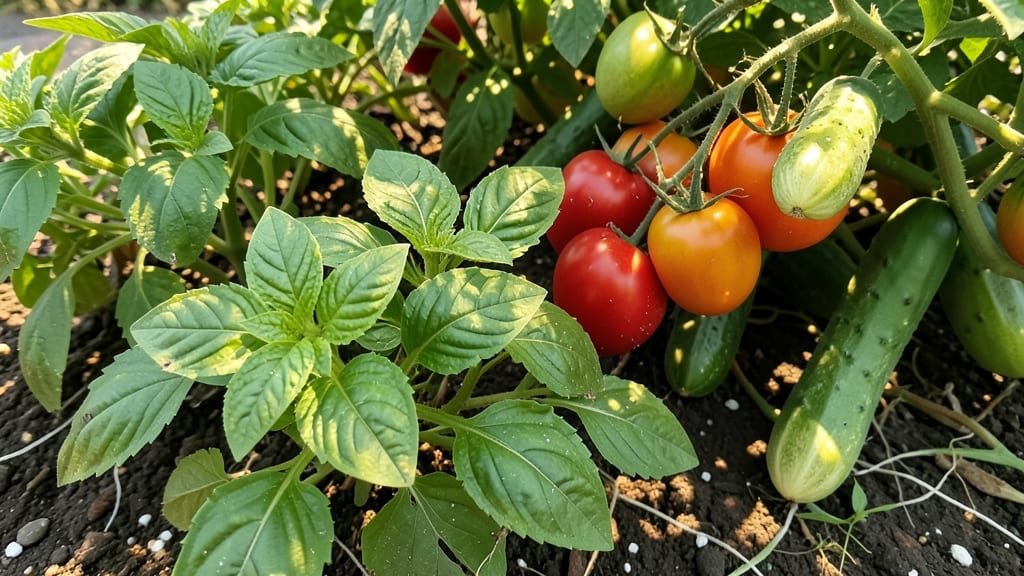
Struggling with thrips or whiteflies chewing on your tomatoes and cucumbers? Sweet basil is the unsung hero of your garden—its strong scent acts like a natural pest repellent while making your tomatoes taste sweeter. This dual-purpose plant is a must-have for organic gardeners who want fewer chemicals and better flavor.
Plant basil near your tomato and cucumber plants to create a protective barrier. The aromatic oils in its leaves confuse pests, reducing damage by up to 50%. Plus, harvesting fresh basil regularly encourages bushier growth, giving you both pest control and homegrown seasoning. For best results, place basil plants about 12-18 inches away from tomatoes and cucumbers.
This pairing is especially valuable for beginners and organic gardeners who want a simple, effective way to boost their harvest without synthetic sprays. 💚
Marigolds For Pest-Free Soil
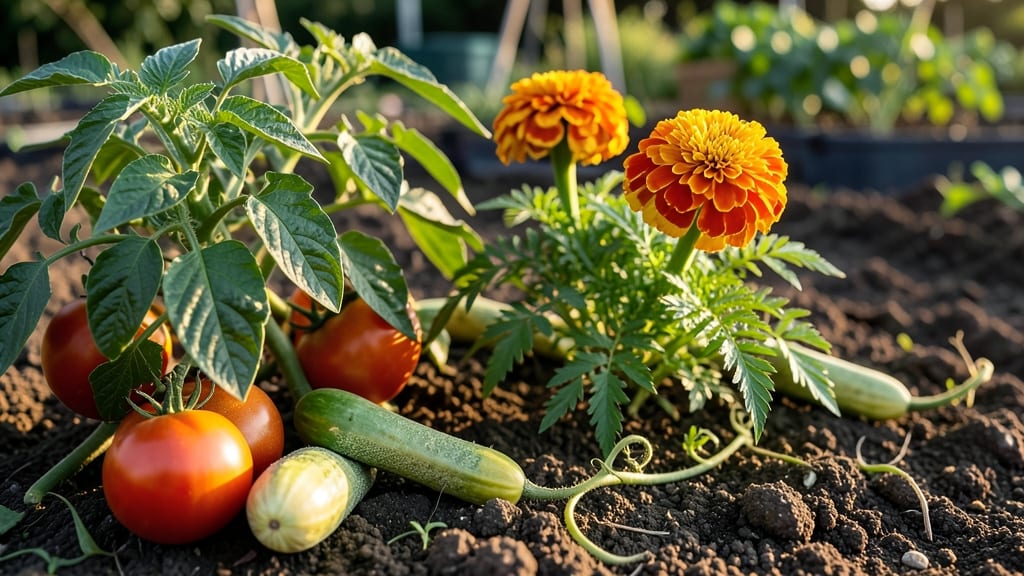
If you’re tired of battling aphids and nematodes in your tomato and cucumber beds, marigolds are your secret weapon. Their pungent scent doesn’t just mask the fragrances that attract pests—it actively repels them, creating a natural barrier that keeps your soil healthier and your plants thriving.
These bright, cheerful flowers release compounds called alpha-terthienyl and limonene, which deter nematodes (microscopic soil pests) and aphids while attracting beneficial insects like ladybugs. Plant them in a ring around your tomato and cucumber plants or scatter them as a low-maintenance ground cover—they’ll self-seed and return year after year with minimal care.
Perfect for beginners and organic gardeners, marigolds add beauty while doing the heavy lifting of pest control. Just a handful of plants can transform your garden into a pest-free zone. 🌻
Nasturtium Trails Between Rows
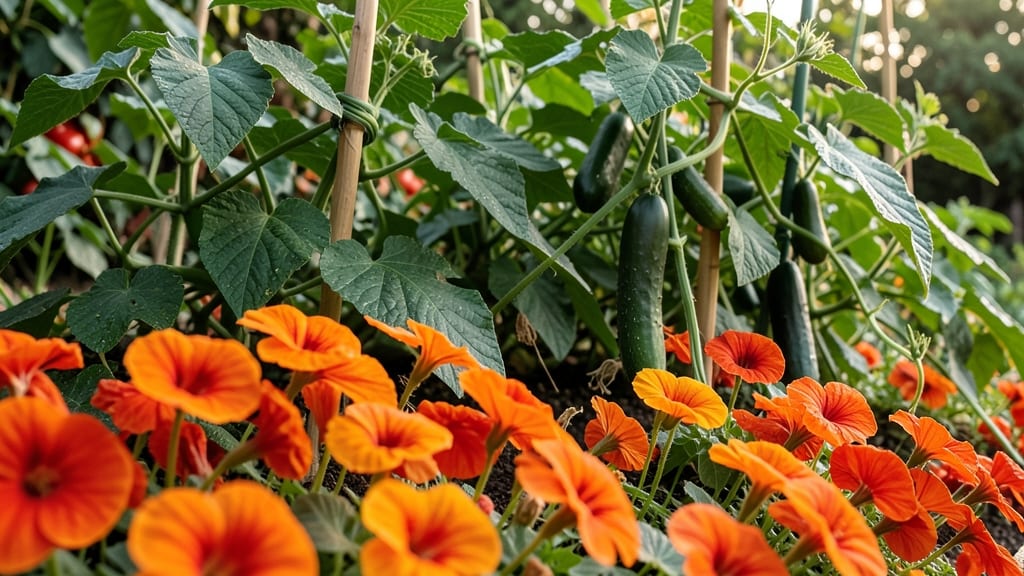
Want a two-in-one solution that protects your tomatoes and sparks up your cucumbers? Nasturtiums are the secret weapon you’ve been missing—this edible ground cover acts as a living pest magnet, luring aphids away from your tomatoes while adding a peppery kick to salads made with cucumbers.
Plant nasturtium trails between your tomato and cucumber rows in early spring, letting their trailing vines cascade naturally. The bright orange and yellow flowers aren’t just beautiful—they’re a sacrificial trap for aphids, keeping them far from your prized vegetables. Plus, their leaves are safe to harvest and add a spicy, peppery flavor to cucumber salads or sandwiches.
Perfect for beginners and small-space gardeners, nasturtiums thrive in partial sun and require minimal care. They’ll even self-seed for next year, giving you a free, edible border that doubles as pest control. 🌻
Onion Family For Disease Prevention
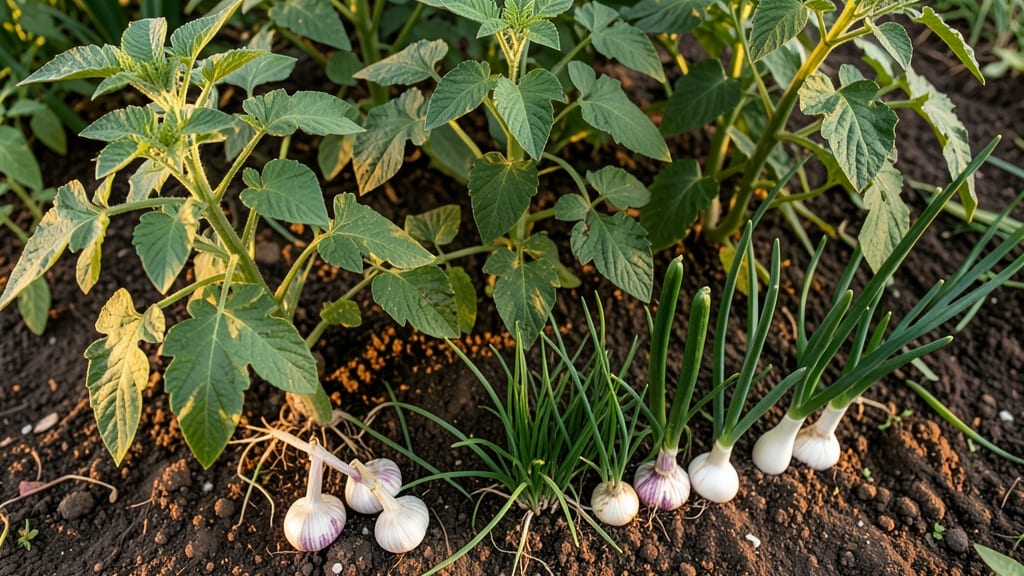
Tired of battling fungal diseases like early blight that plague tomatoes and cucumbers? The onion family—including chives, garlic, and scallions—holds the secret to a healthier garden. These underground powerhouses release natural sulfur compounds that create an invisible shield against soil-borne pathogens.
Plant chives or garlic around the base of your tomato and cucumber plants to create a protective barrier. Their strong scent isn’t just for flavor—it disrupts fungal spores before they take hold. For best results, interplant them at the same time you set out your tomatoes, ensuring their roots intertwine naturally. This method works especially well in container gardens or raised beds where soil health is critical.
Gardeners who struggle with year-round humidity or crowded planting spaces will see the most benefit. These plants are low-maintenance, edible, and double as culinary herbs—making them a win-win for both health and harvest. 🌱
Borage Flowers For Pollinators
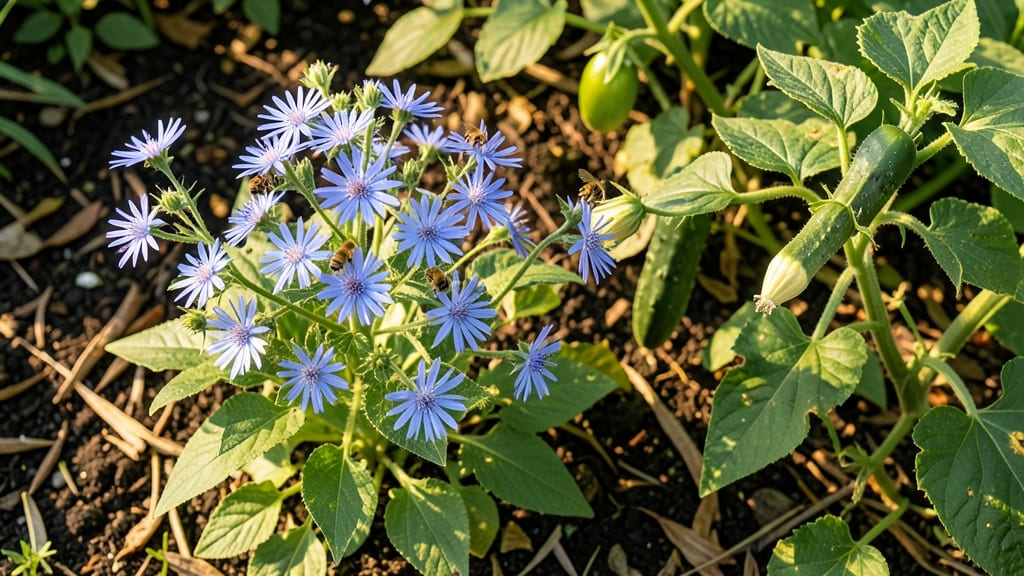
Want to turn your tomato blossoms into a fruit bonanza? Borage is the secret weapon you’ve been missing. This self-seeding annual doesn’t just attract bees—it supercharges your harvest by boosting tomato fruit set by 30% while ensuring cucumbers get the cross-pollination they crave for better yields.
With its drought-tolerant nature and starburst blue flowers, borage thrives in poor soil and spreads effortlessly, making it a low-maintenance pollinator magnet. Plant it near your tomatoes and cucumbers in full sun, and watch bees flock to its nectar-rich blooms. The flowers even have a cucumber-like flavor—great for salads!
Perfect for small spaces or container gardens, borage’s easygoing nature means you’ll get year-round benefits with minimal effort. 🌟
Dill For Cucumber Flavor Boost
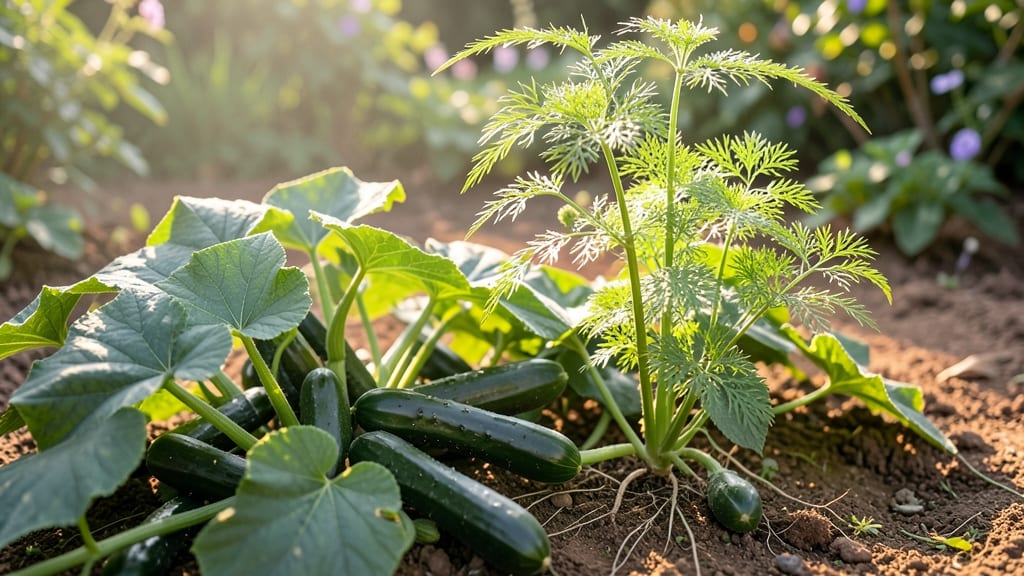
Want crisper, sweeter cucumbers without the bitterness? Plant dill nearby—its feathery foliage creates a natural shade that keeps roots cool while its anise-like scent enhances cucumber flavor. This dual-purpose herb also deters spider mites and attracts predatory wasps that hunt garden pests.
Dill thrives in partial sun (4-6 hours daily) and grows well in containers, making it ideal for balconies or small spaces. Simply tuck dill seedlings between tomato plants or let them sprawl along cucumber trellises. Harvest leaves as needed for soups or garnishes—your cucumbers will thank you with milder, sweeter flesh.
Perfect for urban gardeners or anyone short on space, dill’s benefits extend beyond flavor—it’s a low-maintenance ally that works year after year. 🌱
Lettuce As Living Mulch
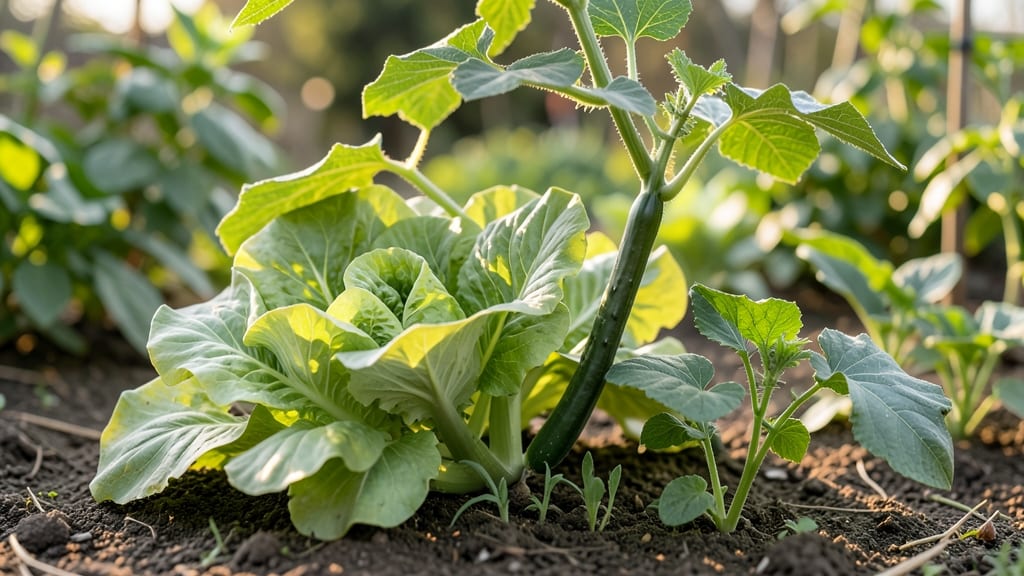
Want to grow sweeter cucumbers without wasting garden space? Butter lettuce is your secret weapon—it acts as a living mulch that blocks harsh sunlight from cucumber roots, preventing that bitter flavor we all hate.
Plant loose-leaf varieties like romaine or oakleaf near cucumber bases in early spring or fall. The lettuce’s deep roots aerate compacted soil while its broad leaves shade cucumber roots, keeping them cool and sweet. Plus, you can harvest outer leaves for salads as they grow—no wasted space or plants!
This trick works especially well for urban gardeners with limited space or anyone who wants to maximize their harvest. The lettuce will bolt in summer heat, but it gives you a free, edible ground cover until then. 🌱
Thyme Ground Cover For Soil Health
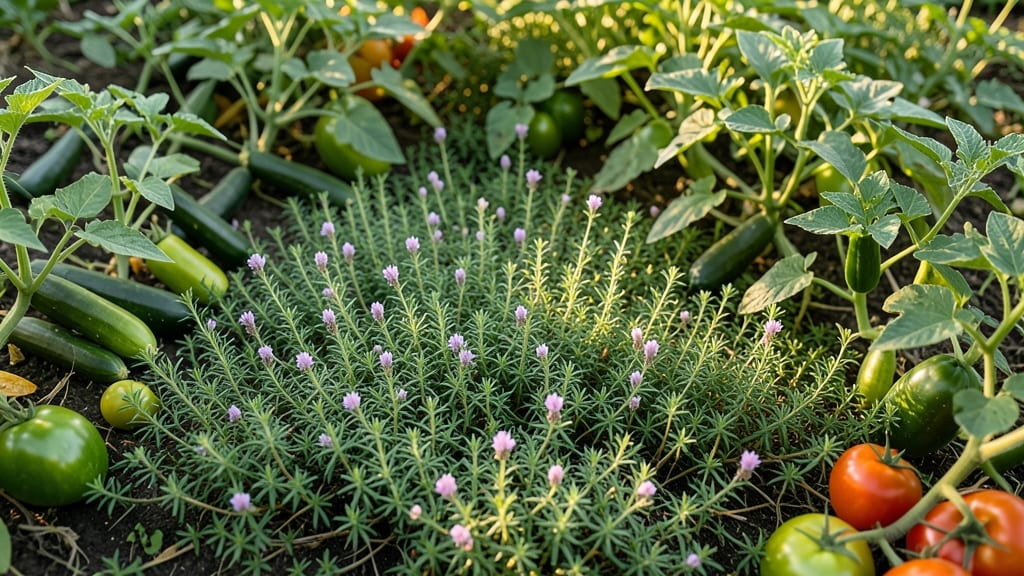
Looking for a low-maintenance, fragrant ground cover that works harder than mulch? Creeping thyme is your secret weapon—it suppresses weeds, deters cabbage worms, and even boosts your tomatoes and cucumbers by fighting fungal diseases in the soil.
This hardy perennial thrives in full sun to partial shade and spreads effortlessly, creating a dense mat that outcompetes weeds. Its antifungal properties protect vulnerable roots from rot, while its strong scent confuses pests like cabbage worms. Plus, it’s drought-tolerant once established, making it ideal for busy gardeners.
Best for urban gardeners, container planters, or rocky slopes, thyme adds a sensory bonus with its lemony aroma. Plant it between your tomato and cucumber rows for a multi-season solution that’s as pretty as it is practical. 🌿
Radishes As Trap Crops
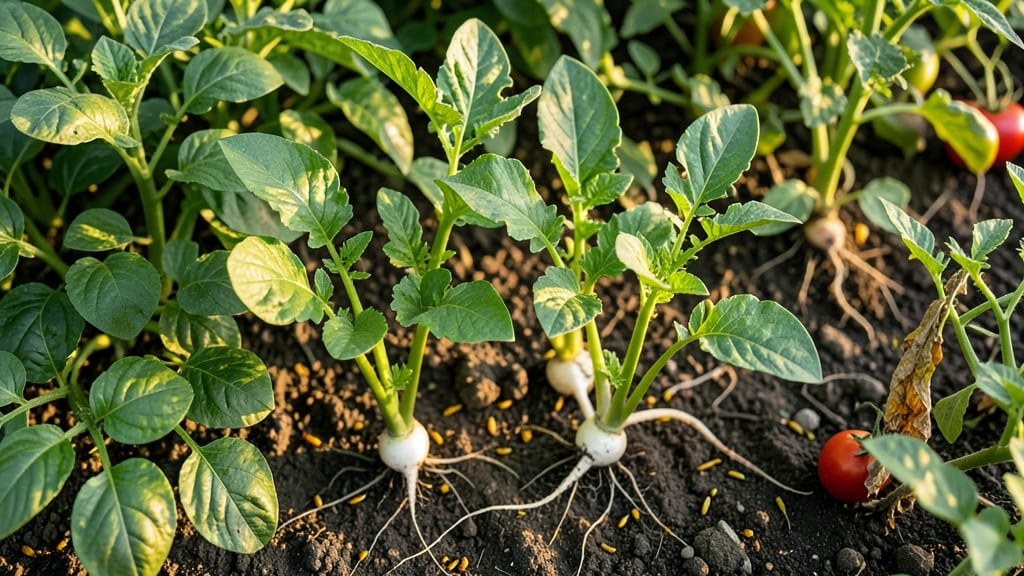
Cucumber beetles are the sneaky pests that wreak havoc on your tomato plants, but there’s a quick, edible solution: radishes. These fast-growing root vegetables act as a natural trap crop, luring beetles away from your prized tomatoes while you enjoy their crisp, peppery flavor.
Plant radishes like French Breakfast or Cherry Belle varieties around your tomato seedlings in early spring. Their rapid growth (ready in just 25-30 days) means you can harvest them early—before they bolt—to break the beetle life cycle. The beetles prefer radishes to tomatoes, giving your vines a fighting chance.
This dual-purpose strategy is perfect for small-space gardeners or those who want to maximize harvests without chemicals. Plus, you’ll get a bonus crop of radishes to snack on while protecting your tomatoes. 🌱
Sweet Alyssum For Long-Term Benefits

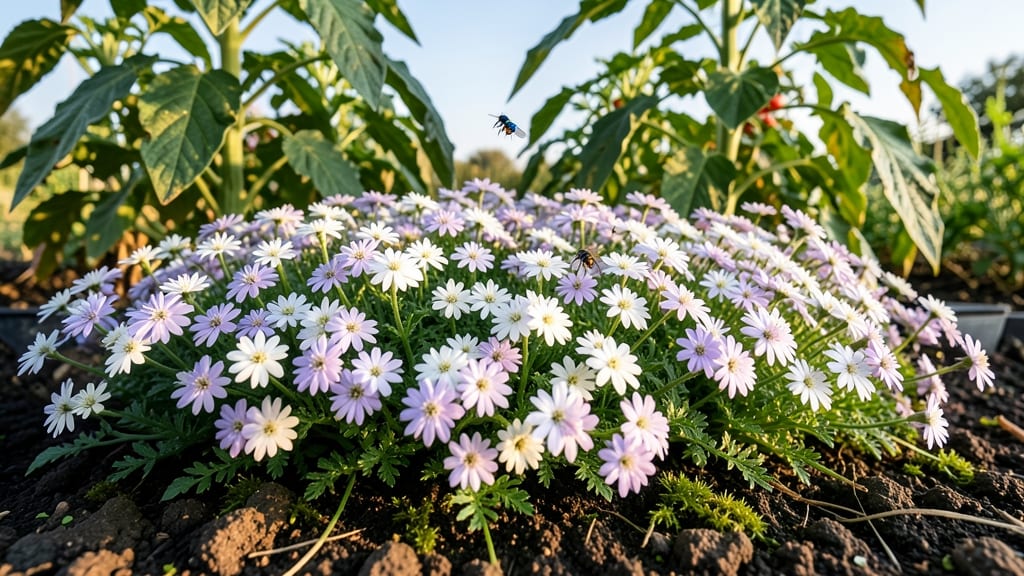
If you're tired of battling tomato hornworms while trying to keep your soil moist, sweet alyssum is your secret weapon. This delicate, low-growing annual doesn’t just add pretty white or purple flowers—it creates a living mulch that locks in moisture and lures beneficial hoverflies, which devour hornworm eggs before they hatch.
Plant sweet alyssum around the base of your tomatoes and cucumbers in early spring, spacing seeds just 6 inches apart. Its self-seeding habit means it’ll return year after year with minimal effort, while its fragrant blooms attract pollinators too. The best part? It thrives in partial shade, making it perfect for under tomato plants where other flowers might struggle.
This is the ideal choice for small-space gardeners or anyone who wants to cut back on watering while keeping pests at bay. 🌟