
Vegetables
Growing cucumbers 🥒 depends on one critical factor you might be overlooking: the soil temperature must hit 60–95°F for germination and growth, or your seeds will just sit there.
Struggling with cucumber seeds that refuse to sprout or plants that wilt despite your best efforts? Soil temperature might be the hidden factor sabotaging your harvest—getting it right can mean the difference between a thriving vine and total failure.
Too cold, and seeds won’t even wake up. Too hot, and roots struggle to absorb water, leading to stunted growth or bitter fruit.
In USDA Zone 6a, like most of the Midwest, timing is everything—plant too early, and frost lingers; too late, and summer heat arrives before your cucumbers even think about flowering.
Below, I’ll break down the exact soil temperatures cucumbers need at every stage—from seed to harvest—and how to monitor and adjust for your climate. No more guessing, just proven results for a bountiful crop.
Optimal cucumber soil temperature for germination: exact ranges and how to measure them
If you've ever planted cucumber seeds only to watch them sit stubbornly in the soil without sprouting, you're not alone. The culprit is often soil temperature—a critical factor that most gardeners overlook.
Cucumbers thrive when soil temperatures fall within a precise range, and even small deviations can delay germination or kill seedlings entirely. Understanding these exact temperature ranges and how to measure them accurately is the first step to a bountiful harvest.
For cucumbers, the ideal soil temperature for germination hovers between 55°F and 95°F, but the sweet spot for consistent, healthy sprouting is 60°F to 70°F. Below 55°F, seeds may rot or fail to sprout, while temperatures above 95°F can cause seeds to dry out or germinate erratically.
The key is monitoring your soil temperature before planting and adjusting your approach based on your climate zone and seasonal conditions.
Here’s the breakdown of what you need to know, including how to test soil temperature at home and practical solutions for cold soil issues:
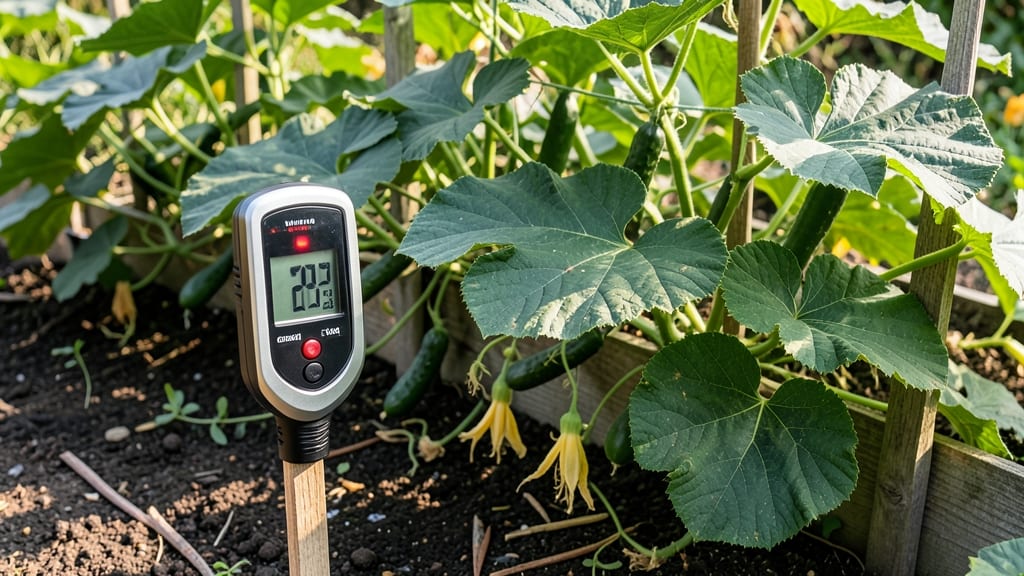
To measure your soil temperature accurately, invest in a soil thermometer, which looks like a long probe with a digital or analog display. Insert it 2–3 inches deep into the soil—this is where cucumber seeds are typically planted—and wait 30 seconds for a reading.
Early mornings are best for testing because soil temperatures are more stable and less affected by daytime heat. If your soil is consistently below 60°F, you’ll need to take action before planting.
One of the simplest ways to warm cold soil is by using black plastic mulch. This material absorbs sunlight and radiates heat back into the soil, raising temperatures by 5–10°F. Lay it down a few weeks before planting to give the soil time to warm up naturally.
For an even faster fix, use seedling heat mats, which plug into an outlet and provide a steady 70–80°F heat source directly under your seed trays. These are especially useful for indoor starts or early spring plantings.
If you're planting outdoors in a cooler climate, consider using row covers or cold frames to create a microclimate that retains heat. These solutions can push soil temperatures up by 10–15°F, making them ideal for extending your growing season.
Just be sure to remove covers once seedlings emerge to prevent overheating, which can stress young plants.
Another pro tip: Plant cucumbers in south-facing beds, where they’ll receive the most sunlight and warmth. Avoid shady areas or spots near large trees, as these can keep soil temperatures artificially low.
If you’re in a region with unpredictable spring weather, consider starting seeds indoors under grow lights and transplanting seedlings once soil temperatures stabilize.
Remember, cucumbers are warm-season crops, so patience is key. If your soil isn’t ready, don’t rush—waiting a few weeks for the right conditions will pay off with stronger, healthier plants.
And if you’re still unsure about your soil temperature, test it for a few days to spot trends before committing to planting.
By mastering these soil temperature basics, you’ll set your cucumbers up for success from day one, ensuring faster germination and a more productive harvest. Happy gardening!
Cucumber growth stages and their soil temperature requirements: from seedling to fruit
Cucumbers are finicky about temperature—each growth stage demands a specific soil temperature range to thrive. Skipping these requirements can stall germination, reduce flowering, or even cause fruit to rot before harvest. Let’s break down the three critical stages and how to keep your plants happy from sprout to cucumber.
First, the seedling stage (0–2 weeks) needs 60–70°F soil. Below 55°F, seeds may rot; above 80°F, they’ll dry out. Next, the flowering stage (3–5 weeks) thrives at 70–85°F, where pollinators are most active. Finally, the fruiting stage (6+ weeks) demands 75–90°F for sweet, crisp cucumbers.
- 1 Seedling Stage (0–2 weeks): 60–70°F soil. Use row covers or heat mats if soil is too cold. Avoid transplanting until true leaves appear.
- 2 Flowering Stage (3–5 weeks): 70–85°F soil. Reduce watering slightly to prevent fungal blooms. Hand-pollinate if bees are scarce (tap flowers gently with a paintbrush).
- 3 Fruiting Stage (6+ weeks): 75–90°F soil. Mulch heavily to retain moisture and cool roots. Fertilize weekly with potassium-rich feed to boost fruit production.
- 4 Temperature Stress Fixes: - Too cold (<55°F): Use black plastic mulch or cloches. - Too hot (>90°F): Provide shade cloth (30–50%) and drip irrigation.
If your soil temperature drops below 60°F during the seedling stage, switch to container growing near a sunny window or use a seedling heat mat ($15–$25). For flowering, morning watering prevents shock—avoid wetting leaves in the evening to deter mildew.
In hot climates (Zones 9–11), cucumbers may struggle above 90°F. Try shade cloth or plant heat-tolerant varieties like ‘Straight Eight’ or ‘Lemon Cucumber.’ Always harvest daily to prevent overripe fruit, which stresses the plant further.
Pro tip: Monitor soil temp with a digital thermometer ($10–$15) buried 2 inches deep. Adjust care based on real-time data—your cucumbers will reward you with bigger, sweeter harvests when you nail these temperature sweet spots.