
Planting
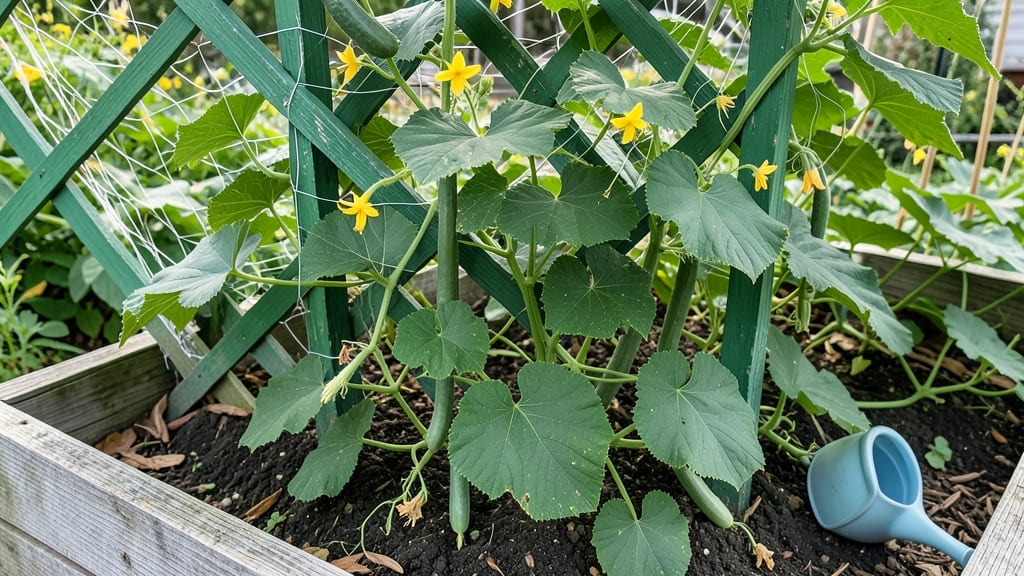
Those cucumber plant spikes might look like thorns, but they’re actually your vines’ way of reaching upward—so don’t yank them out! 🌿 I’ve seen gardeners pull out their hair over these jagged little shoots, but the fix is simpler than you’d think: proper trellis training.
These "spikes" form when vines scramble for support instead of growing upward, and they’re often a symptom of overcrowding or weak stems.
The good news? Once you redirect those vines onto a sturdy trellis, the plant focuses energy on producing smooth, productive growth instead of defensive spikes. Start by tying the main stem to the trellis with soft plant ties, then gently weave side vines upward.
Within a week, you’ll notice fewer spikes and more of those familiar cucumber tendrils clinging to the support.
Prevention is all about early support—install your trellis before vines get too long, and prune any side shoots that aren’t climbing. The result? Bushier, healthier vines with fewer spikes and more cucumbers. Plus, your plants will look like they belong in a catalog, not a panic attack.
If spikes keep appearing even after proper training, check for pests or disease—those can stress plants into abnormal growth. But in most cases, this is purely a structural issue with an easy fix.
Try it this season, and you’ll wonder why you ever let those vines sprawl in the first place.
Root Causes of Cucumber Spikes
When your cucumber vines start producing long, bare stems instead of lush foliage and fruit, it’s often a sign of stress or improper growth habits. Understanding the why behind these "spikes" is the first step to fixing the problem.
Let’s break down the most common culprits—backed by science—and what they mean for your plants.
Cucumbers are sun-loving plants that thrive in 6–8 hours of direct sunlight daily. When they don’t get enough light, their energy shifts from leaf and fruit production to stretching toward the sun—resulting in those telltale spikes.
- How it happens: - Shade from taller plants, buildings, or even dense foliage tricks cucumbers into etiolation (rapid, weak stem elongation) to reach light. - Cloudy or short-day conditions (common in northern climates) slow photosynthesis, weakening the plant’s ability to support bushy vines. - Science behind it: - Phytochrome pigments in plants detect light levels.
Low light triggers auxin hormone overproduction, causing stems to elongate excessively. - Without enough energy from sunlight, the plant prioritizes survival over fruiting, leading to sparse leaves and bare stems.
💡 Pro Tip: If your cucumbers are spiking upward, check for blocked sunlight—even partial shade can cause this. Use reflective mulch or move containers to sunnier spots if needed.
Cucumbers are warm-season crops (ideal temps: 70–90°F). Extreme heat or cold shocks the plant, forcing it to conserve energy by reducing leaf and fruit growth—and instead focusing on vertical growth.
- How it happens:
- Cold snaps (below 50°F) stunt growth, while heatwaves (above 95°F) cause flower drop and weak stems.
- Frost damage or late-season chills can leave plants stunted and spike-prone even if they recover.
- Science behind it:
- Chilling injury disrupts cell membrane integrity, slowing metabolic processes.
- Heat stress increases ethylene production, a hormone that accelerates aging and can cause abscission (dropping of flowers/fruit).
- Both conditions reduce chlorophyll production, leading to pale, weak leaves and elongated stems.
✨ Fix It: Use row covers for early-season protection or shade cloth (30–50%) during heatwaves. Mulch heavily to regulate soil temps and reduce stress.
Inconsistent watering is a top cause of cucumber spikes. Too much or too little water throws off the plant’s hormonal balance, leading to weak, stretched growth.
- How it happens:
- Underwatering causes osmotic stress, forcing roots to work harder and stems to elongate to access moisture.
- Overwatering (or poor drainage) leads to root rot, starving the plant of nutrients and causing weak, leggy growth.
- Uneven watering (e.g., drought followed by a deep soak) confuses the plant, triggering survival-mode spikes.
- Science behind it:
- Abscisic acid (ABA), a stress hormone, spikes under drought conditions, inhibiting leaf growth while promoting stem elongation.
- Flooded roots reduce oxygen availability, impairing auxin transport—a key growth regulator—leading to disorganized growth patterns.
🔥 Action Step: Water deeply 1–2 times per week (1–1.5 inches per week) and keep soil consistently moist (not soggy). Use drip irrigation for even distribution.
Cucumbers need a balanced diet of nitrogen (N), phosphorus (P), and potassium (K). Too much or too little of any nutrient can cause spiky, unbalanced growth.
- How it happens:
- Excess nitrogen (N) promotes leafy growth at the expense of fruit, but deficiency leads to weak stems and spikes.
- Low phosphorus (P) stunts root and flower development, causing elongated, bare stems.
- Potassium (K) deficiency weakens cell structure, making stems floppy or overly stretched.
- Science behind it:
- Nitrogen fuels leaf and stem growth, but imbalances (e.g., too much N early on) delay flowering hormones (florigen).
- Phosphorus is critical for energy transfer (ATP)—without it, the plant can’t support robust vine growth.
- Potassium regulates water balance and enzyme activity; a deficit leads to poor structural integrity.
🎯 Solution: Test your soil and amend with compost or a balanced fertilizer (10-10-10). Avoid high-nitrogen fertilizers after vines start flowering.
When cucumber plants compete for space, light, and nutrients, they stretch upward to escape competition—resulting in spikes instead of bushy vines.
- How it happens:
- Planting too close (recommended spacing: 12–24 inches apart) forces vines to climb over each other.
- Weeds or other plants stealing sunlight and nutrients stress cucumbers, triggering vertical growth.
- Science behind it:
- Competition for light increases shade avoidance syndrome (SAS), where plants elongate rapidly to reach sunlight.
- Root competition reduces water and nutrient uptake, leading to weak, stretched stems.
💡 Quick Fix: Thin seedlings to proper spacing and remove competing weeds. If growing in containers, prune lower leaves to improve airflow and light penetration.
Pests like cucumber beetles, aphids, or spider mites and diseases (powdery mildew, downy mildew) damage leaves and stems, forcing the plant to redirect energy to repair rather than grow bushy.
- How it happens:
- Leaf-chewing pests (e.g., squash bugs) reduce photosynthesis, starving the plant.
- Sap-sucking insects (aphids) transmit viruses and excrete honeydew, promoting sooty mold (which blocks light).
- Fungal diseases (e.g., mildew) clog stomata, reducing gas exchange and weakening stems.
- Science behind it:
- Jasmonic acid, a stress hormone, spikes in response to herbivory, reallocating resources to defense over growth.
- Pathogen attacks trigger salicylic acid, which suppresses growth hormones like gibberellins.
🛡️ Prevention: Use row covers early, neem oil sprays, or beneficial insects (ladybugs). Remove infected leaves immediately to prevent spread.
While trellising is meant to guide growth, doing it too late or incorrectly can encourage spiking instead of bushy vines.
- How it happens: - Adding a trellis too late (after the plant has already elongated) reinforces vertical growth habits. - Trellises too far away make the plant stretch extra hard to reach support. - No trellis at all lets vines flop, but when they finally get support, they shoot upward in spikes. - Science behind it: - Thigmomorphogenesis—the plant’s response to touch—stimulates cell elongation when stems brush against a trellis.
If introduced too late, this locks in the spike habit.
👨🍳 Fix It: Install trellises early (when seedlings are 4–6 inches tall) and train vines gently to climb. Use soft ties to avoid stem damage.
Cucumber spikes are rarely a terminal problem—they’re usually a red flag that your plant is stressed or misguided. By addressing light, water, nutrients, space, and support, you can
Practical fixes for unruly cucumber growth
When your cucumber vines start spiking uncontrollably—shooting long, tangled stems toward the ground—it’s time to take action. The good news? With the right techniques, you can train those vines into a neat, productive structure. Below, we break down the most common causes of wild cucumber growth and the easy, effective fixes to keep your plants climbing (and producing!) like a pro.
If your cucumbers are sending out too many lateral shoots or sprawling stems, they’re competing for energy instead of focusing on fruit production. Here’s how to prune like a pro:
- 🔪 Trim the main runners: Snip any side stems (laterals) that are longer than 6–12 inches, leaving only 2–3 leaves at the base. This forces energy into the main vine and fruit.
- 🌿 Remove "spikes" at the base: Look for suckers (small shoots growing from the main stem). Pinch or cut these off—they drain energy from your cucumbers.
- 🍅 Prioritize fruit-bearing stems: Keep only the strongest, most productive vines attached to the trellis. Weak or leggy stems can be sacrificed.
💡 Pro Tip: Use clean, sharp pruners to avoid damaging the plant. Prune on a dry, sunny morning so wounds heal faster.
A flimsy or improperly set-up trellis is like giving your cucumbers a permission slip to sprawl. Strengthen your support with these no-fail methods:
| Problem | Solution |
|---|---|
| Vines slipping off the trellis | Wrap main stems with soft plant ties or old T-shirts (gentler than twine!). Reposition every few days as they grow. |
| Trellis bending or collapsing | Upgrade to a sturdy A-frame trellis or heavy-duty wire mesh. Bury supports 12+ inches deep for stability. |
| Vines growing downward instead of up | Gently weave vines through the trellis in a zigzag pattern. Avoid tying too tightly—stress = more spikes! |
✨ Bonus Hack: If using a bamboo trellis, soak the poles in water for 24 hours before planting to prevent snapping as vines thicken.
Overwatering or too much nitrogen can trigger excessive vine growth at the expense of fruit. Balance your care routine with these tweaks:
- 💧 Water deeply but less often: Aim for 1–1.5 inches per week, delivered at the base of the plant (not overhead). Wet leaves = more disease risk.
- 🌱 Switch to a low-nitrogen fertilizer: Use a 5-10-10 or 3-4-6 blend to encourage flowering/fruiting over leafy growth.
- 🍃 Add potassium-rich compost: Banana peels or wood ash can help boost fruit production while keeping vines in check.
🔥 Warning: Avoid manure-heavy compost—it spikes nitrogen and leads to leafy monsters, not cucumbers!
Once you’ve tamed your cucumbers, lock in those gains with these long-term strategies:
- 🌱 Start with bush varieties: If space is tight, try compact hybrids like ‘Bush Champion’ or ‘Spacemaster.’ They’re bred to stay contained!
- 🌿 Plant in early spring (before heat spikes): Cooler temps slow early growth, giving your trellis time to catch up.
- 🕳️ Mulch heavily: Use straw or grass clippings to suppress weeds (which compete for nutrients) and retain moisture.
- 📅 Harvest frequently: Pick cucumbers every 2–3 days to signal the plant to keep producing instead of going rogue.
🎯 Final Thought: Think of your cucumbers like a team sport—prune the slackers, reinforce the plays (trellis!), and feed them right. Soon, you’ll have neat, productive vines instead of a jungle of spikes!
Frequently asked questions
Are those "spikes" on my cucumber plant actually thorns?
No, they're not true thorns! These "spikes" are actually abnormal growths caused by stress or improper vine support. They're often side shoots or elongated stems trying to reach upward when the plant lacks proper trellis training. Unlike thorns, they're soft and flexible when young.
How soon should I install a trellis to prevent spikes?
Install your trellis when seedlings reach 4-6 inches tall—this is critical for preventing spikes. If you wait until vines are already long and leggy, the plant may develop spiky growth habits that are harder to correct. Early support helps guide vines upward naturally.
Can I still get good cucumbers if my plant has spikes?
Yes! While spikes indicate stress, your plant can still produce fruit. Focus on pruning the spikes, improving support, and optimizing growing conditions. The key is redirecting energy to the main vines and fruit-bearing stems rather than removing the entire plant.
What's the difference between cucumber spikes and tendrils?
Tendrils are thin, curly growths that help vines climb naturally, while spikes are long, straight stems or side shoots growing abnormally. Tendrils are healthy and should be encouraged, while spikes often need pruning. Look for the spiral pattern of tendrils versus the linear growth of spikes.
Will pruning my cucumber plant's spikes harm it?
Not if done correctly! Prune spikes by cutting them back to a leaf node (where leaves grow) using clean, sharp pruners. This redirects energy to healthier growth. Just avoid removing more than 25% of the plant's foliage at once to prevent stress.