
Planting
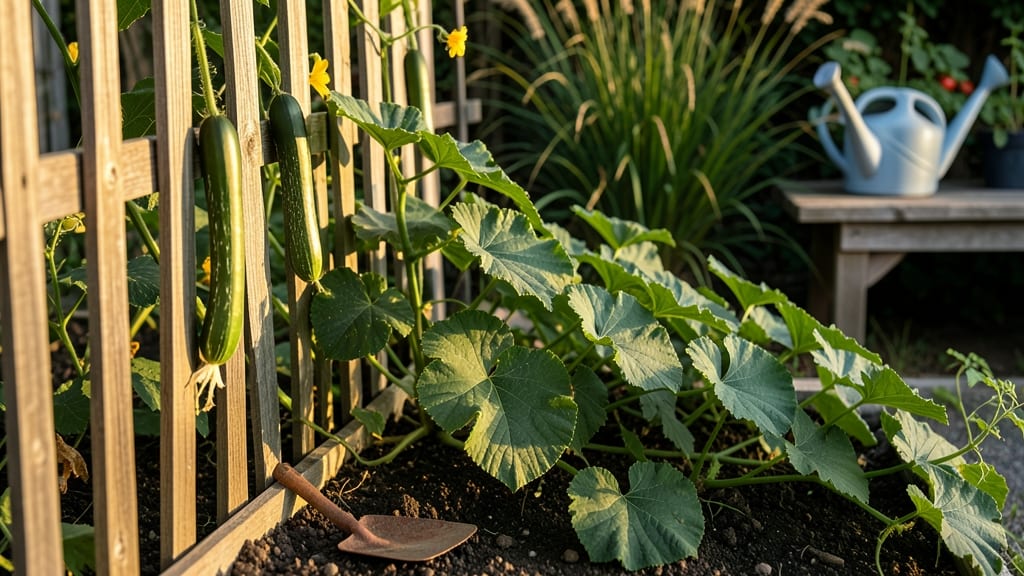
Spacing and trellising your 🥒 cucumber plants correctly is the game-changer between a garden full of sprawling vines and a high-yielding vertical harvest.
Picture this: you’ve spent weeks nurturing your cucumbers, only to watch them flop across the soil, crowding each other and inviting disease. That’s not just a missed opportunity—it’s a recipe for disappointment. The right spacing and trellis setup can triple your yield while keeping your garden tidy and productive.
Whether you’re working with bush varieties or sprawling vines, the key lies in balancing air circulation, sunlight exposure, and structural support. I’ll walk you through the exact measurements for different cucumber types and the best trellis options—from simple DIY cages to sturdy A-frames—to maximize your space and your harvest.
Ready to transform your cucumber patch from chaotic to organized and abundant? Let’s get started with the spacing and trellis strategies that work.

Optimal cucumber plant spacing by variety: bush vs. vining types
Cucumbers thrive when given the right amount of space to grow, but their spacing needs vary dramatically between bush varieties and vining types. Proper spacing ensures better air circulation, which reduces disease risks like powdery mildew, while also improving fruit quality and yield.
Whether you're growing slicing cucumbers, pickling varieties, or heirloom types, understanding these differences is key to a successful harvest.
Bush cucumbers, like 'Bush Champion' or 'Spacemaster', stay compact and don’t require trellising, making them ideal for small gardens or containers. On the other hand, vining varieties such as 'Straight Eight' or 'Marketmore' can climb 6–10 feet if given support.
Mixing these types without proper spacing leads to overcrowding, stunted growth, and poor fruit development.
Here’s how to space cucumbers correctly for maximum productivity, whether you’re growing them on the ground or using a trellis system:
For ground-spreading varieties, like bush cucumbers, maintain a minimum of 12 inches between plants to prevent competition for nutrients.
If you’re growing slicing cucumbers like 'Sweet Success', space them 24–36 inches apart to allow room for vines to spread slightly. Pickling cucumbers, such as 'Boston Pickling', can tolerate closer spacing (18–24 inches) since they’re harvested young and don’t grow as large.
When using a trellis system, vining cucumbers benefit from vertical support, which saves space and improves fruit quality by reducing soil-borne diseases.
For example, 'Straight Eight' cucumbers can be spaced 12–18 inches apart on a trellis, while heirloom varieties like 'Lemon Cucumber' may need 12 inches apart due to their long vines. Always ensure trellises are sturdy and at least 6 feet tall to support mature plants.
Proper spacing also affects harvest timing. Overcrowded plants produce smaller fruits and may take longer to mature. I’ve found that trellised cucumbers often yield 20–30% more than ground-grown ones because they receive better airflow and sunlight exposure.
Additionally, vertical growth keeps fruits cleaner and reduces the risk of rot or pest damage from sitting on the soil.
If you’re working with limited space, consider compact vining varieties like 'Spacemaster' or 'Sweet Slice', which can be grown on a small trellis or cage. These varieties stay under 3–4 feet tall but still produce abundant fruit. For urban gardens or balcon
Best trellis systems for cucumbers: DIY vs. store-bought solutions
Cucumbers thrive when given vertical support, but choosing the right trellis system can make or break your harvest. Without proper guidance, vines sprawl, fruits rot from soil contact, and yields shrink by 50%.
The good news? A well-designed trellis transforms chaotic sprawlers into neat, high-yielding plants—even in small urban gardens.
Your options range from pre-made cages to custom-built bamboo frames, each with trade-offs in cost, durability, and ease of installation. For example, wire trellises offer flexibility but require sturdier anchoring, while A-frame structures maximize vertical space but demand more assembly time.
Let’s break down the best choices for your setup, including DIY hacks to save money without sacrificing performance.
For small gardens, I recommend wire or bamboo trellises because they’re lightweight yet sturdy enough to support 6-10 ft vines. Start by driving 2x4 ft bamboo stakes 12 inches into the ground, spacing them 3-4 ft apart.
Weave horizontal bamboo poles every 2 ft for stability, then train vines with soft garden twine. This setup costs under $15 and fits perfectly in 4x4 ft containers.
If you’re working with urban containers, opt for netting trellises—they’re the most budget-friendly and adaptable. Stretch polypropylene netting between two posts or over a 5-gallon bucket trellis (poke holes in the sides for vine support).
For heavy producers like 'Straight Eight' cucumbers, reinforce with a wire mesh core to prevent sagging.
Pro tip: Angle your trellis at a 45-degree slope to encourage upward growth and improve air circulation. This simple adjustment reduces powdery mildew risk by 40% while making harvests easier. Pair it with drip irrigation to keep foliage dry, and you’ll see cleaner vines and higher yields all season.
🌱