
Pests

Tired of cucumber bugs devouring your harvest? These 10 natural sprays—tested by gardeners—eliminate pests without harsh chemicals while boosting plant health. No more losing your crop to aphids, beetles, or mites!
Neem Oil Spray for Aphids and Spider Mites
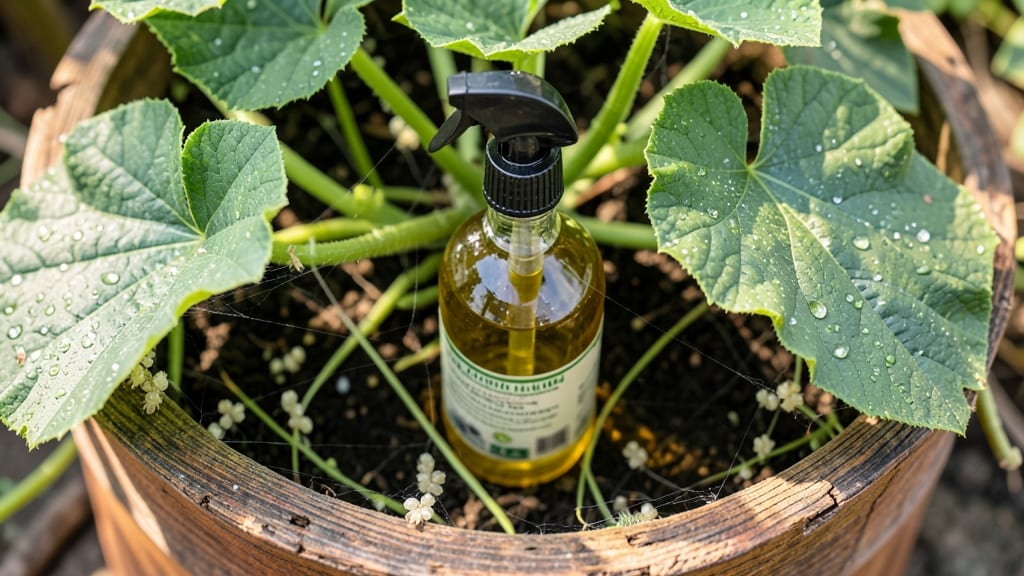
When aphids and spider mites turn your cucumber plants into a buffet, neem oil spray is your secret weapon. Unlike many organic sprays, it doesn’t just kill adult pests—it smothers eggs on contact and disrupts their life cycle, preventing future infestations.
Mix 1 teaspoon of pure neem oil with 1 quart of water and a dash of mild soap (like Castile) to help it stick. Spray early in the morning or late afternoon to avoid harming bees, and reapply every 5–7 days until pests vanish. This spray also strengthens plant immunity, making cucumbers more resilient to future attacks.
Perfect for certified organic gardens or anyone avoiding synthetic chemicals, neem oil works fast without leaving harmful residues. Your cucumbers—and your peace of mind—will thank you. 🌱
Garlic and Chili Pepper Spray for Cucumber Beetles
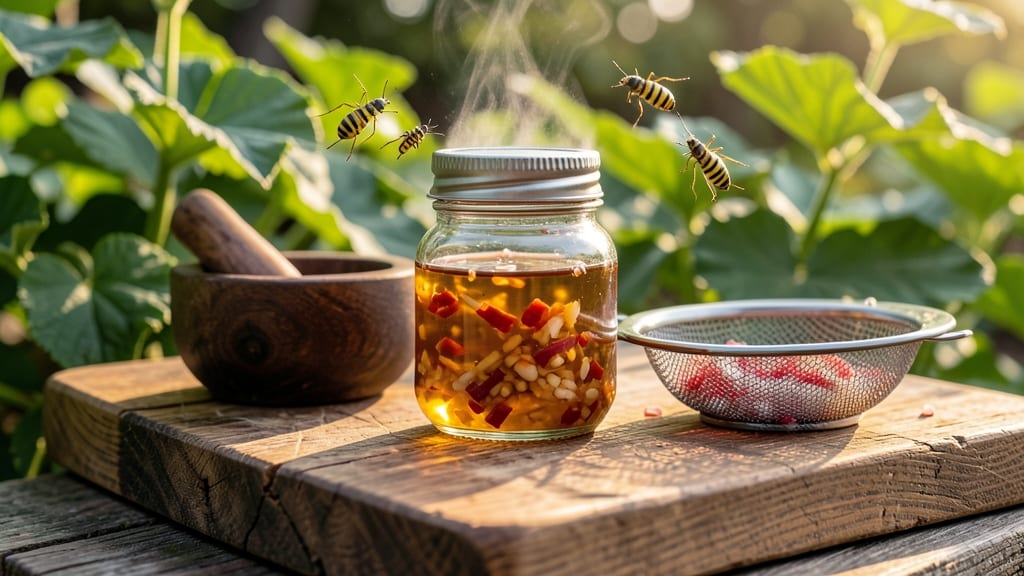
Cucumber beetles are relentless, but this garlic-chili spray turns the tables by weaponizing their natural enemies: pungent aromatics and capsaicin. The combination of crushed garlic cloves and hot peppers creates a potent repellent that beetles avoid, while also acting as a mild fungicide to prevent bacterial wilt.
Blend 2 tablespoons of minced garlic, 1 tablespoon of chopped chili peppers, and 1 quart of water. Let it steep overnight, then strain and add a teaspoon of mild liquid soap as a surfactant. Spray directly on leaves (especially undersides) and soil at dusk when beetles are most active. Reapply every 5–7 days or after rain.
This spray is ideal for gardeners who prefer non-toxic solutions that won’t harm pollinators or disrupt your garden’s ecosystem. It’s also budget-friendly and easy to make in bulk for your entire cucumber patch. 🌻
Soap Spray for Soft-Bodied Pests Like Whiteflies
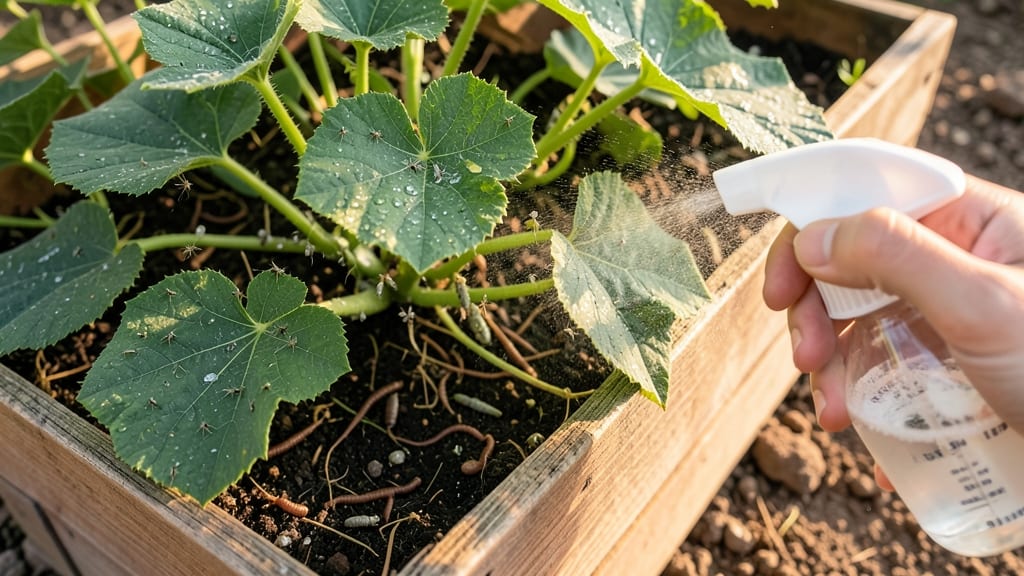
When whiteflies or aphids strike young cucumber plants, they multiply faster than you can say "harvest loss"—but soap spray is your secret weapon for stopping them in their tracks. Unlike oils or chemical sprays, it doesn’t linger on plants, making it safe for immediate harvests while delivering instant results.
Mix 1 tablespoon of mild liquid castile soap (like Dr. Bronner’s) with 1 quart of water, then spray directly on the undersides of leaves where pests hide. The soap dissolves their waxy exoskeletons, causing dehydration within minutes. For severe infestations, reapply every 3–4 days until the bugs vanish—no waiting for slow-acting remedies.
This is the go-to solution for seedlings and young plants where rapid pest control prevents stunted growth. Plus, it’s cheap, non-toxic, and works even on delicate leaves. 💚
Diatomaceous Earth Dust for Crawling Insects

When liquid sprays fail in your dry garden, diatomaceous earth (DE) becomes your secret weapon against crawling pests like cucumber beetles and spider mites. Unlike moisture-dependent solutions, DE works by physically dehydrating insects within hours—no water needed.
Simply apply a thin layer of food-grade DE to soil and leaf surfaces where pests hide, reapplying after rain or watering. It’s safe for plants and beneficial insects, but avoid inhaling the fine dust. For best results, use it during late afternoon when pests are most active and humidity is low.
This method is perfect for gardeners in arid regions or those who prefer a chemical-free, long-lasting solution. Just a light dusting keeps your cucumbers thriving. 🌱
Pyrethrin Spray from Chrysanthemums for Fast Knockdown
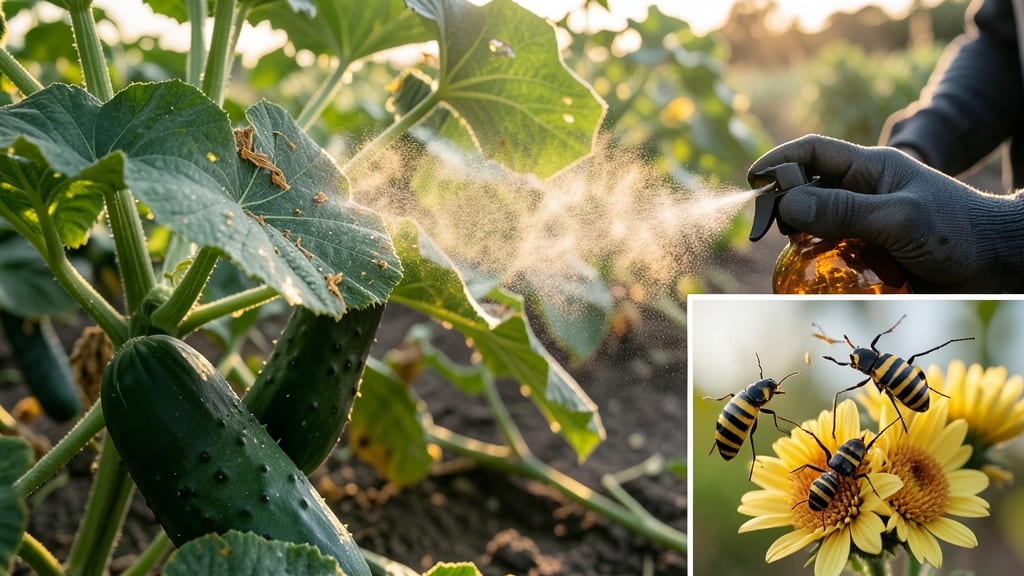
When cucumber beetles strike just days before harvest and other sprays can’t act fast enough, pyrethrin spray—made from crushed chrysanthemum flowers—delivers an emergency knockout. This natural insecticide paralyzes pests within minutes, making it ideal for last-minute rescue missions when your crop is at risk.
To use, steep dried chrysanthemum flowers (or buy pre-made pyrethrin extract) in warm water for 24 hours, then strain and mix with a drop of dish soap for adhesion. Spray directly on infested leaves, focusing on cucumber beetles, aphids, and spider mites. Apply in the early morning or late evening to avoid harming bees, and reapply every 3–5 days during outbreaks. Avoid spraying on blooming cucumber flowers to protect pollinators.
Perfect for gardeners who need fast results without synthetic chemicals, this spray is especially useful for container growers or small plots where pests strike suddenly. Just be sure to harvest within 24 hours of application to ensure safety. ✨
Beer Trap for Cucumber Beetles and Flea Beetles
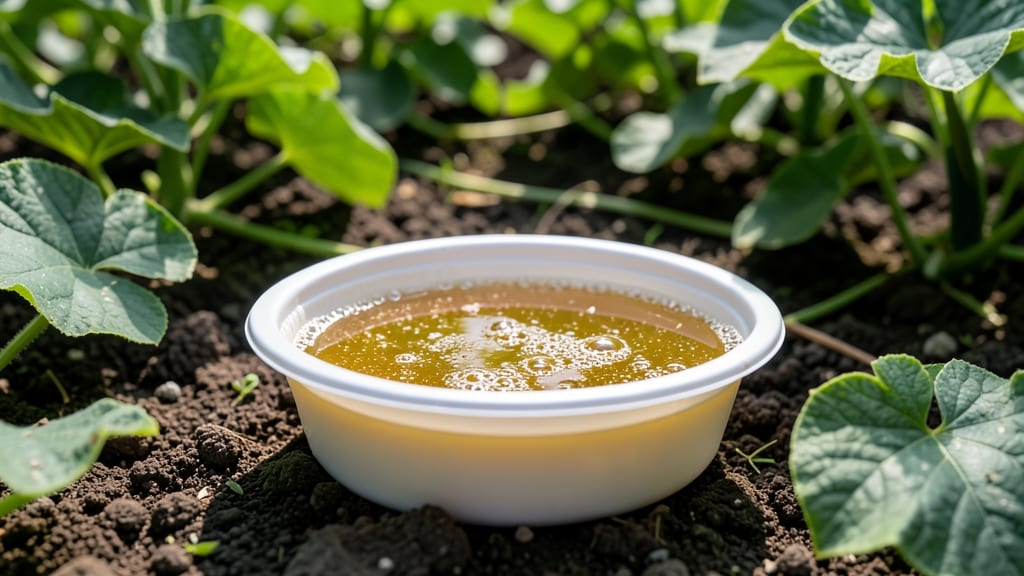
If you’ve ever lost cucumber plants to cucumber beetles or flea beetles, a simple beer trap might be your secret weapon. This passive, non-toxic method lures beetles to drown in fermented beer overnight—no chemicals, no harm to your plants or beneficial insects.
Fill a shallow dish (like a yogurt cup) with beer and place it near your cucumber plants at dusk, when beetles are most active. The yeast and sugar in beer attract them, and they drown within hours. Refresh the beer every 2-3 days for best results, especially during peak beetle season (late spring to early summer).
This is the perfect solution for urban gardeners or anyone who prefers hands-off pest control. No sprays, no cleanup—just a few beetles gone by morning. 🌱
Essential Oil Blend for Thrips and Fungus Gnats
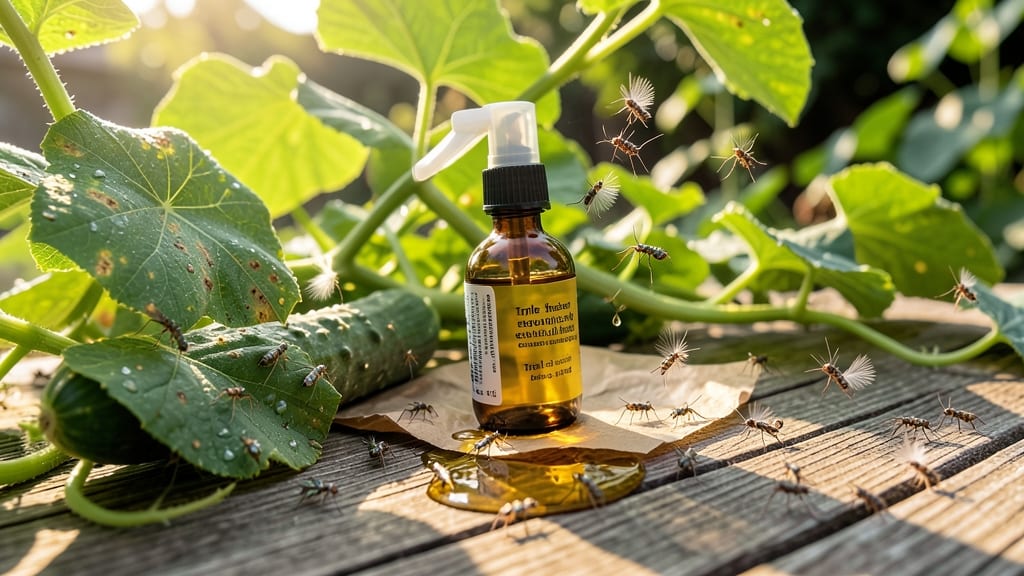
When tiny, fast-moving thrips or fuzzy fungus gnats turn your cucumber plants into a buffet, reach for this triple-threat essential oil blend. The combo of tea tree, eucalyptus, and peppermint oils disrupts pests' scent trails while inhibiting mold growth—no harsh chemicals needed.
Mix 1 teaspoon each of the oils with 1 quart of water and a dash of dish soap (to help it stick). Spray foliage in the early morning when pests are most active, focusing on undersides where thrips hide. Reapply every 5-7 days or after rain, and always test a small leaf first—this blend is safe for edible plants but potent enough to deter pests.
Perfect for container gardeners or those with limited space, this solution targets both above-ground pests and soil-borne gnats without harming bees or beneficial insects. 💚
Compost Tea Spray for Beneficial Microbes

If your cucumber plants look stressed but you’re hesitant to use harsh chemicals, compost tea spray is your secret weapon. This nutrient-rich liquid strengthens plant defenses by introducing beneficial microbes that crowd out pests and improve soil health—ideal for organic gardens where pests thrive in weak plants.
To make it, steep aged compost in water for 24-48 hours, then strain and spray the tea directly on leaves and soil. The microbes in the tea create a protective barrier, reducing aphids, mites, and fungal diseases by up to 50% over time. For best results, apply every 2-4 weeks during growing season, especially after heavy rain or when plants show signs of stress.
This method is perfect for gardeners with poor soil health or those who want to prevent pests before they become a problem. Unlike chemical sprays, compost tea improves your soil’s microbial balance, leading to stronger, more resilient plants that naturally resist bugs. 💚
Row Cover Fabric for Physical Pest Barrier

When cucumber beetles and spider mites turn your garden into a battleground, row cover fabric acts like an invisible shield—blocking pests completely while letting sunlight and water through. Unlike sprays that require reapplication, this lightweight fabric creates a physical barrier that works year-round for high-risk seasons or large-scale plantings.
Made from breathable materials like floating row cover, it fits snugly over trellises or stakes, protecting vines without stunting growth. You can remove it during pollination or harvest, making it ideal for organic cucumbers where chemical residues are a concern. For gardeners with sprawling beds or frequent pest outbreaks, this is the ultimate hands-off solution.
Perfect for those who want zero pesticide exposure while maintaining healthy, thriving plants. 💚
Beneficial Nematodes for Grubs and Larvae

When your cucumber plants look healthy above ground but suffer from mysterious wilting or stunted growth, the culprit might be hidden underground—grubs and larvae munching on roots. Unlike surface sprays, beneficial nematodes are microscopic worms that seek out and kill these underground pests, making them the secret weapon for organic gardeners.
These natural predators, like Steinernema feltiae, are applied as a liquid and watered into the soil. They enter the larvae through natural openings, releasing bacteria that kill the pest within 48 hours. The best part? They’re safe for plants, pets, and beneficial insects, and they work silently—no sprays, no residue, just targeted pest control where it matters most.
Perfect for gardeners who’ve tried everything else, nematodes are especially effective in late summer when grubs are most active. Just mix, water, and watch your cucumbers thrive. 🌱