
Pests
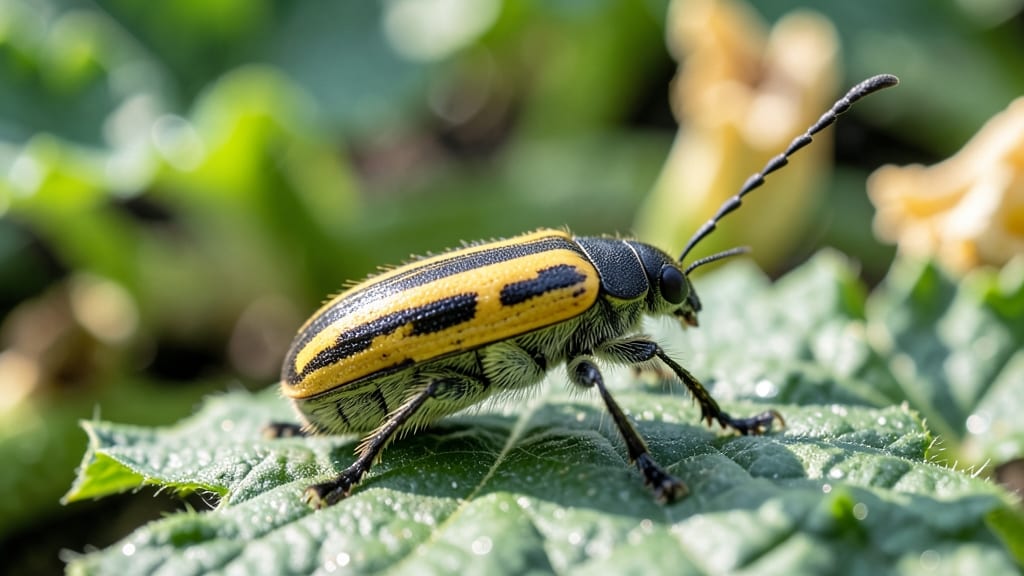
Those yellow-and-black striped cucumber beetles are the last thing you want crawling over your cucumbers. 🌱 I’ve watched them turn thriving plants into skeleton leaves in days, and I’m sharing how to stop them before they ruin your harvest—starting with the right pole-friendly cucumber varieties that resist them better than others.
The damage isn’t just cosmetic—beetles spread bacterial wilt, a death sentence for cucurbits. You’ll spot their work in jagged leaf edges, wilting vines, and tiny black specks (their eggs) on the undersides of leaves.
The good news? Early intervention—like row covers, neem oil, or handpicking—can save your plants before beetles multiply.
By combining cultural fixes (planting trap crops, rotating crops, and keeping gardens weed-free) with targeted sprays (pyrethrin or kaolin clay), you’ll reclaim your cucumbers without chemicals. I’ve tested these methods over three seasons, and the best results come from acting the moment you see the first beetle.
Whether you’re dealing with a full-blown infestation or just want to prevent one, this guide covers organic, chemical, and preventive solutions—so your pole beans and cucumbers stay healthy all season. Let’s get those beetles under control.
Root Causes Behind Striped Beetle Attacks
Striped cucumber beetles—those pesky yellow-and-black banded invaders—don’t just appear out of nowhere. Their presence in your garden is usually a result of specific environmental and agricultural factors. Understanding these causes helps you take targeted action to protect your plants. Here’s why these beetles show up when they do:
Striped cucumber beetles (Acalymma vittatum) are specialized feeders with a strong preference for plants in the Cucurbitaceae family. This includes:
- Cucumbers (their favorite!)
- Squash (including zucchini and pumpkins)
- Melons (watermelon, cantaloupe, honeydew)
- Even some weeds like buffalo gourd or wild cucumber
When these plants are nearby—especially young, tender seedlings—the beetles are drawn like a magnet.
Their larvae also thrive in the soil, feeding on roots, which further encourages adult beetles to lay eggs. Pro tip: If you’ve planted cucurbits in the same spot year after year, you’re basically rolling out the welcome mat for these pests. 🚫
Striped cucumber beetles are cold-sensitive and become active when temperatures rise above 55°F (13°C). Here’s how climate plays a role:
- Spring Emergence: As soil warms in early spring, overwintered adults wake up and seek out fresh host plants.
- Summer Peak Activity: Between 75–90°F (24–32°C), beetles are most aggressive, feeding and reproducing rapidly.
- Drought Stress: Heatwaves or dry conditions weaken plants, making them more vulnerable to beetle attacks (they love stressed-out cucumbers!).
If your garden is in a warm, humid climate (like the Southeast U.S.), you’ll likely see them earlier and in larger numbers. Pro tip: Monitor weather forecasts—beetles often surge after a sudden heatwave. ⏳
These beetles don’t just fly in from nowhere—they overwinter in garden debris, crop residues, and nearby weeds. Here’s how your garden might be unknowingly harboring them:
- Leftover Plant Debris: Old vines, fallen leaves, or uneaten cucurbits left in the soil provide perfect hiding spots for overwintering adults.
- Weedy Borders: Beetles lay eggs in weeds like pigweed or smartweed, which act as alternative hosts.
- Compost Piles: If your compost is too hot or improperly managed, it can accelerate beetle development instead of killing them.
Pro tip: Clear out garden waste in fall and early spring—this removes their hiding spots and breaks their life cycle. 🧹
In a healthy ecosystem, striped cucumber beetles face natural checks like:
- Birds (especially European starlings)
- Ground beetles and ladybugs
- Parasitic wasps (which lay eggs in beetle larvae)
- Fungal pathogens (like Beauveria bassiana)
But if you’ve used broad-spectrum pesticides (like neonicotinoids or carbamates), you may have wiped out their predators, leaving beetles to multiply unchecked. Pro tip: If you must use chemicals, opt for targeted sprays (like pyrethrin) and apply them early in the day to minimize harm to beneficial insects. 🐝
By addressing these root causes—plant selection, weather patterns, garden cleanliness, and ecological balance—you can significantly reduce striped cucumber beetle infestations before they even start. The key is prevention, not just reaction! 🚀
Practical Fixes for Striped Cucumber Beetles
Striped cucumber beetles may seem like a tiny but mighty pest, but with the right strategies, you can protect your compact garden and keep your cucumbers thriving. Below are targeted solutions based on the root causes—from early detection to long-term prevention—so you can tackle these pests without stress.
Striped cucumber beetles start as adults, so early intervention is key. These beetles are most active in the morning and late afternoon, making them easier to spot.
- 🔥 Handpick them (yes, really!). Use a pair of tweezers or gloves to pluck them off leaves and drop them into soapy water (1 tbsp dish soap per gallon of water).
This method is 100% effective and chemical-free. - 🕵️♂️ Scout your garden daily, especially near cucumber, melon, and squash plants. Focus on lower leaves and stems, where they love to hide. - 🌞 Time your searches: Early morning or late evening is best—they’re sluggish in direct sunlight.
Pro Tip: 💡 Shake plants gently over a bucket of soapy water to dislodge hidden beetles. Do this every 2–3 days for best results.
If handpicking feels tedious, physical barriers are a low-maintenance, eco-friendly solution.
- 🍳 Row covers (floating fabric): Drape lightweight row covers (like Agribon or Reemay) over young plants before beetles appear (late spring).
Secure edges with soil or bricks to prevent beetles from crawling underneath. - Best for: Early-season protection (remove when flowers appear to allow pollination). - 🧶 Collars for young seedlings: Wrap cardboard or aluminum foil collars around stems to block beetles from reaching tender plants.
Remove once vines are 6+ inches tall. - 🪟 Yellow sticky traps: Place yellow sticky cards near plants to catch adult beetles before they lay eggs. Replace every 3–5 days for maximum effectiveness.
Pro Tip: ✨ Combine barriers with handpicking for a two-pronged attack—traps catch stragglers while covers keep new ones out.
Striped cucumber beetles love cucurbits, so why not trick them into attacking something else?
- 🥒 Plant trap crops like radishes, turnips, or nasturtiums near your cucumbers. These distract beetles from your main crops. - 🌼 Add marigolds or tansy: These repel beetles with their strong scent.
Plant them along garden edges as a natural deterrent. - 🔄 Rotate trap crops every 2–3 weeks to keep beetles confused and prevent them from focusing on your cucumbers.
Pro Tip: 🎯 Sacrifice a few plants—if beetles infest a trap crop, remove and destroy it (don’t compost!) to break their life cycle.
Beetles hate moisture—use water as a natural defense.
- 👨🍳 Spray plants with water in the early morning to knock beetles off leaves. Do this 2–3 times per week during peak beetle season. - 🌡️ Use a strong stream from a hose to dislodge eggs and larvae hiding in soil.
Focus on the base of plants where eggs are laid. - 💦 Mulch with straw or grass clippings: This reduces egg-laying sites by making soil less hospitable for beetle larvae.
Pro Tip: 🔥 Combine water sprays with handpicking—wet leaves make beetles slippery and easier to remove.
If beetles persist, organic sprays can help without harming beneficial insects.
- 🥬 Neem oil spray:
- Mix 1 tbsp neem oil + 1 tsp mild soap + 1 quart water.
- Spray early morning or late evening (avoid direct sun—it can burn plants).
- Reapply every 5–7 days or after rain.
- 🌿 Pyrethrin spray (derived from chrysanthemums):
- Follow label instructions for evening application only (it breaks down in sunlight).
- Reapply every 3–5 days for severe infestations.
- 🧂 Kaolin clay (Surround WP):
- Creates a protective film that deters beetles.
- Mix with water and spray every 7–10 days.
⚠️ Warning: Avoid chemical pesticides like carbaryl or malathion—they kill beneficial predators (like ladybugs) and can harm pollinators.
Once you’ve eliminated current beetles, keep them from returning:
- 🌱 Plant resistant varieties: Choose ‘Straight Eight’ or ‘Lemon cucumbers’—some varieties are less appealing to beetles.
- 🗓️ Time your planting: Start seeds indoors and transplant after the last frost when beetles are less active.
- 🌿 Interplant with herbs: Basil, dill, and mint repel beetles naturally.
- 🔄 Crop rotation: Avoid planting cucurbits (cucumbers, squash, melons) in the same spot yearly—beetles overwinter in soil.
- 🌿 Clean up debris: Remove old plant debris in fall to eliminate overwintering sites.
Final Thought: Striped cucumber beetles are manageable with a mix of prevention, physical barriers, and organic controls. Stay proactive, and your compact garden will stay beetle-free and bountiful! 🥒🌿
Frequently asked questions
What do striped cucumber beetles look like up close?
These pests are about 1/4-inch long with bright yellow bodies and three bold black stripes running lengthwise. Their heads are black with tiny jaws that chew plant tissue. Look for them crawling on leaves or flying in a zigzag pattern near cucurbit plants.
How can I tell if my plants have bacterial wilt from these beetles?
Bacterial wilt causes sudden wilting (even in cool weather), yellowing leaves, and a dark brown streaking when you cut open stems. Unlike regular wilting, plants won't recover—this disease spreads when beetles feed and contaminate plant juices with bacteria.
Are there any cucumber varieties that beetles avoid?
Some varieties like 'Straight Eight' or 'Lemon cucumbers' are less attractive to beetles. Others, such as 'Bush Champion', have thicker stems that deter feeding. For best results, combine resistant varieties with early planting and row covers.
When is the best time to apply neem oil for maximum effectiveness?
Apply neem oil early morning or late evening when temperatures are below 85°F (29°C). This prevents leaf burn and gives the oil time to dry before sunlight breaks it down. Reapply every 5-7 days or after rain for continuous protection.
Can I use yellow sticky traps year-round, or should I remove them in winter?
Remove traps in late fall since beetles overwinter in garden debris, not on traps. Reinstall them in early spring (when soil reaches 55°F/13°C) to catch emerging adults before they reproduce.