
Pests
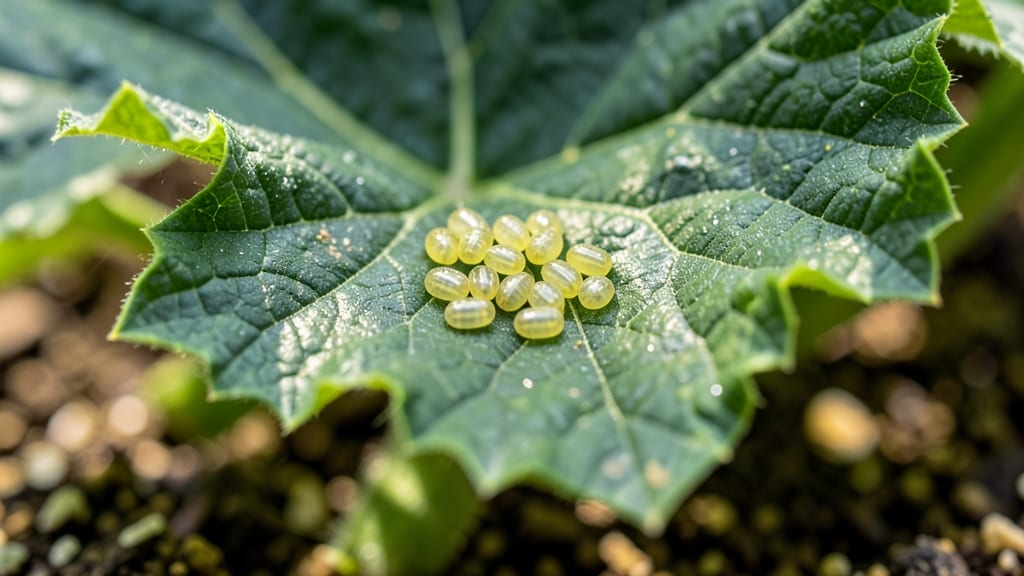
Those mysterious yellow specks on your cucumber leaves might actually be cucumber beetle eggs—and here’s how to stop them.
Those are cucumber beetle eggs—and they’ll turn into voracious pests if you don’t act fast. ✨ I’ve lost entire harvests to these striped invaders, but a few minutes of early intervention saves your plants (and your sanity).
The key is catching them before they hatch, and I’ll show you exactly how—no fancy tools required.
These eggs look like tiny yellow dots (about 1/32-inch wide), clustered on leaf undersides or stems. If left alone, they’ll hatch into beetles that chew leaves, spread disease, and stunt growth—especially on cucumbers, squash, and melons.
The good news? Scraping them off by hand or using soapy water works better than most sprays, and it’s safer for bees and other pollinators.
By the time you finish these 3 simple steps, your plants will be protected and your harvest on track. You’ll spot the eggs early, remove them before they hatch, and keep your garden thriving—no more wilted vines or shriveled fruit.
The best part? These methods work for any garden, from backyard plots to container setups.
Once you’ve mastered the basics, I’ll share how to prevent future infestations—because the last thing you want is a repeat performance next season. Let’s get your cucumbers back on track!
The hidden triggers behind eggs
Cucumber beetle eggs don’t just appear out of nowhere—they’re the result of a precise, nature-driven strategy by these striped or spotted pests. Understanding why they lay eggs in your garden is the first step to stopping them before they hatch into hungry larvae.
Let’s break down the science behind their behavior and what makes your cucumbers, melons, and squash such irresistible breeding grounds.
Cucumber beetles (Diabrotica and Acalymma species) are specialized feeders, meaning they target specific plants in the Cucurbitaceae family—think cucumbers, squash, pumpkins, and melons. Here’s why your garden becomes their love nest:
- Volatile Compounds: These plants release volatile organic compounds (VOCs) when damaged, which act like pheromones to adult beetles. A single chewed leaf can signal, “Food and future meals here!” to beetles up to 100 feet away.
- Soft, Sap-Rich Leaves: Cucumber beetles prefer tender, young foliage because it’s easier to feed on—and lay eggs in. Mature leaves are tougher, so they avoid them.
- Scent Traps: Some cucurbit plants (like muskmelons) emit cucurbitacin, a bitter compound that beetles actually crave for mating. It’s like a built-in aphrodisiac for them!
Actionable Insight: If you’ve noticed beetles swarming your plants, they’re likely already mating—and eggs will follow within 24–48 hours. Act fast to disrupt their cycle.
Cucumber beetles are cold-sensitive but thrive in warm conditions. Their egg-laying timeline is directly tied to soil and air temperatures:
| Temperature Range | Egg-Laying Activity | Hatching Time |
|---|---|---|
| Below 50°F (10°C) | Minimal to none | Eggs may not hatch or die |
| 50–65°F (10–18°C) | Moderate (females lay ~10–20 eggs) | 7–14 days |
| Above 65°F (18°C) | Peak activity (50+ eggs per female) | 3–7 days |
Why It Matters: In early spring or late fall, cooler temps slow reproduction. But once your garden heats up (especially in Zone 7+), beetles go into overdrive, laying hundreds of eggs per season if unchecked.
Pro Tip: 🌡️ Monitor your garden’s microclimate. If temps are consistently warm, check undersides of leaves daily—that’s where females deposit their eggs in clusters of 10–30.
Beetles don’t just target single plants—they exploit dense, unmanaged gardens. Here’s how your layout might be inviting them:
- Monoculture Planting: Growing only cucumbers or squash in a block creates a beetle buffet. With no plant diversity, predators (like lacewings or parasitic wasps) have fewer food sources, leaving beetles unchallenged.
- Low-Growing Plants: Beetles prefer to lay eggs on leaves within 6–12 inches of the soil, where moisture and warmth are ideal. Bush varieties (like bush cucumbers) are higher-risk than vining types.
- Weedy Borders: Beetles often move from wild host plants (like buffalo gourd or wild cucumbers) into cultivated gardens. If your garden edges are overgrown, it’s a highway for invaders.
Science Note: Studies show that gardens with 3+ types of cucurbits (e.g., cucumbers + zucchini + pumpkins) see 40% fewer beetle eggs due to confusion effect—beetles struggle to find the “best” host.
Quick Fix: 🌱 Interplant with marigolds, nasturtiums, or radishes to disrupt beetle navigation and attract beneficial insects.
Cucumber beetles are seasonal strategists, and their egg-laying peaks align with your garden’s most vulnerable phases:
- Early Season (Pre-Bloom): Beetles target seedlings and young plants because they’re soft and undefended. This is when they lay the first wave of eggs (often in May–June in most climates).
- Post-Harvest (Late Season): As plants mature, beetles shift to flowering stages, where they lay eggs near squash blossoms. The larvae then feed on developing fruit, causing cucumber beetle wilt.
- Overnight Activity: Beetles are nocturnal egg-layers. They wait until dusk or night to avoid predators like birds, making early-morning scouting critical.
Critical Window: If your plants are 3–6 weeks old and temperatures are rising, you’re in the high-risk zone. Set up a weekly check during this period.
Beat Back Beetle Eggs Fast
Discovering tiny yellow eggs clinging to your cucumber leaves can feel like a garden nightmare, but don’t panic—these pests are beatable! The key is acting quickly with targeted solutions tailored to the problem’s root cause.
Below, we break down the most effective fixes, from quick fixes to long-term prevention, so you can reclaim your garden without stress.
If you catch the eggs before they hatch, a little elbow grease can save your plants.How to do it:
- 👨🍳 Inspect leaves daily—especially undersides—with a magnifying glass or phone camera (zoom in for better visibility). Eggs look like tiny yellow ovals, often grouped in clusters.
- 🧼 Wipe them off with a damp cloth, soft brush, or even your fingernail. Drop them into soapy water to kill them instantly.
- 🌿 Focus on new growth—beetles lay eggs near tender leaves, so prioritize those areas.
Pro tip: Do this in the early morning when eggs are still soft and easier to remove. 💡
Chemical sprays can harm beneficial insects, but these DIY solutions are tough on beetles and gentle on your garden.Top 3 homemade sprays:
| Spray Type | How to Make It | When to Apply |
|---|---|---|
| Neem Oil Spray | Mix 1 tbsp neem oil + 1 tsp mild soap + 1 quart water. Shake well and spray directly on eggs/leaves. | Apply at dusk every 3–5 days. Avoid spraying flowers to protect pollinators. |
| Garlic & Pepper Spray | Blend 2 cloves garlic + 1 tsp cayenne pepper + 1 quart water. Strain and add 1 tsp soap. | Spray early morning or evening to avoid harming bees. Reapply after rain. |
| Kaolin Clay Spray | Stir 2 tbsp food-grade kaolin clay into 1 gallon water until dissolved. Add 1 tsp soap. | Use as a protective barrier on leaves to deter egg-laying. Reapply every 7–10 days. |
Pro tip: Always test sprays on a small leaf first—some plants (like squash) may react to strong ingredients. 🌡️
Adult cucumber beetles are the egg-laying culprits. Trap them before they reproduce!3 trapping methods:
- 🍯 Yellow Sticky Traps—Place traps near plants. Beetles are drawn to yellow and get stuck. Replace every 2–3 days.
- 🥘 Beer Traps—Fill a shallow dish with beer and bury it at ground level. Beetles fall in and drown. Refresh every 2 days.
- 🕷️ Encourage Predators—Ladybugs, lacewings, and parasitic wasps eat beetle eggs. Plant dill, fennel, or marigolds nearby to attract them.
Pro tip: Trap adults in the morning when they’re sluggish from the cool air—easier to catch! ✨
The best offense is a strong defense. Keep beetles from returning with these habits:- 🌱 Rotate crops—Don’t plant cucumbers, squash, or melons in the same spot yearly. Beetles remember!
- 🛡️ Use row covers—Lightweight fabric barriers (like floating row covers) block beetles while letting sunlight and water through.
- 🌿 Plant repellent herbs—Basil, mint, and tansy confuse beetles with their strong scents.
- ⏰ Time your planting—Start seeds indoors and transplant after the last frost but before beetles emerge (usually late spring).
Pro tip: Interplant cucumbers with radishes—their peppery scent deters beetles naturally. 🎯
With these strategies, you’ll not only stop cucumber beetle eggs in their tracks but also create a garden that’s resilient against future attacks. Stay vigilant, and your cucumbers will thrive! 🥒💪
Frequently asked questions
What do cucumber beetle eggs look like up close?
Cucumber beetle eggs appear as tiny yellow ovals about 1/32-inch wide—roughly the size of a pinhead. They’re usually clustered in groups of 10–30 on the undersides of leaves or along stems. Use a magnifying glass or phone camera to spot them clearly.
How long do cucumber beetle eggs take to hatch?
Eggs typically hatch in 3–7 days when temperatures are above 65°F (18°C). In cooler conditions (50–65°F/10–18°C), hatching may take 7–14 days. The warmer it is, the faster the eggs develop—so act quickly if you spot them!
Can I use vinegar to remove cucumber beetle eggs?
White vinegar can help, but it’s not the most effective method. Mix 1 part vinegar with 3 parts water and spray directly on eggs—it dries them out. However, vinegar may harm plants if overused. For better results, use soapy water or neem oil instead.
Will ladybugs eat cucumber beetle eggs?
Yes! Ladybugs (and their larvae) are natural predators of cucumber beetle eggs. Plant dill, fennel, or marigolds nearby to attract them. You can also release ladybugs directly onto infested plants for faster control.
What happens if I don’t remove cucumber beetle eggs?
If left unchecked, eggs will hatch into larvae that chew leaves and spread bacterial wilt, causing plants to wilt and die. Adult beetles also feed on flowers and fruit, reducing yields. Early removal prevents these devastating effects.