
Pests
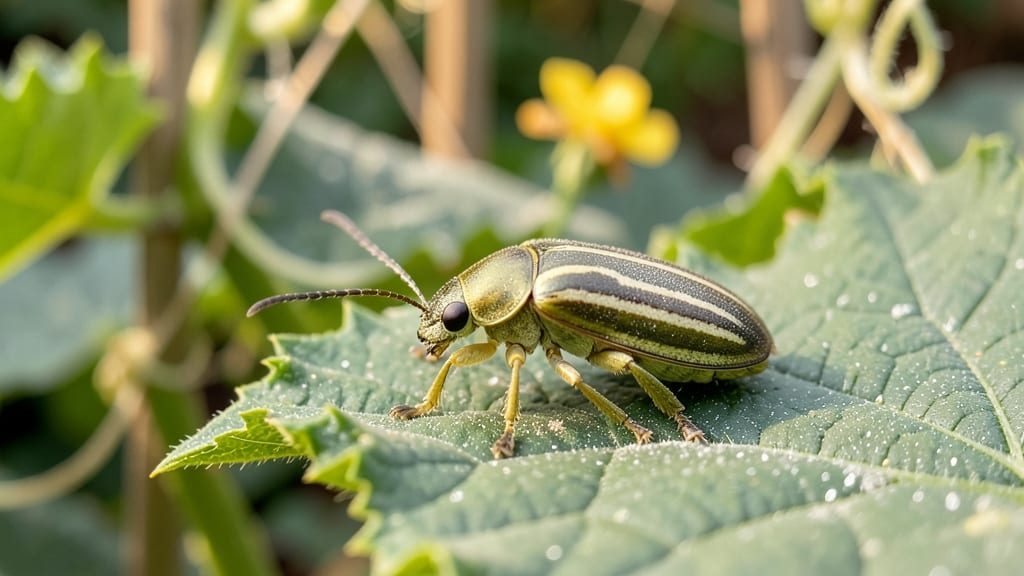
This cucumber beetle insecticide of neem oil and soap spray saved my cucumbers last year—now I’ll share my battle-tested formula to stop those striped pests in 24 hours. 🌿 hours—no harsh chemicals needed.
These yellow-and-black beetles chew leaves into lace and spread bacterial wilt, but they hate the smell of neem oil. A simple homemade spray with just a few ingredients creates a protective barrier that repels them instantly.
You'll see fewer beetles within hours, and your plants will stop looking like Swiss cheese.
The best part? This solution works on zucchini, squash, and melons too. No waiting weeks for results—just mix, spray, and watch the beetles retreat. The key is timing: apply it at dawn or dusk when beetles are most active.
For stubborn infestations, repeat every 5-7 days until harvest. If your plants already show wilting, it might be too late for organic fixes—consult a pro before giving up. Here's exactly how to make and use the spray effectively.
Root Causes of Beetle Infestations
Cucumber beetles—those tiny, striped pests—don’t just appear out of thin air. Their presence in your garden is usually the result of a mix of environmental, agricultural, and ecological factors. Understanding why these beetles target your cucumbers, squash, and melons is the first step to stopping them before they wreak havoc.
Below, we break down the key reasons these insects become a problem and how they exploit your garden’s weaknesses.
Cucumber beetles are drawn to plants that are already struggling. When your cucurbits (cucumbers, squash, pumpkins, etc.) are weak, they emit stress signals—like volatile organic compounds (VOCs)—that act as a dinner bell to these pests. Here’s why this happens:
- Nutrient Deficiencies: Plants lacking nitrogen, phosphorus, or potassium are more vulnerable. Beetles detect these deficiencies and see them as easy targets. Actionable fix: Use a balanced fertilizer (like 10-10-10) at planting and side-dress with compost mid-season.
- Drought Stress: Even slight dehydration makes plants emit distress signals. Beetles thrive in gardens where watering is inconsistent. Actionable fix: Maintain 1–1.5 inches of water per week, especially during flowering and fruiting stages.
- Poor Soil Health: Compacted or poorly drained soil limits root growth, making plants more susceptible. Beetles also prefer areas where beneficial microbes (like Bacillus thuringiensis) can’t thrive. Actionable fix: Amend soil with organic matter (e.g., worm castings, aged manure) before planting.
💡 Pro Tip: Healthy plants with strong foliage are less appealing. Rotate crops yearly to prevent soil-borne pathogens that weaken cucurbits.
Cucumber beetles are most active in spring and early summer, and they’re drawn to young, tender plants. If you plant cucumbers or squash too early, you’re essentially rolling out a welcome mat:
- Overwintering Survivors: Some beetles hibernate in garden debris, mulch, or nearby weeds. When you plant early, these survivors emerge and lay eggs near fresh seedlings.
- No Natural Predators Yet: Early-season beetles face fewer predators (like lacewings or parasitic wasps), giving them free rein to feed and reproduce. Actionable fix: Wait until soil temps reach 60°F+ and nighttime lows are above 55°F before planting.
- Slow Growth = More Damage: Young plants can’t outgrow beetle feeding. A single beetle can chew through a seedling’s stem, causing wilting or death. Actionable fix: Use row covers (floating fabric) until plants are 4–6 inches tall.
Beetles don’t just target your prized cucumbers—they’ll feast on any cucurbit family member, including weeds. If your garden has nearby wild hosts, you’re creating a beetle buffet:
- Wild Cucurbits: Plants like Cucurbita foetidissima (buffalo gourd) or Echinocystis lobata (wild cucumber) attract beetles and their eggs. These weeds can be beetle reservoirs year-round.
- Crop Rotation Failures: Planting cucurbits in the same spot yearly (or near where they grew last season) leaves behind beetle eggs or larvae in the soil. Actionable fix: Follow a 3-year rotation with non-cucurbit crops (e.g., beans, tomatoes, brassicas).
- Mulch and Debris: Beetles hide in leaf litter, old vines, or thick mulch during the day. Actionable fix: Remove garden debris in fall and use straw mulch (not wood chips) to deter overwintering.
🔥 Warning: Even "harmless" weeds like morningglory can host beetles. Pull them aggressively within a 10-foot radius of your garden.
Cucumber beetles reproduce rapidly in warm, humid climates—ideal conditions for gardens in the South and Midwest. Here’s how weather plays a role:
| Factor | Why It Matters | Actionable Fix |
|---|---|---|
| Temperature (70–90°F) | Beetles develop from egg to adult in 10–14 days. Warmer temps mean more generations per season. | Use shade cloth (30–50%) to reduce leaf surface temps by 10–15°F. |
| Humidity (>60%) | High humidity keeps eggs and larvae moist, increasing survival rates. | Improve airflow with trellises or prune dense foliage. |
| Rainfall (1–2 inches/week) | Beetles thrive in damp soil, which also washes away natural predators like ground beetles. | Install drip irrigation to keep soil moist without over-saturating. |
✨ Smart Hack: Plant traps crops (like radishes or turnips) away from your main garden to lure beetles away from cucurbits.
By addressing these root causes—stress, timing, weeds, and weather—you’re not just treating the symptoms of a beetle infestation. You’re cutting off their food, shelter, and breeding grounds. The next step? Learn how to disrupt their life cycle with targeted insecticides like neem oil and soap sprays.
Beat Back Beetles Naturally
Cucumber beetles may be tiny, but their damage can be mighty—especially if you’re growing cucumbers, squash, or melons. The good news? You don’t need harsh chemicals to send them packing. Below, we’ll break down targeted solutions for every stage of infestation, from prevention to full-blown rescue.
Think of this as your beetle-busting battle plan—effective, eco-friendly, and easy to execute.
Cause: Beetles spotted on leaves or vines, but damage is minimal. Fix: Act fast with barriers, traps, and deterrents to keep them away.
- 🛡️ Physical Barriers - Row Covers: Use lightweight floating row covers (made of fine mesh) over young plants. These block beetles while allowing sunlight, water, and pollination.
Install them before planting or as soon as seedlings emerge. - Collars for Seedlings: Wrap the base of young plants with cardboard collars (cut from egg cartons or toilet paper rolls) to prevent beetles from crawling up.
- 🎣 Traps & Lures - Yellow Sticky Traps: Hang yellow cards or buckets coated with petroleum jelly or sticky traps near your garden.
Beetles are attracted to yellow—place traps 2–3 feet above the ground for maximum effectiveness. - Beer Traps: Fill a shallow dish with beer (the yeast attracts them). Bury it near plants so the rim is level with the soil. Check and refresh every 2–3 days.
- 🌱 Companion Planting
- Radishes or Marigolds: Plant these around your cucumbers—their strong scent repels beetles. Radishes also act as a trap crop, luring beetles away from your main plants.
Cause: Visible holes in leaves, wilting vines, or bacterial wilt (yellowing, drooping plants). Fix: Neem oil, insecticidal soap, and manual removal to break their cycle.
- 🍃 Spray Solutions (Safe & Strong) - Neem Oil Spray (Best for all life stages) - Mix 2 tbsp neem oil + 1 tsp mild liquid soap + 1 quart water in a spray bottle. - Spray thoroughly (top and bottom of leaves) every 5–7 days or after rain. - Pro Tip: 💡 Apply in the early morning or late evening to avoid harming bees. - Insecticidal Soap (Kills on contact) - Use a store-bought soap (like Safer® Brand) or DIY with 1.5 tbsp castile soap + 1 quart water. - Spray directly on beetles—they’ll drop off within minutes.
Reapply after rain. - Garlic or Chili Pepper Spray (Natural repellent) - Blend 1 garlic bulb + 1 tbsp cayenne pepper + 1 quart water. Strain and spray. Beetles hate the spicy scent!
- 👨🌾 Manual Removal
- Handpick beetles in the early morning when they’re sluggish. Drop them into soapy water to kill them instantly.
- Vacuum them up with a shop vac (wear gloves!)—great for heavy infestations.
- 🌱 Rotate Crops & Clean Up
- Remove all debris (fallen leaves, old plants) where beetles hide.
- Avoid planting cucurbits (cucumbers, squash, melons) in the same spot next year—beetles overwinter in soil.
Cause: Plants are heavily damaged, wilting, or showing bacterial wilt (oozing stems). Fix: Aggressive treatment + cultural controls to save your harvest.
- 💦 Water Deeply & Mulch
- Beetles thrive in dry, stressed plants. Keep soil moist but not soggy and mulch heavily to retain moisture and deter beetles from laying eggs.
- 🔥 Pyrethrin Spray (Last Resort)
- If beetles are overwhelming, use a pyrethrin-based spray (derived from chrysanthemums). It’s fast-acting but kills beneficial insects too, so use only in emergencies and early morning.
- 🌱 Replace Heavily Infested Plants
- If bacterial wilt has set in (stems turn brown and ooze), pull and destroy the plant immediately to prevent spread. Do not compost infested plants!
Cause: You want to avoid future beetle battles. Fix: Long-term strategies to keep your garden beetle-free.
- 🌱 Plant Resistant Varieties
- Choose beetle-resistant cucumber varieties like:
- ‘Straight Eight’ (cucumber)
- ‘Defender’ (squash)
- ‘Minnesota Midget’ (melon)
- Choose beetle-resistant cucumber varieties like:
- 🌿 Interplant with Herbs
- Basil, dill, and tansy naturally repel cucumber beetles. Plant them among your cucurbits.
- 🕰️ Time Your Planting
- Start seeds indoors and transplant after the last frost when beetles are less active.
- Use early-maturing varieties to harvest before beetles peak in late summer.
- 🌱 Soil Health Matters
- Healthy soil = stronger plants that beetles avoid. Add compost and worm castings before planting.
Final Thought: 🎯 Cucumber beetles are a nuisance, but with proactive steps, you can minimize damage without chemicals. Start with prevention, then strike fast if they appear. Your garden—and your zucchini—will thank you!
Frequently asked questions
How often should I apply neem oil spray for cucumber beetles?
Apply your neem oil mixture every 5-7 days or immediately after heavy rain. Consistency is key—beetles rebuild their numbers quickly! For best results, spray in the early morning or late evening when bees are less active.
Will insecticidal soap harm my plants if used too much?
No, when used correctly! Insecticidal soap is plant-safe when diluted properly (like the 1.5 tbsp castile soap + 1 quart water mix). Overuse won't damage plants, but it may reduce effectiveness if you apply it too frequently (stick to every 3-5 days max). Always test on a small leaf first.
Can I use these sprays if I have bees pollinating my garden?
Yes, but with caution! Neem oil and soap sprays are least harmful to bees when applied early morning or late evening (before/after peak pollination hours). Avoid spraying when flowers are open. For extra protection, focus treatments on leaves and stems rather than blooms.
What's the fastest way to stop a new cucumber beetle infestation?
Combine manual removal (handpick beetles into soapy water) with a neem oil/soap spray applied at dusk. For immediate results, add yellow sticky traps near plants—beetles are drawn to yellow and get trapped instantly. Repeat daily until you see 70% reduction in beetle numbers.
Are there any chemical insecticides that work better than natural options?
For severe infestations, pyrethrin-based sprays (derived from chrysanthemums) work fastest but kill beneficial insects too. Use only as a last resort in early morning when bees aren't active. For organic growers, kaolin clay creates a protective barrier that repels beetles while being bee-safe.